7th Abrates Conference: Official coverage – Part 2

This is the second part of my post about the Abrates Conference. Read the first part here.

After having such a good start, the second talk I watched on Saturday was Isabel Gorg’s, also on automated translation. The speaker conducted a survey and found out that 22% of the interviewees used some sort of MT strategy. Her presentation was mostly based on pointing out common mistakes in MT, such as spacing, capitalization, grammar, sentence structure, local standards and terminology. Being aware of their frequency makes it simple to spot and correct them. And, needless to say, source quality can also highly influence the quality of MT translations. The takeovers from her talk were: MT will not disappear, but rather get better; MT can increase productivity; we should concentrate on what MT does right, not wrong; and we should align our expectations.
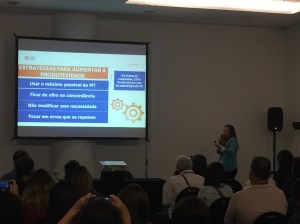
IMG_3399

Isabel Georg

The third talk I attended on Saturday was by Felipe Cichini Simões, on personal and professional budgeting for freelancers. According to Felipe, we must never spend every cent we earn, but have some savings for vacation, professional investment, variable income, etc. The speaker suggested the YNAB (You Need A Budget) method and briefly showed us how the app works. According to Felipe, in order to start a budget plan, we must forget the past and start planning from now on. Felipe also said that giving each cent a function helps us understand what we can do with our money. Acknowledging our actual expenditures (besides our fixed ones) is also important for planning our future budget. However, he also points out that budgets are not always perfect, and sometimes they may not work as planned, especially for us, freelancers, who do not have a fixed income. It can happen, and we may not lose heart. The speaker also suggested the Wave Accounting app for financial control. I will surely try any of those apps, because I myself am very bad at budgeting and planning for the future. I know, shame on me!
IMG_3409

Felipe Cechini Simões

Next on the presentations I attended on Saturday was Adriana de Araújo Sobota’s, on how to start working with translation agencies. The large room was totally full and people loved her presentation. Adriana mentioned methods for receiving payment from overseas (PayPal, Moneybrookers, direct bank transfer, wire transfer through Payoneer and TransferWise) and how to check a potential client’s reputation (Payment Practices, Blueboard, Hall of Fame and Shame, Untrustworthy Translation Agencies). It is also important to check if they have a physical address, on-line domain, professional e-mail address, etc. When looking for translation agencies on Google, we should be careful with the search results, because they can return one-person companies/entrepreneurs, not only agencies. Adriana also mentioned the importance of professional behavior, having a good CV, knowing how to behave on-line, communication, etc. The translation market is fast, so we should make sure we do not lose a chance for nothing. All the information needed on how to find potential clients is out there: research and search for it. The speaker concluded her presentation stressing out some don’ts: do not depend on only one agency; do not pressure the potential client for the result of the test; do not ask if you can send a CV, simply send it; do not send bulk e-mails; do not complain about an agency in public (social media).
IMG_3436

Adriana de Araújo Sobota

After lunch, I attended GALA’s presentation, “Economic Crisis at Home? The World is Yours – How to Overcome Obstacles When Selling Abroad.” You can read more details about this one here, on a post I wrote for their blog.
IMG_3445

GALA (Globalization and Localization Association): Fabiano Cid, Lilian Alves Mouton, Eugenia Echave and Gabriela Morales

After that, I ran to a presentation I was actually part of, about the Abrates Mentoring Program. Steering Committee members William Cassemiro, Adriana Sobota, Mônica Reis and yours truly explained how the program works and what the rules are to those who wish to take part both as mentor and mentee. Our current mentors and mentees, both represented, respectively, by Filipe Alverca and Sabrina Fuzaro and present among the attendees, had a voice and spoke about the enriching experience they are having with the program. You can find more information about the program on its web page and on this blog post I wrote a while ago (both in Portuguese). Juliana Tradutora has also written a blog post about our presentation, also in Portuguese, here. Should you not understand Portuguese, here are some important points:

  • The program is totally free, from all parts: both Committee members and mentors are volunteers, and mentees do not have to pay to take part.
  • To be a mentor, the person needs to be an Abrates member and have at least five years of experience in the area.
  • To be a mentee, the person also needs to be an Abrates member and have a maximum of two years of experience in the area. Or be in the last year of a Translation/Interpreting course.
  • The program lasts two years with a minimum of two hours of mentoring per month (in person or via Skype or other method agreed upon both parts).
  • The program’s coordinators closely follow their assigned pairs through follow-up reports both the mentor and the mentee have to fill out separately after every meeting.
  • The coordinators must be aware of every decision made by their assigned pairs in order to avoid any potential issue, including change of date of the meeting.

We had a fantastic feedback from our current mentors/mentees, from potential mentors/mentees and from people who run mentoring programs in other associations all over the world, such as Canada, Argentina and Israel. They were mesmerized by our organization, quality and professionalism. The presentation was followed by our own coffee break filled with positive comments, feedback, nice conversations with people who were interested at the program and future contacts. Should you be interested in learning more about it, do not hesitate to leave a comment below or send an e-mail to mentoria@abrates.com.br.
13412959_1245777265433179_2687839429918031323_n

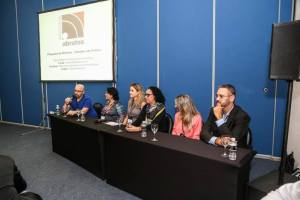
Steering Committee members, William Cassemiro, Adriana de Araújo Sobota, Caroline Alberoni e Mônica Reis, mentee Sabrina Fuzaro and mentor Filipe Alverca

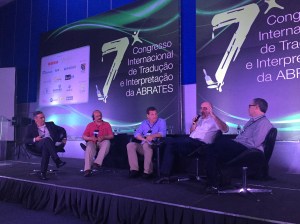
To sum up a perfect first day, Renato Beninatto hosted a round-table about, once again, machine translation with Kirti Vashee, Ricardo Souza, Ronaldo Martins and Marcelo Fassina. Marcelo Fassina, from Lionbridge, started talking and said that usually material with low access by the general public or the end user goes through MTPE (machine translation post-editing). However, the agency must always inform the translator when they use MT. The translator’s feedback is extremely important to feed the MT and improve it, as Kirti also mentioned in this morning’s presentation. Ronaldo Martins took the floor and spoke beautifully and eloquently. I was in owe with his perfect choice of words. According to him, evolution is inevitable. Technology may close some doors, but it will certainly open other windows. Ronaldo explained the difference between accelerated, delegated and augmented technologies. The first ones are not revolutionary; they only assist, but do not replace; for example, bikes. The second ones are substitutive, but are not necessarily better than what they replace. The last ones, on the other hand, enable us to do things we were not able to do before. In spite of what people think, MT involves science. Ricardo Souza followed, representing translators. Last but not least, Kirti Vashee also gave his opinion on the subject. According to him, human translation is the driving force of technology.
IMG_3469

Ronaldo Martins, Kirti Vashee, Renato Beninatto, Ricardo Souza and Marcelo Fassina

This was it for Saturday. Sunday talks in Part 3 (final).

Read the impressions and reviews of other attendees:

Adriana de Araújo Sobota: Como começar a trabalhar com agências de tradução – VII Congresso da Abrates, by Juliana Tradutora
Traduzir livros para crianças é coisa de gente grande – VII Congresso da Abrates
, by Juliana Tradutora
Silvana Nicoloso: Identidade de gênero e o trabalho de interpretação simultânea em Libras – VII Congresso da Abrates, by Juliana Tradutora
Mesa-redonda sobre machine translation – Kirti Vashee – Ricardo Souza – Ronaldo Martins – Marcelo Fassino – VII Congresso da Abrates, by Juliana Tradutora
Comitê de Mentoria: Adriana Sobota, Caroline Alberoni, Mônica Reis e William Cassemiro – VII Congresso da Abrates, by Juliana Tradutora
Marina Piovesan Gonçalves: Inglês geral x inglês jurídico: diferenças e/ou semelhanças – VII Congresso da Abrates, by Juliana Tradutora
7º Congresso da Abrates – Resumão, by Laila Compan
5 insights que tive no 7º Congresso da Abrates, by Laila Compan
Ensaio sobre o fracasso, by Thiago Hilger on Pronoia Tradutória blog
Como começar a trabalhar com agências de tradução, Adriana de Araújo Sobota’s PowerPoint presentation
The Larger Context Translation Market, by Kirti Vashee

Other links can be found in Parts 1 and 3.

Mentoria em tradução

Cabeçalho

O que é

Embora o termo mentoria seja recente, principalmente no Brasil, o conceito faz parte das nossas vidas de maneira informal desde que nascemos. Em sua forma básica, trata-se do processo natural no qual somos orientados no melhor caminho, incentivados a fazer mudanças ou impulsionados a evoluir. Por proporcionar efeitos altamente significativos, esse processo natural começou a ser estudado e pesquisado profundamente a partir dos anos 70 (no Brasil, somente há cerca de 10 anos). Foi, então, adaptado ao uso formal, estruturado como recurso de orientação e desenvolvimento profissional. No Brasil, a mentoria como ferramenta de desenvolvimento profissional está dando os primeiros passos. Na tradução, a ATA (American Translators Association) foi a primeira a introduzir um Programa de Mentoria, seguida recentemente pela APTRAD (Associação Portuguesa de Tradutores e Intérpretes) e agora pela Abrates (Associação Brasileira de Tradutores e Intérpretes).

Como funciona

A mentoria é um processo no qual o mentorado é orientado para facilitar e agilizar seu desenvolvimento e evolução por um profissional mais experiente que dedica seu tempo para compartilhar conhecimento e experiência com base principalmente no exemplo. Por sua experiência e por já ser consagrado no mercado, o mentor serve como objeto de respeito e admiração, um exemplo a ser seguido. Na tradução, esse processo ajuda o tradutor iniciante ou recém-formado a adquirir uma base mais sólida sobre como funciona o mercado diretamente de alguém que já está nele e que pode falar com propriedade sobre o assunto. Com isso, o mentorado obtém o caminho para encontrar as respostas (não as respostas em si) de que precisa de forma mais rápida e eficaz.

Benefícios são gerados para todas as partes: mentorado, mentor e organização. Além do aprendizado geral sobre o mercado e a profissão, o mentorado tem a chance de ampliar sua rede de relacionamentos. O mentor, por sua vez, além de ser reconhecido e de também aprender com o mentorado, obtém satisfação pessoal e profissional. Já a organização, adquire experiência organizacional e aprende com o desenvolvimento dos mentores e mentorados. Ou seja, todos saem ganhando.

Caminho das Pedras

O Programa de Mentoria “Caminho das Pedras” da Abrates é totalmente gratuito. Foi lançado no início de março e já é sucesso absoluto! No momento, há 20 pares mentor/mentorado em andamento e já há uma lista de espera.

Para se inscrever como mentorado, é preciso:

  1. Ser associado da Abrates e estar em dia com suas obrigações; e
  2. Ter no máximo dois anos de experiência como tradutor/intérprete; ou
  3. Estar no último ano do curso de tradução/interpretação/letras.

Para se inscrever como mentor, é preciso:

  1. Ser associado da Abrates e estar em dia com suas obrigações; e
  2. Ter no mínimo cinco anos de experiência na área.

Os interessados são solicitados a preencher uma ficha de inscrição com detalhes pessoais e metas desejadas para o programa. O Comitê de Administração analisa cada ficha e decide, em conjunto, o mentor mais adequado para cada perfil, de acordo com as descrições fornecidas na ficha do mentorado.

Cada programa dura seis meses, contados a partir do primeiro encontro do par. Os pares devem se encontrar por no mínimo duas horas por mês, no formato de preferência dos dois, com frequência também a ser decidida em conjunto. Cada par tem seu próprio coordenador dentro do Comitê de Administração. As reuniões são acompanhadas pelo coordenador designado por meio de relatórios de acompanhamento que devem ser preenchidos pelo mentor e pelo mentorado separadamente após cada reunião. Embora o programa tenha caráter voluntário (de todas as partes), há regras a serem seguidas para garantir a qualidade e o andamento fluido do programa de cada par. Caso essas regras não sejam seguidas, os coordenadores do Comitê de Administração decidirão, em conjunto, sobre a possível exclusão do mentor ou mentorado do programa.

Embora o limite de pares já tenha sido atingido, se você tiver interesse em ser mentorado e estiver de acordo com a regras do programa, envie um email se inscrevendo a fim de que possa entrar na lista de espera. A lista de espera segue a ordem de conclusão de inscrição, ou seja, quando o mentorado é finalmente aprovado no processo de seleção e considerado apto para começar o programa.

Acesse a página do programa no site da Abrates para saber mais detalhes, conhecer as regras e obrigações. Caso tenha qualquer dúvida ou queria se inscrever, entre em contato pelo e-mail: mentoria.abrates@gmail.com.br.

Curta a página do programa no Facebook e siga o perfil no Twitter para ficar atualizado sobre as novidades.


How to manage your Facebook friends like a pro

photo-1453928582365-b6ad33cbcf64-2

Contrary to what most people think, Facebook (and any other social media) is not an alien world where you behave the way you wish, differently from real life. The same rules and common sense that apply in real life must be applied on Facebook as well. And in real life, everybody has several personas played accordingly in each situation. For example, you do not behave the same way in church as you do among your close friends; your boss does not know you as well as your family does. So why share absolutely everything with pretty much everyone who is your friend on Facebook? That picture of you, totally toasted one night at a bar may not convey a good image of yourself to your boss or a potential client (we never know who may have access to it).

“I don’t care what people think about me!”

Well, on social media, you should, especially if it can jeopardize your professional life.

We cannot help it. People will add us as friends on Facebook, regardless of the contact you have had with them and your level of intimacy. In the beginning, I was reluctant to accept requests from people I did not know. With time, I learned that was useless, especially if you are an online person. People may know you, even though you do not know them. Because of that, we may end up having total strangers as friends on Facebook or acquaintances whose friend requests you cannot ignore for any reason, but with whom you do not wish to share absolutely everything you post.

The good thing that most people do not know is that you can create custom friend lists on Facebook in order to easily and quickly restrict what people see, from photo albums to single posts you share.

To create a custom friend list: Scroll down to Friends on the left side of your News Feed. Hover over Friends and click More. Click + Create List. Enter a name for your list and the names of your existing friends you’d like to add to it. Click Create. You can add or remove friends from your lists at any time.

Don’t worry! People do not get notified when you add them to these lists. And you can create several lists. For example, “Family”, “Besties”, “Work”, “Church”, “Strangers”, etc.

You can send someone to a list straight when you send them a friend request: After adding the person, click Friend Request Sent. Select the list you want to add them to. If the list you want is not visible, select Add to another list… to see all of your lists or create a new one.

You can also send someone to a list when you accept their friend request: After confirming their request, hover over the Friends button next to the person’s name still on Friend Requests (at the top of the Facebook page) and select the list you want to add them to. If the list you want is not visible, select Add to another list… to see all of your lists or create a new one.

Whenever you want to add or remove someone from a list, scroll down to Friends on the left side of your News Feed. Hover over Friends and click More. Click on the list you want and then Manage List on the upper right corner of the page. Click Edit List. You can also delete and rename the list here. On this window, you can click on the person you want to remove from the list. Click on the dropdown On This List to add someone from your Friends, Pages or Following list.

Now, when you post something (status updates, photos and others), you can use the audience selector tool (dropdown menu beside Post on What’s on your mind? or with a gearing wheel on your albums). It lets you choose a specific audience:

  • Public: anyone, including people off of Facebook
  • Friends of Friends
  • Friends (+ friends of anyone tagged)
  • Only Me
  • Custom: this is where you are able to choose who you want to share or not to share your post with (lists, specific people, groups, networks)

I suggest you start by creating your lists. Then review every one of your existing friends and send them to specific lists, or take the chance to unfriend them if you feel like doing so. Uncluttering is also a good practice from time to time.

Another great Facebook feature is the Timeline review. It lets you choose whether posts you are tagged in by other people appear on your Timeline. When people you are not friends with tag you in a post, they automatically go to Timeline review. By doing this, you can accept or reject a tag, depending on your wish to show it on your Timeline or not. You can do the same with all tags:

Click on the arrow at the top right of the Facebook page and select Settings. In the left column, click Timeline and Tagging. Look for Review posts friends tag you in before they appear on your Timeline? and click Edit to the far right. Select Enabled from the dropdown menu.

Also in Settings, take the time to review your current settings, especially the privacy ones. For example, you can restrict who can contact you and who can look you up, block users, etc.

Should you have any other doubts, check the Friend Lists section of Facebook’s Help Center.

32 lessons I’ve learned in 32 years

photo-1446933810843-52d1ae9be86b

My birthday was on January 8th. And as a (belated) celebration, here is a post with 32 lessons I’ve learned in 32 years (and counting, both the lessons and the years).

1. It’s a huge waste of our time to worry about what others think.

2. We may be young and healthy now, but not forever. Taking good care of our body is essential for having a healthy and long life.

3. Dealing with our own business is already a full-time job, so why waste our time minding other people’s?

4. Being polite and using the magical words (“please”, “thank you” and “sorry”) are the best mom’s advice we should live by.

5. Listen more and speak less.

6. A positive atitude and a smile can do wonders.

7. Nobody is better than us neither we are better than anyone else. We all have something to learn with each other.

8. Therapy isn’t a waste of time. It can help us be a better person.

9. “Do what you love and love what you do, and you won’t have to work a day in your life” is definitely not a cliché.

10. The busier we are, the more productive we are and the more we want to accomplish, and vice-versa.

11. If we want something, we should go and get it. Things do not fall from the sky straight on our laps.

12. We all have something interesting to share.

13. Balance is key. Life goes way beyond work.

14. Whining, complaining and drama do not solve problems, only attract negative vibes.

15. Vacation and time off are as important as routine.

16. Real friends are a treasure.

17. Only by traveling are we able to acknowledge and value our own culture.

18. Gratitude is key to happiness.

19. Sometimes it is better to agree with a person than waste our time and energy arguing with them.

20. Even the worst times and people in our lives teach us something. It is up to us to learn from them or simply regret them.

21. Life is full of ups and downs. And the downs are as important as the ups.

22. Positivity takes us beyond and helps us go through hard times.

23. Embracing ourselves and accepting who we are help us acknowledge our weaknesses and strengths and learn how to deal with them.

24. People need attention and love as much as we do. Give and you shall receive.

25. We will never be good enough for everybody, but we may be the best for a single person. That’s what counts.

26. Mistakes are part of life. Admit them and apologize, do not give excuses.

27. Kindness is the real beauty.

28. We are the only ones responsible for our happiness.

29. When people are rude to us, they reveal who they are, not who we are. Politeness is the best response.

30. We should always try to make a great first impression.

31. Working hard does not always mean working smart.

32. There is no one-size-fits-all approach to success, because it depends on how each one of us perceives it and on our individual paths.

Would you like to share any lessons you have learned in life?

Five things to be grateful for

photo-1447914178647-198e7e4a70b5

It’s past mid-November, and I have several reasons to celebrate it: it’s my 5-year business anniversary this month, today is Thanksgiving and the Holidays are just around the corner (as is my birthday right after them). And even a few months ago, I already had that lucky feeling of mission accomplished this year, when you feel the year can already end, because plenty of good things have already happened and you couldn’t be happier. I hope you know what I mean, because it certainly feels fantastic.

We do not celebrate Thanksgiving here in Brazil, but I think it’s a shame. People seem to take pleasure in complaining, but not in being grateful and acknowledging the good, instead of the bad. (And here I am, complaining about people who complain. It’s a vicious circle, you see?)

A Brazilian runner I follow on Instagram, Débora Aquino, once mentioned a Brazilian entrepreneur, Bel Pesce. Débora always talks about being grateful and not complaining, talking about other people behind their back and the like, and one of those times she mentioned Bel, saying people like this young entrepreneur do not have time to complain and talk about other people because they are always busy building something and innovating. (Obviously, I immediately started following Bel as well and can confirm she is indeed an amazing professional.)

Therefore, as a celebration of my 5-year business anniversary, I decided to list 5 things I’m grateful for this year:

  1. Having a job.
    Or even better: being able to do what I love and love what I do. After all, isn’t that a blessing?
    This end of the year, the project flow has been slower than usual. I could complain. Instead, I choose to focus my free time on other things that demand my attention and take the time to innovate, have new ideas, brainstorm, etc. Besides, I still have a “job” and I still get to do what I love.
  2. Choosing a healthy lifestyle.
    In fact, my lifetime decision to change to a healthy lifestyle was made last year: I completely changed from being a sedentary person who crazily ate absolutely everything it was in front of her to someone who started exercising and following a healthy diet. This year, however, I took everything to the next level: started running 10 km; playing tennis for good, including taking part in a competition (I’m currently in the semi-finals); and weight-lifting. Exercising and eating healthily are now part of my normal routine and it feels great.
  3. Friends and colleagues.
    It’s no secret my friends have always been like family to me. Having lived far from home for many years, they turned out to be my home-away family, so they do have a very special reserved space in my heart.
    And translation has brought me several wonderful colleagues, many of which I can now call friends. Many of them I only met online, some Brazilian ones I had already had the chance to meet in person, but some other international ones I had the great pleasure of meeting in person this year, at the IAPTI conference in Bordeaux, France, to name but a few: Chiara Bartolozzi, Emma Becciu, Marta Prieto, Mila Rapizo, Gala Amat (with whom I shared a flat), Rita Maia, Paula Arturo, Vanessa Marques. (Please forgive me if I haven’t mentioned your name, but you are all equally important.) Besides, one of the greatest things that the conference provided to me was to finally meet Marta Stelmaszak and Valeria Aliperta, my role models, in person and to attend one of their talks.
    After all, working as freelance, all by ourselves behind a computer at our (home) office is nothing without our colleagues, right?
  4. Being able to afford a comfortable lifestyle.
    I’m a wanderluster, and translation allows me to travel a lot, sometimes even more than once a year, as was the case this year: I had the chance of traveling to Fernando de Noronha island, one of the greatest (if not the greatest) beach destinations in Brazil with my wanderluster friends in April, and to Europe in September, also with a dear friend.
    I’m able to have a healthy and balanced lifestyle.
    I was able to move out and live by myself again.
    I can afford to buy things I love, and not simply wish I had them.
    I was finally able to buy my very first car.
    I know things and money do not equal happiness, but they certainly help.
  5. You!
    Yes, you! If it weren’t for all my followers, supporters and blog readers, I wouldn’t be compelled to keep passing on what I know and increasingly wanting to learn more to do so. You keep me going and motivate me to innovate and always help. Thank you! 🙂

Reflecting on our accomplishments and writing them down make them feel real and avoid us from taking them for granted. We all have gifts in life, lessons learned and achievements every year, and I think it’s important to acknowledge them and be thankful before moving on and setting new goals and resolutions. Also, reward yourself on your achievements and reflect upon what didn’t go right in order to change and innovate, instead of keeping the same old mistakes. The time is now. I can already feel Christmas approaching. How about you?

P.S.: I love you!

Just kidding! LOL I couldn’t miss the joke.

Now, seriously, I’ve just received 200 likes on the blog with this post, so there’s something else to be grateful for. Thank you! And I guess I do love you as well, after all. 🙂

Newbies, clients will not knock on your door nor fall on your laps

photo-1444653614773-995cb1ef9efa

I recently read an article on Forbes (in Spanish) about the mistakes recently graduated students make when looking for a job. It got me into thinking that the same old mistakes repeat themselves over and over again, and it is not something exclusive of the translation area. Is it a generation z issue?

Even though there are endless articles on the internet mentioning the Dos and Don’ts, newbies keep asking the same questions and making the same mistakes – what is even worse. Even this post is repetitive! I have already written here a few posts with advice to those who are starting out. To name but a few, only here in my blog (both in English and in Portuguese, as you can see):

Don’t wait for things to fall from the sky. Go and get it!
Conselhos aos tradutores iniciantes
How to establish rates
O começo
Some personal heartfelt tips for newbies
Dear beginner
Lidando com o início da carreira

I guess there is no need to question my availability and willingness to help newbies, right? And here I am again trying to put some sense into your heads.

However, people, for Jerome’s sake, research! There is absolutely no excuse nowadays for claiming you do not know something. We have Google! Not having experience is NOT an excuse for anything, especially in our profession. Every established professionals were newbies someday and they had to figure it out by themselves. I had to figure absolutely everything out by myself. I did not have a mentor, nor did I know anyone who was already an established translator. No client fell on my lap as by a divine miracle. I had to chase them like crazy! I learned things practically banging my head against a wall.

It is not easy. As it isn’t in any profession. Life is not easy. Deal with it. Whinning and blaming is not going to get you anywhere. Hard work will. And persistence. And willpower.

Please note that this is not me ranting against newbies who ask and want to learn, this is me ranting against newbies who ask before even researching and trying to find out by themselves. Research, first. Did not find it out? Research more. And again. And again. Then ask. People may already be busy with their own questions, so do not waste their time with questions you could really find the answers for by yourself.

As a dear colleague and friend just posted on Facebook, “The good translator is not the one who knows everything (there is no such a thing). The good translator is rather the one who knows where/how to research and who to ask.”

To sum it up and end this post with tips from established translators, I recently asked on my social media channels: “If you could give only one piece of advice to a recently graduated translation student about how to get into the freelance translation market, what would it be?” Here are the answers:

  • Provide your clients with high-quality translations.
  • Acquire experience through an in-house internship or a partnership with a more seasoned colleague.
  • Believe in yourself.
  • Learn how to use CAT tools.
  • Don’t settle for lower rates, ask to be paid what you deserve.
  • Find yourself a mentor.
  • Never stop learning.
  • Don’t listen to people on social media.
  • Be professional: deliver what was promised and, if possible, go beyond.
  • Chat with established professionals.
  • Read books on the area.
  • Always review your work: one bad job can ruin your reputation.
  • Study, study, study!
  • Pay attention to the world around you: What does it need? What do you need? How will you do it?
  • Study your target language.
  • Take some business classes: professional knowledge will lead to further learning; lack of business savvy will lead to failure.
  • Get on Twitter and start networking with other linguists from all over the world.

Por onde começar?

photo-1433357094834-cdeebc8e9dce

Tardei, mas não falhei! Cá estou com a minha primeira publicação mensal, em português.

Há aproximadamente um mês, recebi uma mensagem pelo site de uma pessoa que assistiu à minha palestra no Congresso da Abrates deste ano e que tem interesse em se tornar tradutora, mas não sabe como. Como acredito que as dúvidas dela possam ser as de muitas outras pessoas que têm interesse em entrar na área, decidi respondê-las aqui no blog, assim elas ficam mais acessíveis.

  1. A criação de um nome para a minha marca como uma sigla soa profissional ou devo usar uma palavra mesmo?
    Sim, claro! Obviamente, contanto que a sigla não soe estranha ou ofensiva em nenhuma cultura. O nome pode ser uma sigla, um dos seus nomes próprios ou o seu nome completo, ou até mesmo um nome criado totalmente do zero. O importante é considerar todos os fatores, como a imagem que ele passa para pessoas de qualquer cultura, a facilidade de pronunciá-lo e escrevê-lo, a não existência prévia dele, etc. Leve sempre em consideração seus possíveis clientes (e as culturas deles), seus valores, suas características e sua preferência, é claro.
  2. Como faço para começar a divulgar meu trabalho? Você acredita que seja uma boa ideia começar a divulgar em algumas faculdades aqui de minha cidade, para fazer traduções de monografias e textos acadêmicos, ou devo procurar outro público?
    Você conhece as particularidades da escrita acadêmica nos idiomas nos quais pretende trabalhar? As regras são diferentes da escrita usual e também são diferentes de acordo com o idioma.
    Você conhece as áreas com as quais pretende trabalhar? As áreas podem variar desde assuntos mais gerais a outros bem específicos, como biologia, engenharia e física. Como textos acadêmicos e monografias/teses e afins são direcionados e detalhados sobre um assunto específico, é necessário ter pelo menos certo conhecimento ou estar preparado e disposto para pesquisar bastante e aprender.
    Você pode começar pesquisando agências de tradução. Elas sempre são um ótimo ponto de início. Você pode encontrá-las em buscas no Google ou em grupos de tradutores, ou mesmo obter indicação de outros tradutores que já trabalharam ou trabalham com agências. O importante é sempre pesquisar sobre a agência antes de enviar seu currículo para saber com quais idiomas e áreas ela trabalha e se é idônea. Envie o currículo para cada uma separadamente, de preferência, citando o nome da pessoa responsável pelo recebimento de currículos, fazendo uma breve apresentação sua já no corpo do email.
  3. Quanto cobrar pelo serviço? Não tenho ideia de onde começar nem de como e quanto cobrar dos clientes. Por exemplo, quanto você acha justo cobrar por um abstract de monografia e pela tradução de textos acadêmicos?
    Não tenho a fórmula mágica, pois não existe uma. Cada tradutor cobra um valor e cada cliente é um caso diferente. No caso de agências, muitas vezes, quem estipula o preço são elas. O importante é você ter uma ideia do seu valor mínimo e não aceitar migalhas.
    Eu, pessoalmente, comecei ganhando R$ 0,03 por palavras do material original. Um mês depois, a agência aumentou para R$ 0,05. Cerca de um ano depois, comecei a receber R$ 0,07. Hoje, meu valor mínimo por palavra para clientes brasileiros é de R$ 0,11. No entanto, varia de acordo com o cliente. Se eu não me engano a tabela do Sintra sugere R$ 0,35, ou seja, como você pode ver, há uma variação muito grande.
    Tente sempre negociar os valores oferecidos pela agência. Na pior das hipóteses, você ouvirá um “não” e decidirá se aceita a proposta deles ou não. Com o tempo, veja qual é sua produtividade de palavras por dia a fim de calcular um valor por palavra com base nas suas necessidades financeiras.
  4. Devo solicitar o recebimento do pagamento antes de fazer o serviço ou depois?
    Depende. Repito, no caso de agências, são elas quem mandam e você tem que aceitar. O prazo normalmente varia de 30 a 60 dias após a emissão da nota fiscal. No caso de clientes diretos, se o cliente é novo, sempre peço parte do valor total (30 ou 50%) mediante a aprovação da cotação e estipulo que só iniciarei a tradução quando confirmar o recebimento desse valor inicial. O restante, nesse caso, solicito que seja pago mediante a entrega do material traduzido. Se eu já conheço o cliente, solicito o pagamento em até 30 dias corridos após a entrega do material traduzido. No entanto, alguns pagam em até uma semana.
  5. Qual é a forma de pagamento que devo oferecer (depósito em conta ou alguma outra forma)?
    Eu particularmente só recebo pagamentos nacionais por depósito ou transferência bancária e internacionais pelo PayPal. Desconheço tradutores que utilizem outra forma de pagamento nacional, como cartão de crédito ou boleto.
  6. Devo estipular um prazo de entrega do serviço de quantos dias ou baseado em quê?
    Isso dependerá totalmente de você. Você precisa saber sua produtividade diária para estipular o prazo de entrega. Se você ainda não tiver absolutamente nenhuma ideia de qual seja sua produtividade diária e precisa estipular um prazo, sugiro que considere cerca de 1.500 a 2.000 palavras por dia. No início, é melhor pecar pelo excesso de cuidado do que pela falta dele e acabar não conseguindo cumprir o prazo, prejudicando sua imagem. Sempre inclua um ou dois dias a mais no prazo, a fim de evitar eventuais problemas. Quando tiver outros projetos em andamento, considere-os também. Aliás, há vários outros fatores a serem considerados, como o par de idiomas (versão ou tradução?), a área do material, o tipo de arquivo, a ferramenta a ser utilizada, se houver, além de outros fatores, como feriados, fins de semana, etc.
  7. A entrega do material traduzido deve ser feita impressa ou digitalizada?
    A tradução só é entrega impressa no caso de traduções juramentadas. Em todos os demais casos, o recebimento e a entrega dos arquivos são feitos por email ou outra forma de envio online.
  8. Você acha que é importante fazer estágio em uma empresa de tradução ou apenas a experiência da prática já é suficiente?
    Eu acredito que qualquer tipo de experiência seja de extrema importância para o aprendizado pessoal. Um não desmerece o outro, mesmo porque o estágio não deixa de ser uma experiência prática. No entanto, é preciso ter cuidado com o termo “estágio”. Contanto que ele seja remunerado, não há problema. Jamais aceite trabalhos não remunerados, exceto se forem voluntários e por uma causa.
    O que normalmente acontece é que muitas pessoas começam trabalhando dentro de agências exatamente por não encontrarem oportunidades como freelancer no início. Algo que também é válido, pois se aprende muito dentro de agências.

Essas eram as perguntas (um pouco reformuladas). Espero ter conseguido responder claramente a elas e que eu tenha ajudado a pessoa em questão, assim como outras.

Outras dúvidas?