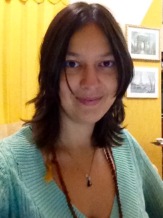
Greatest Women in Translation: Regina Alfarano

^3BD2FAACEAC897D21BE68030808476304DC722B6E37A1C22D8^pimgpsh_fullsize_distr

Dear readers, welcome back to our Greatest Women in Translation interview series!

I doubt anybody else enjoys this series as much as I do. I love it! Meeting new people, learning more about them in order to ask the questions, reading their amazing answers…

And today, once again, it’s with a great pleasure that I introduce you to the lovely Regina Alfarano, nominated by Luciana Meinking.

Welcome, Regina!


melissa harkin

1. Let’s start talking about your “firsts”. You were part of the team that founded the second translation university course in Brazil, back in 1971. A few years after that, you also joined the staff starting the translation course at USP. Additionally, you founded the first publishing company specialized in translation publications in São Paulo, Alamo, and the first translation journal in Brazil, Tradução & Comunicação. I can only conclude you had quite an important role in introducing translation studies in Brazil. Could you tell us a bit more about these experiences you had?

Those were very exciting years! And undoubtedly, times of fighting hard battles as well. Translation was not recognized as a specific area. It was seen as a “branch” of Language Courses. So, a university course was considered “unthinkable”. I heard – from active interpreters then – questions like: “Do you really think you can teach students to be translators?” “Do you honestly think Translation can be a course on its own?” Well, I am glad it did not take too many years to see Translation and Interpreting as they were originally thought to be and as they had already been in other countries! The experience was different at Ibero-americana (from 1971-1985) and USP (1979-2000). Ibero-americana held an undergraduate program, while USP held a graduate program in Translation only. Both contributed immensely for the professional development of both areas. The first translation journal – Tradução & Comunicação – was one of my most gratifying achievements. Although aware of the groundbreaking character of such endeavor, I was flabbergasted when right after Volume 1 was launched I received a letter (those were old times [1981], when communication was carried out through letters!!!!!) from the Fedération Internationale des Traducteurs (FIT) with an invitation to present the journal at their International Congress in Vienna, Austria. META was the only translation journal in the Americas (Montréal) at the time, so Tradução & Comunicação was greeted sparklingly and immensely welcomed.

2. According to your own words, one of the most interesting projects you were ever involved in was The translations of William Kennedy in Brazil while being a Fulbright Scholar at the New York State University at Albany. Why was it so interesting?

First of all, being a Fulbright Scholar was, in itself, extremely gratifying. A Fulbright Scholar in the US enjoys high respectability and is recipient of many privileges. Secondly, only in my post-doctorate could I dedicate my research to Translation Studies! USP would not accept translation projects for Master’s Degree or PhD back then. Of course my background in American Literature (Master’s Degree) and British Theater (PhD) were of great help, as was my background in Language and Linguistics. I had visited Albany before, very briefly, after reading William Kennedy’s trilogy – his Albany trilogy. This was 1990. The trilogy was added by a number of books later on. But in 1990 I was absolutely taken by the trilogy – Ironweed, Legs and Billy Phelan’s Greatest Game – and while in the United States, I decided to visit Albany. That visit increased my interest. Back to Brazil I found the translation for the 3 books. Although a trilogy, and practically three books as three chapters of one encompassing work, each was translated by a different translator, and each clearly suggesting to be totally separate. Therefore, the Albany area and its social and cultural scenario – the very core of Kennedy’s trilogy – were lost. Not only that had been lost! I decided to call the publishing house of Ironweed (Vernônia, in the Portuguese version) to try to contact the translator and understand why Kennedy’s language style had been changed (just one example: all swearing names were eliminated). I was informed that the translator could not be contacted. She used a pseudonym and had asked not to be identified! (At a time of such hard struggle for translators’ visibility, rights and copyright.  I was very active both with ABRATES [Associação Brasileira de Tradutores] and SINTRA [Sindicato Nacional de Tradutores], had created ABRATES-SP, and acted as a Director of ABRATES and President of SINTRA ). And worse: she was very religious, and did not approve of swearing, so, she eliminated all the swearing words in Ironweed!!!!!!!!!!!! I was lucky to interview Mr. William Kennedy and was embarrassed to inform him of the unbelievable fact! Mr. William Kennedy had bought the house where Billy Phelan had lived, and not only preserved it but kept it untouched. It was the first and only time I actually visited the physical scenario of a book! The building, the furniture, glasses, lamp fixtures! And William Kennedy sitting in Billy Phelan’s chair and talking about his trilogy! It could not have been more interesting and more of a privilege! I was even more embarrassed, however,  when he said he had never been paid for the copyright of the books published in Brazil!!!!!!!!!!!!!!!!!!  Not one cent! Not one letter! How horribly embarrassing could that be???? I had the opportunity to meet Mr. William Kennedy one more time (although very briefly) in Paraty, at FLIP 2010. As one of FLIP’s guests he had very busy days and of course was highly requested by participants!

3. You describe your first experience with the translation practice as “a scuba diving initiation”. Could you tell us about your experience and how it shaped your translation career?

I was 18 years old and had just returned to my hometown (Limeira, SP, Brazil) from my one-year AFS exchange program in the US. Someone called from a local hospital. They had just received new equipment imported by a wealthy man who, nearly dying, would have his last chance if the equipment could be put to work. So, they had the “brilliant” idea of calling an 18-year-old whom they thought would translate the manual. As much as I tried to tell them – as I already knew back then, in 1965, that speaking a language did not mean I would be able to translate, let alone a manual – the pressure was so high (‘The man will die if this does not work!’) that I went to the hospital. A piece of equipment, a team of medical professionals and technicians and myself, scared to death. As I translated the instructions I thought ‘I will be the next one to need emergency help here…..’. But slowly but steadily the team started activating the commands – the equipment worked and the man was saved! I felt as if a plow had gone over me! Sweating, hardly breathing, exhausted! But relieved! Would that be the reason why I would never, ever come close to translating manuals? The experience may have shaped my translation career in the sense that I do not, by any means, translate technical material, manuals, and the like. But yet, I do translate medical material, so, it may have been the “scuba diving initiation” to show the challenge, the excitement and the gratification translation can offer.

Translation is not only about languages, knowledge, cultures, and all that comes with it, of course, but about those using it for those purposes: people.

4. Besides this first experience you had, you also say you had total immersion experiences that shaped your areas of specialization (poetry and medical translation). Could you tell us a bit more about them?

When teaching translation I used to say to my students that only poets could translate poetry, which explained why I never included poetry in my Literary Translation Courses. At some point in time, Haroldo de Campos asked me to translate the speech he was going to deliver at a ceremony to honor Octávio Paz. The speech included some poetry. I froze when I received the originals, and immediately talked to Haroldo about it. He said he would give me support if I needed – how would anyone in this world refuse a request by and support from Haroldo de Campos? I decided to take the challenge! Of course I said I would send a first version for Haroldo’s reading, suggestions, etc. etc. To my total astonishment, he did not make any changes at all. And to my double/triple astonishment, sometime later I received a call from Régis Bonvicino, who was organizing a poetry anthology for the Brazil Exhibition in Paris. He invited me to translate Contemporary Brazilian Poets, and before I had any reaction, he added: “Haroldo said you would say you do not translate poetry, but that is not true, you do translate poetry, and he has recommended you”! Again, how could anyone refuse such invitation! And Desencontrários (Unencontraries) was my first delightful experience translating poetry. Others – just as delightful – followed, and I am glad to say I truly enjoyed ‘every word/verse/rhyme’. Working with Haroldo de Campos was most enriching, as expected. Sitting with him, reading poems and translations – invaluable and unforgettable!

As for medical translation, I was caught having to check reference material for one of my projects. Those references showed so many translation problems that they could hardly be useful as references. So, I had to search, re-search and re-search for my research! The project I was involved in included doctors’ research, and again and again, high reading volume. Then, it led me to FDA material research. As the project was of high relevance, I was very involved and of course wanted to do a good, reliable job. Extensive reading and research called the attention of the doctors involved and they recommended me for an even larger project that was medical-related. After detailed information I realized I could face the challenge. That was the beginning of a fast-moving dive into medical translation. One day, my husband, a medical doctor himself, came to my desk, saw the material (we used many dictionaries back then, and many typed copies of translation….. and re-typed pages…..) and asked me: “Are you translating medical texts?” I answered I had been, for some time. He was very surprised! So, it all had to do with my own projects – it all led me quite naturally. The long-lasting AIDS projects both in Brazil and in the US were of profound involvement and partnerships. Thanks to my graduate Translation students at USP who helped me, Brazil was the only country to launch AZT on the same day and at the same time as the US. I was honored to have translated presentations by top Brazilian scientists and researchers on the model AIDS prevention project Brazil developed (and unfortunately interrupted in recent years). The bridge between poetry and medical – as odd as it may seem at first…. – reached its apogee when I translated one of Nelson Ascher’s poem – Mein Herz – from Portuguese into English. As soon as he got my version he called and asked me: “Are you a physician?” “Why do you ask?”, was my reaction. “Because you translated this poem so beautifully, and it sounds ‘medical’”! Coming from a translator of such stature, I could not doubt the ‘bridge’ was viable (and enjoyable!).

5. You say stress and adrenaline are integral parts of translation. Why and/or how?

It has been proven that interpreting is the most stressful profession in the world. The study compared interpreters and surgeons! So, stress and adrenaline are part of the very nature of interpreting, of the fantastic decision-making process and rendition. Interpreting is very often referred to as ‘oral translation’. I would say that is too simplistic! But stress and adrenaline are also integral parts of translation. Clients’ turnaround needs, clients’ reviews of originals – so often – clients’ updates for materials already translated, clients’ requests for additions. And, of course, in no time at all! Clients traveling all over the world – all those requests to be delivered on time and wherever they are. The only way to meet those needs is to draw a map and have color pins to show who is where – Brazilians in Asia, Europeans in the Americas, Americans in Europe. Time zones are absolutely crucial, and projects overlap, since changes were requested after projects had been delivered. ‘The project is over’ – wishful thinking! It does come back….. and back again. When it comes to medical projects, that is potentiated. Huge projects come back for updates two, three, four years later. Many a time, clients’ staff has worked on interim versions (‘minor’, as they say…..). Medical records to be translated for patients who must travel for medical care. Documents required to import medications for all sorts of patients (and many times, children). It is an extremely stressful cycle, fighting against time and having to comply with bureaucracy. Interpreting doctors, nurses, patients and family members about very serious conditions can be the most stressful and the most intense of all experiences. Clients, medical staff in Brazil and all over the world watch the very personal, and many times very sad, testimonials, which must be rendered as any other interpreting session. To be honest – not at all like any other interpreting session. Stress and adrenaline can hardly be measured. And although trembling voice must be avoided, an  interpreter is not always successful when others around are already shedding tears.

[The translation profession] rewards the cumulative years of experience, which is to say, age counts positively; it encourages and demands ongoing learning, which is to say, it is intellectually healthy; it also demands recycling and updating, which is to say, it is continuously evolving; it fits in wonderfully with self-employment, which is to say, one can—or tries to!—manage one’s own working days and hours.

6. You give your students two key pieces of advice: 1. Do not charge less than you deserve for your work; never, ever charge more than you believe you deserve for your work.; and 2. Choose what you really like to do as a profession, and above all, have fun doing it. Why do you think these are the most important pieces of advice to give to translation students?

Dignity is crucial in life – personal life and professional life. Every professional deserves to be compensated for the work done, which goes without saying. But competition may interfere, and ‘professionals’ trying to find jobs unfortunately do charge humiliating fees. So, that is the first part of the first piece of advice: do not charge less than you deserve and the professional field finds to be common sense. And how to find out? Very easily: through professional associations, translation unions, international associations, peers. Competition must never interfere with dignity. On the other end, if a professional is aware of how to charge for the work done, that is what should guide his/her attitude – never, ever charge more. Translators are so often, too often in fact, faced by urgency, by extreme clients’ needs (a few examples above), by the literal plea ‘charge whatever you want’. Of course there are urgency fees, but that is a different issue altogether. There are also pro-bono projects, which are extremely important, gratifying, and no doubt made evident by their own nature. As for regular projects, translators must present their fees very clearly, from the start. Clients should ideally receive a document which shows all services to be rendered, all situations under which they can be rendered, and just as translators expect clients to comply, so must they.

As for liking what we do as a profession, and above all, have fun doing it, I pose a question: how do we feel every time we have to do something that we do not find pleasant, or likeable? It is definitely not a good feeling. When involving others, the result will certainly not be satisfactory. When involving professionals, it can be nearly disastrous! Translation in itself is about making decisions. So, the crucial decision is: I want to be a translator, I like to be a translator, I enjoy what I do, and I have fun doing it (despite all the stress). Then, the decision making process at the core of translating will flow more smoothly. It would never flow otherwise, I am sure.

7. Now it’s your turn to nominate someone you admire and that is a great woman in translation.

I can think of a  number of great women in translation. The one I choose to nominate is Angela Levy. A pioneer in interpreting in Brazil, a prominent translator and outstanding translation/interpreting teacher, Angela has trained and inspired so many translators and interpreters. Angela is to be admired and respected as a professional, as an amazing human being, and as a long-time peer and friend.


Regina, I sincerely appreciate you accepting Luciana’s nomination and my invitation, and taking the time to answer my questions. It was an honor to welcome you on my blog. Thanks a lot! 🙂

Top 100 Language Lovers 2016

TLL_pic2_400x400

Here I am, once another year, asking for your help to vote for me in the Top 100 Language Lovers 2016, a competition hosted by bab.la and Lexiophiles. This is the third consecutive year I take part in the competition. In 2014, I got into one of the Top 25 Language Twitterers (19th place) and, in 2015, I got into the Top 25 Language Twitterers again (19th place) and Top 25 Language Professional Bloggers (20th place).

This year, I got nominated for all possible categories: Twitter profile, blog, Facebook page and YouTube channel. And now I need your help to vote for them, should you like them, of course. 😉

Here’s how it works. It’s pretty easy and it won’t take more than 5 minutes, I promise.

To vote for this blog in the Language Professional Blog category, click here, hover over Carol’s Adventures in Translation, last on the fifth line, and click on the Vote button that appears.

To vote for my Facebook page, click here, hover over Alberoni Translations, last right on the first line, and click on the Vote button that appears.

To vote for my Twitter account, click here, hover over Caroline Alberoni, first on the fourth line, and click on the Vote button that appears.

And last but not least, to vote for my YouTube channel, click here, hover over Caroline Alberoni, last on the second line, and click on the Vote button that appears.

You can also find all the categories when you first access the website on the upper left side of the page. You can vote only once for each category. Voting phase ends in June 6th.

I’d really appreciate it, if you enjoy any or all of my pages, if you could vote for them. 🙂


Aqui estou eu, mais um ano, pedindo a ajuda de vocês para votar por mim na competição Top 100 Language Lovers (100 melhores sites relacionados a idiomas) realizada pelo bab.la. É o terceiro ano consecutivo que participo da competição. Em 2014, fui classificada como 19º melhor perfil do Twitter. Em 2015, fui novamente classificada como 19º melhor perfil do Twitter e como 20º melhor blog.

Neste ano, fui indicada em todas as categorias possíveis: perfil do Twitter, blog, página do Facebook e canal do YouTube. Agora, preciso da ajuda de vocês para votar por elas, caso vocês gostem dos meus canais, é claro. 😉

Para votar é muito fácil e não leva mais que 5 minutos.

Para votar neste blog na categoria Language Professional Blogclique aqui, passe o mouse sobre Carol’s Adventures in Translation, última coluna na quinta linha, e clique no botão Vote que será exibido.

Para votar na minha página do Facebookclique aqui, passe o mouse sobre Alberoni Translations, última coluna logo na primeira linha, e clique no botão Vote que será exibido.

Para votar na minha conta do Twitterclique aqui, passe o mouse sobre Caroline Alberoni, primeira coluna na quarta linha, e clique no botão Vote que será exibido.

Por último, mas não menos importante, para votar no meu canal do YouTubeclique aqui, passe o mouse sobre Caroline Alberoni, última coluna na segunda linha, e clique no botão Vote que será exibido.

As categorias podem ser todas acessadas na parte superior esquerda da página, caso você queira continuar no site. Só é permitido um voto por categoria. A fase de votação vai até 6 de junho.

Se você gosta de seguir qualquer uma das minhas páginas, seu voto será muito bem-vindo! 🙂

Por que você deve ir ao Congresso da Abrates?

12552626_1057347087661932_2196468356575178684_n

O VII Congresso Internacional de Tradução e Interpretação da Abrates começa oficialmente daqui a exatamente duas semanas. Caso você já tenha feito sua inscrição, ótimo, nos vemos lá. Caso ainda não tenha feito, pense bem e leia este texto com carinho, pois só tenho motivos irrefutáveis para você participar. 🙂

O primeiro Congresso da Abrates do qual participei foi em Belo Horizonte, há três anos, quando ele passou a ser anual e não mais bianual. Depois disso, não perco mais nenhum. Fui ao Rio de Janeiro no ano seguinte e a São Paulo no ano passado, e vejo ele ficar cada vez maior e melhor com o passar dos anos. Se, na minha opinião, a edição do ano passado foi incrível, não consigo nem imaginar como será a deste ano.

Se você foi a uma das últimas edições sabe exatamente do que estou falando. E se pensar como eu, não perde esta edição por nada.

Mas vamos aos números da edição do ano passado:

– Participantes: quase 900.

– Palestras: mais de 70.

Você consegue ter ideia dessa proporção e do que ela significa? É impossível você não achar nenhuma palestra interessante.

Na minha opinião, estes são os benefícios de participar de um evento desse porte:

– Primeiro motivo fundamental: aprendizado. Como eu disse, é impossível não se interessar por nada, pois são várias opções no mesmo horário. Os assuntos são os mais diversos possíveis, apresentados por profissionais estabelecidos no mercado, tanto nacionais quanto internacionais. Todos têm a aprender: tanto iniciantes quanto profissionais já estabelecidos.

– Segundo motivo fundamental: networking. Pense bem: você tem 900 possibilidades de conexão. Estou falando de conexões reais, olho no olho, tomando um cafezinho, trocando uma ideia, formando parcerias. Você tem a chance de encontrar, em um só lugar, todas aquelas pessoas que você só conhece pela internet. E ainda tem a incrível chance de conhecer inúmeras outras pessoas novas, além de poder conversar com aquele palestrante ou tradutor que admira em um ambiente mais descontraído que possibilita essa abordagem.

– Terceiro motivo importante, na minha opinião: inspiração. Você sai de um evento desses extremamente inspirado, cheio de ideias, com uma vontade fantástica de trilhar caminhos novos e promissores. As baterias são recarregadas de uma forma que nenhum período de férias, seja onde for, consegue fazer, porque você volta inspirado para trabalhar e fazer acontecer.

– Último motivo, mas não menos importante: descanso. Embora você esteja aprendendo e toda a carga horária seja, de certo modo, cansativa, é uma oportunidade de sair da toca, ver pessoas conhecidas e novas, tomar um café, almoçar, passear… É a união perfeita do útil com o agradável. Melhor, impossível! Além das festinhas, é claro. Teremos um happy hour organizado por mim, pela Dayse Boechat e pelo William Cassemiro na quinta-feira (mais informações abaixo), o coquetel de abertura do próprio congresso na sexta e um jantar no sábado.

Agora vamos ao investimento, afinal de contas, é um investimento profissional. O que você realmente ganha com isso, além do já exposto acima?

– Além das 95 opções de palestras, este ano teremos cursos pré-congresso. Eles são pagos separadamente, mas os inscritos no congresso têm desconto. É a chance de você fazer cursos presenciais em diversos temas.

– Haverá duas palestras de treinamento do Studio 2015 com direito a certificado na programação normal.

– Espaço reservado para agências, nos quais os participantes poderão conversar diretamente com os recrutadores com a possibilidade de fechar parcerias.

– Presença de grandes empresas de CATs, como memoQ, MateCat, Memsource e Wordfast.

Ou seja, é um investimento que vale cada centavo. Além de ser possível parcelar o valor da inscrição, a Abrates também tem parcerias com hotéis que oferecem desconto aos participantes.

Veja a Programa preliminar do congresso (quase final).

Minha palestra, Como usar o Facebook como ferramenta de divulgação do seu trabalho, será no sábado, às 14h10. Além disso, também participarei da apresentação do Programa de Mentoria da Abrates no mesmo dia, às 15h10, com um coffee break especial da mentoria após a apresentação.

Sobre o happy hour na quinta-feira:

Local: Inverso Bar, Rua Mena Barreto, 22 – Botafogo
Horário: 18h

Caso queira se juntar a nós, basta confirmar presença aqui nos comentários ou entrar em contato diretamente comigo por e-mail ou qualquer outra rede social.

Esses são ou não são motivos irrefutáveis para você participar do congresso? Vejo você daqui a duas semanas?


Guest post: Yoga for translators

Welcome back to our guest post series, dear readers!

Our guest today is also from my hometown, Rio Claro (SP, Brazil). She was born in Descalvado, SP, but moved to Rio Claro when she was 5. However, she can actually be considered a nomad, because is frequently moving from one place to another in the world. She has lived for a while in Australia and her last adventure was in India, early this year.

Although being from the same hometown, we actually met on a bus back home from the last Abrates conference (2015), where someone switched seats with her and she ended up sitting next to me. Talk about destiny (or coincidence, whatever you call it)!

Welcome, Sofia Pulici!

Foto ilustrativa

How translators can benefit from yoga

Greetings to all the readers, to my teachers & masters, and to Carol, for inviting me to write this guest post!

Yoga has been a part of my life for nearly six years now. I was first drawn to yoga as a young adult. I liked the fact that it enables you to strengthen and calm the body and mind, and connect with yourself – but it was not until 2010 that I started practicing yoga regularly. Back then, I had no idea that I would benefit so much from it, and that regular practice would have such an enormous impact on all aspects of my life, including my work routine.

Yoga has helped me to become much more aware of my body and mind. As a consequence, I started making changes to my sitting posture and the position of my hands on the keyboard, while working. I noticed that my mind was calmer to reply to emails, communicate with direct clients, colleagues and agents, and reflect on translation options. What amazes me the most is that this all seemed to happen naturally – as my mind became more alert and more aware of what was happening, I started to become more aware of my sitting posture, how my back is supported, how my hands bend or move while typing, how anxious or calm my mind is when faced with the daily workload, etc. This awareness allows me to make instant adjustments, paying heed to what my body or mind is trying to tell me.

For some time now, I have been keen to share all this information with my colleagues and fellow translators, so that those interested in starting this practice might also benefit from it. Below are some of the benefits that can be gained through regular yoga practice:

  • Releasing tension – as translators, we know all about tension, right? Tension can build up in the shoulders, neck and back muscles, in the eyes, even in the brain…
  • Releasing stagnant blood from parts of the body that we do not move constantly – we sit for long hours and, even if we take regular breaks and do physical exercise, we may forget about toes, the back of the legs that are compressed against the chair, etc.
  • Lubricating joints, including hip joints – this improves mobility (remember we experience long periods of sitting!) and helps prevent injuries
  • Strengthening muscles – particularly strengthening the back and core muscles, which helps when sitting for long hours
  • Irrigating the brain – excellent for the long hours of mental processing required of translators
  • Stretching the muscles and spine – also good when sitting for long hours, as it helps  align the spine, and causes energy and blood flow better
  • Massaging internal organs – helping maintain perfect health of the organs, particularly in the lower abdominal region, which are compressed when we remain sitting for long hours
  • Balancing and integrating the right and left hemispheres of the brain – positively influencing cognitive processes, helping with concentration and focus, and enabling us to learn better
  • Releasing gases from the body – which, depending on the foods we eat, can accumulate with long hours sitting down
  • Strengthening eye muscles – with eye cleansing techniques that strengthen the eyes and maintain eye health

Yoga has beneficial effects on the mind, and it helps reduce anxiety and increase concentration. A clearer, calmer mind can be helpful when negotiating with clients or tackling stressful projects. I have learned that, instead of getting anxious, jumping to conclusions, or getting stressed over something a project manager or client has said, for example, with regular practice I am able to recognise these stressful moments more easily, and react more calmly and consciously.

Yoga is not just about assuming certain body postures, called asanas. Other practices, such as meditation, yoga nidra (full body relaxation and deep state of consciousness), pranayama (breathing practice), and mantra chanting, among others, can all help you connect with your body and mind, become more aware of what is happening inside you, and be more in tune with your own personality.

Important notes about yoga:

  • Yoga is not something miraculous or supernatural; it helps you connect with and become aware of your body and mind, and remove the layers (misleading thoughts, habits, patterns) that hide your true essence.
  • Although it is not something supernatural, yoga is a serious, subtle practice and should be practiced with the guidance of a qualified yoga instructor who is serious about the tradition. Unless you have had some training or are an experienced practitioner, you shouldn’t try and practice it by yourself at home or following videos uploaded to the Internet. Neither should you attempt to put your feet behind your head or get into an upside down posture just to show off your flexibility – that’s not what yoga is all about.
  • In order to gain the full benefits, you need practice yoga regularly. It is better to have two regular weekly sessions than to practice yoga sporadically, or at irregular intervals.

Thank you so much for such a lovely contribution to the blog, Sofia! It was a pleasure hosting you and reading your post. Good luck on your next adventure!

About the author
Foto SofiaSofia Pulici is a linguist (MA in Applied Linguistics), and a NAATI- and ABRATES-accredited Portuguese/English translator who will have completed 10 years as a translator in June this year. Her fields of expertise are tourism & hospitality, yoga & spirituality, and migration documents to Australia. As a yoga practitioner since 2010, Sofia is committed to improving her yoga learning and techniques; she has studied Vedanta since October 2015, has been learning the Sanskrit language, and is enrolled in a yoga training program. You can contact her through her translation blog, Facebook page, or LinkedIn.
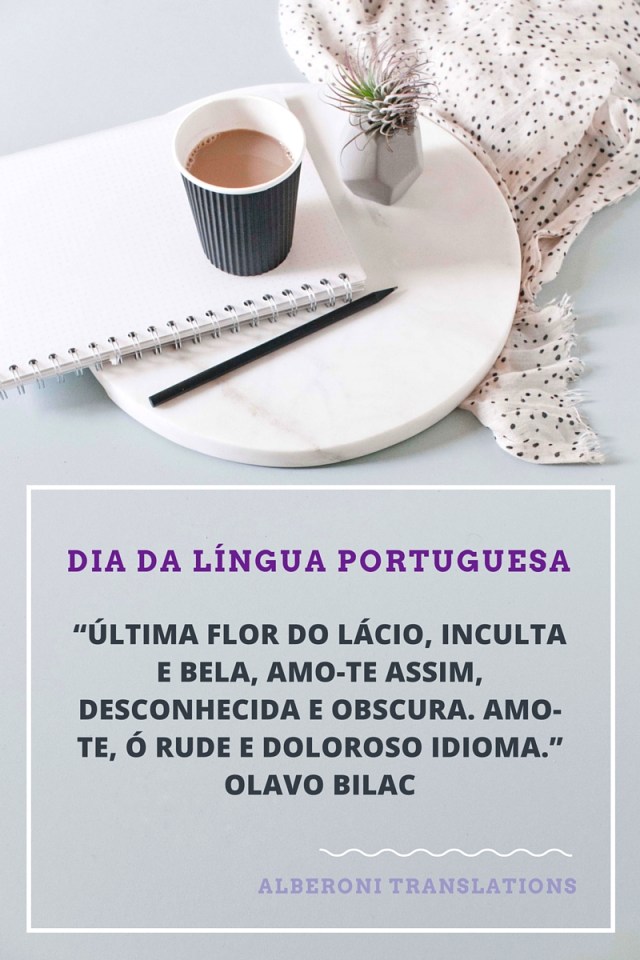
Dia da Língua Portuguesa

plan a surprisebirthday partyfor yourboyfriend-2

Surpresa! Estava eu procurando links para publicar nas redes sociais sobre o Dia da Língua Portuguesa e a língua portuguesa em geral, mas tem tanta coisa legal que resolvi juntar tudo em um só lugar. Embora eu estivesse adorando a ideia de encher a linha do tempo de vocês de links e não deixar ninguém trabalhar hoje… 🙂

Bom, quem curte a minha página do Facebook e/ou me segue no Twitter, já sabe que hoje é Dia da Língua Portuguesa. A data foi instituída pela Comunidade dos Países de Língua Portuguesa (CPLP) em 2009. Especificamente no Brasil, dia 5 de novembro foi a data instituída em 2006 pelo presidente Lula como Dia Nacional da Língua Portuguesa. A data foi escolhida por se tratar do dia de nascimento de Ruy Barbosa, estudioso da língua portuguesa no Brasil. Já em Portugal, a data comemorada nacionalmente é 10 de junho (instituída em 1981), em homenagem ao icônico poeta Camões. Para não confundir, há também o Dia Internacional da Língua Materna, comemorado em 21 de fevereiro.

O português tem sua origem no latim vulgar (falado). Atualmente, 250 milhões de pessoas têm o português como língua materna, segundo a ONU, divididas em 8 países (Angola, Brasil, Cabo Verde, Guiné-Bissau, Moçambique, Portugal, São Tomé e Príncipe, e Timor-Leste). Mais de 80% desses são brasileiros. É a quinta língua mais falada do planeta.

Hoje, minha comemoração será dando a primeira aula do módulo “Português para tradutores” do curso Tradução 360º do Netwire Learning Center. Além desse módulo, também darei uma oficina de português nos meses de setembro e outubro, também para o NLC. Mais informações em breve. Fiquem ligados! 😉

Caso vocês ainda não saibam, também dou dicas de português no Periscope todas as segundas-feiras, às 14h. Basta me seguir no Periscope (@Alberoni) e você será notificado quando eu estiver on-line.

Espero que gostem dos links que separei para vocês:

Revista Língua
Ora pois, uma língua bem brasileira
Quite the Brazilian language, I say
Reino Unido considera português um idioma com futuro
Blog “Português é legal”
Entrevista: CPLP e Dia da Língua Portuguesa e da Cultura
Porta, portão, porteira: conheça a rota do “caipirês” falado no Estado de São Paulo
Feliz Dia da Língua Portuguesa
Preconceito e a língua que falamos: linguística para leigos
Brazilian Portuguese Phrasebook
Language differences between English and Portuguese
Instituto Internacional da Língua Portuguesa
Bilingual post by Melissa Harkin on Facebook
Portal “Terminologia”

Feliz Dia da Língua Portuguesa! Lembrem-se: usem-na sem moderação, mas com sabedoria. 😉

Greatest Women in Translation: Luciana Meinking

^3BD2FAACEAC897D21BE68030808476304DC722B6E37A1C22D8^pimgpsh_fullsize_distr

Welcome back to our interview series! Let’s start the week and month inspired by another one of our amazing Greatest Women in Translation? Then please welcome another Brazilian translator, Luciana Meinking, nominated by Melissa Harkin.


Luciana meinking

1. Melissa Harkin nominated you to be our next interviewee. You two had a professional partnership that you described as extraordinary and one of those coincidences of destiny. Could you please tell us a bit more about how you two met and how this partnership started?

Melissa used to work for the same company as my sister. By that time she was still living in Brazil. I think one day Melissa might have told her coworkers that she was looking for freelance translators and that’s how my sister came to ask me for my resume. In fact, Melissa and I never met in person, which makes this story even more interesting (we are planning to meet in person this coming November during the ATA Conference in San Francisco!). I sent Melissa my resume and passed the translation test she requested me to submit. With the first job assignments I got from her, our relationship started to develop, and I am glad to say that I am extremely glad to have worked for her. It is hard to find someone who is also very detailed and whose professional standards are very similar to yours. I am extremely grateful to have had this opportunity – she was certainly a great peer and friend!

2. A lot of people treat their peers as competition and do not consider other translators may also be potential clients or even professional partners in the future. What’s your opinion on the subject?

I guess that’s true and it is something you see on a daily basis, especially if you are working as an in-house translator. It is surely conditioned by the difficult market and people’s fear of losing their jobs or clients. It might sound a bit idealistic but I would like to think about this in terms of finding the best professional partner or partners to actually come up with a good final product.

3. You started translating by chance while taking your PhD in Germany and, after that, gave up your area (Literature and Linguistics). Why did you change your mind and decided to venture into translation?

During the final year of my doctorate in Germany I was still figuring out what to do with my life. First I thought I wanted to pursue an academic career in the university, but the market was also not very good for that and the strong competition didn’t seem to me by then to be a path that I was willing to tread. So starting in the translation industry also happened per chance when an acquaintance asked me if I wanted to translate technical texts. It all seemed very interesting, getting to know a CAT tool for the first time, seeing how fast you can translate and how much fun it is to keep a terminological database. I guess I noticed quickly that I enjoyed translating and proof-reading.

4. You currently work as an IT QA tester. Could you please describe what you do exactly?

My work consists basically of localizing strings and running functional and linguistic quality assurance tests for the client’s products. It is very different from what I have been doing so far in terms of content, but it is an opportunity to learn new skills and meet new people.

5. You say a freelance translator’s life working home office is quite lonely. Do you prefer to work in-house as compared to home office? In your opinion, what are the pros and cons of working in-house x home office?

I am not really sure if I prefer one or the other. Right now, I enjoy working in-house because I have met wonderful people who hopefully will become friends. I think one of the cons of working in-house is, for instance, the fact that you have less control on the final product, which consists of patches of texts several other people have worked on and whose standards or linguistic preferences are not necessarily the same as yours. But this is actually also part of the learning process, I mean, learning to negotiate ways of getting to the same goal. I also think that in-house working also produces more unveiled competition. As for the pros, again, meeting people and actually having the opportunity to catch a glimpse on people’s lives is a very positive thing. It’s about having a bit of a change in your daily schedule, really, and having the opportunity to socialize. Home office work is quite lonely indeed and can be really tough. Apart from that, I guess you can produce a much better outcome by working on your own and exchanging information with a professionally trustworthy partner whenever you need help with a specific text or subject.

6. You say you do not have the typical freelance translator profile. What is this profile, in your opinion?

Maybe that is extremely subjective, but what I meant by that is that the typical freelance translator profile is someone who is willing to engage in some self-promoting and marketing strategy in order to find more clients, people who keep blogs and produce interesting socially engaging tools. I admire people who have the energy and especially the time to do this.

7. Now it’s your turn. Who do you nominate as one of our Greatest Women in Translation?

Now, since I cannot nominate Melissa Harkin anymore (oh, no!), I chose to nominate someone I have never worked with before but who was, maybe without even knowing it, a role model for me in my career as a translator. Her name is Regina Alfarano. She was my first instructor at NYU, when I took the online Certificate in translation course offered by that institution. So read this nomination also as homage to good teachers and educators, those you still remember after years have passed by.

Regina was an extremely dedicated and disciplined instructor, but, above all, in these hard linguistic times, you could see that she had that love for the Portuguese language that is, unfortunately, lacking in many people nowadays. You can see that she has a very strong linguistic background and that, without being a purist, she also cares for the language and what people are actually doing to it nowadays.

Mentoria em tradução

Cabeçalho

O que é

Embora o termo mentoria seja recente, principalmente no Brasil, o conceito faz parte das nossas vidas de maneira informal desde que nascemos. Em sua forma básica, trata-se do processo natural no qual somos orientados no melhor caminho, incentivados a fazer mudanças ou impulsionados a evoluir. Por proporcionar efeitos altamente significativos, esse processo natural começou a ser estudado e pesquisado profundamente a partir dos anos 70 (no Brasil, somente há cerca de 10 anos). Foi, então, adaptado ao uso formal, estruturado como recurso de orientação e desenvolvimento profissional. No Brasil, a mentoria como ferramenta de desenvolvimento profissional está dando os primeiros passos. Na tradução, a ATA (American Translators Association) foi a primeira a introduzir um Programa de Mentoria, seguida recentemente pela APTRAD (Associação Portuguesa de Tradutores e Intérpretes) e agora pela Abrates (Associação Brasileira de Tradutores e Intérpretes).

Como funciona

A mentoria é um processo no qual o mentorado é orientado para facilitar e agilizar seu desenvolvimento e evolução por um profissional mais experiente que dedica seu tempo para compartilhar conhecimento e experiência com base principalmente no exemplo. Por sua experiência e por já ser consagrado no mercado, o mentor serve como objeto de respeito e admiração, um exemplo a ser seguido. Na tradução, esse processo ajuda o tradutor iniciante ou recém-formado a adquirir uma base mais sólida sobre como funciona o mercado diretamente de alguém que já está nele e que pode falar com propriedade sobre o assunto. Com isso, o mentorado obtém o caminho para encontrar as respostas (não as respostas em si) de que precisa de forma mais rápida e eficaz.

Benefícios são gerados para todas as partes: mentorado, mentor e organização. Além do aprendizado geral sobre o mercado e a profissão, o mentorado tem a chance de ampliar sua rede de relacionamentos. O mentor, por sua vez, além de ser reconhecido e de também aprender com o mentorado, obtém satisfação pessoal e profissional. Já a organização, adquire experiência organizacional e aprende com o desenvolvimento dos mentores e mentorados. Ou seja, todos saem ganhando.

Caminho das Pedras

O Programa de Mentoria “Caminho das Pedras” da Abrates é totalmente gratuito. Foi lançado no início de março e já é sucesso absoluto! No momento, há 20 pares mentor/mentorado em andamento e já há uma lista de espera.

Para se inscrever como mentorado, é preciso:

  1. Ser associado da Abrates e estar em dia com suas obrigações; e
  2. Ter no máximo dois anos de experiência como tradutor/intérprete; ou
  3. Estar no último ano do curso de tradução/interpretação/letras.

Para se inscrever como mentor, é preciso:

  1. Ser associado da Abrates e estar em dia com suas obrigações; e
  2. Ter no mínimo cinco anos de experiência na área.

Os interessados são solicitados a preencher uma ficha de inscrição com detalhes pessoais e metas desejadas para o programa. O Comitê de Administração analisa cada ficha e decide, em conjunto, o mentor mais adequado para cada perfil, de acordo com as descrições fornecidas na ficha do mentorado.

Cada programa dura seis meses, contados a partir do primeiro encontro do par. Os pares devem se encontrar por no mínimo duas horas por mês, no formato de preferência dos dois, com frequência também a ser decidida em conjunto. Cada par tem seu próprio coordenador dentro do Comitê de Administração. As reuniões são acompanhadas pelo coordenador designado por meio de relatórios de acompanhamento que devem ser preenchidos pelo mentor e pelo mentorado separadamente após cada reunião. Embora o programa tenha caráter voluntário (de todas as partes), há regras a serem seguidas para garantir a qualidade e o andamento fluido do programa de cada par. Caso essas regras não sejam seguidas, os coordenadores do Comitê de Administração decidirão, em conjunto, sobre a possível exclusão do mentor ou mentorado do programa.

Embora o limite de pares já tenha sido atingido, se você tiver interesse em ser mentorado e estiver de acordo com a regras do programa, envie um email se inscrevendo a fim de que possa entrar na lista de espera. A lista de espera segue a ordem de conclusão de inscrição, ou seja, quando o mentorado é finalmente aprovado no processo de seleção e considerado apto para começar o programa.

Acesse a página do programa no site da Abrates para saber mais detalhes, conhecer as regras e obrigações. Caso tenha qualquer dúvida ou queria se inscrever, entre em contato pelo e-mail: mentoria.abrates@gmail.com.br.

Curta a página do programa no Facebook e siga o perfil no Twitter para ficar atualizado sobre as novidades.


Guest post: Coworking (in Portuguese)

unsplash-bonus

Coworking: um modismo benéfico à saúde da tradução profissional

Dizem por aí que procrastinar é o oitavo pecado capital do homem contemporâneo, mas foi mergulhando nessa sina que eu descobri o coworking. Segunda-feira arrastada, Facebook aberto, feed de notícias pra cima e pra baixo, até que bati o olho no post de um colega anunciando que sua empresa estava de casa nova em um espaço de coworking. Curiosa, cliquei na tag do lugar e em um minuto me encantei pela proposta – ou melhor, fiquei obcecada a ponto de isso ter me rendido uma experiência de vida e trabalho fora do país, um par de palestras e um convênio de abrangência nacional para tradutores – nada mal para uma procrastinadazinha, não? E essa brincadeira só está começando. Mas, afinal, o que é coworking?

A resposta objetiva e superficial para essa pergunta é: um escritório compartilhado por profissionais liberais de diferentes áreas.

A resposta aprofundada (e que dá pano para manga) para essa pergunta é: um fenômeno (re)construído diariamente por aqueles que se propõem viver e trabalhar dentro da recém-nascida ordem da economia colaborativa.

Fruto da virtualização e da globalização do cotidiano, os coworkings são, fisicamente, espaços apropriados coletivamente por pessoas com diferentes objetivos de negócio. Assim, também são temporariamente multifacetados, pois o fluxo de integrantes (os coworkers) é dinâmico e variável. Além de oferecer benefícios diretos, facilmente identificáveis – uma alternativa econômica aos custos estratosféricos do mercado imobiliário/ratatá de infraestrutura -, os espaços de coworking também proporcionam ganhos indiretos, sutis e subjetivos por hospedarem diversidade, sendo, na prática, verdadeiros melting pots do empreendedorismo. Logo, são espaços que os tradutores precisam ocupar com urgência para crescer profissionalmente, até porque coworkar é a solução perfeita para fugir do isolamento do home office e fazer um networking saudável e nada forçado.

Foi experimentando essa prática em Buenos Aires que notei o potencial de transformação que coworkar traz aos seus adeptos. Por não estar em casa e por estar pagando pelo uso daquele espaço, chegava para trabalhar de verdade, com foco. Aproveitei também para cronometrar minha produtividade, comprovando na prática de que eu precisava, em média, de quatro a cinco horas bem trabalhadas para dar conta das minhas metas diárias. Isso me deu tempo suficiente para conhecer a cidade porteña com calma, fugindo do óbvio turístico, e, aos poucos, comecei a cultivar minhas próprias raízes no local. Em outras palavras, ouso dizer que consegui me aproximar um pouquinho do famoso work-life balance ao experimentar tocar o meu negócio em um espaço de coworking. E voltei para o Rio de Janeiro obstinada a espalhar a ideia para as pessoas, principalmente para tradutores como eu.

E desse desejo surgiu, há um mês, o Convênio Coworking para os associados da ABRATES e do SINTRA. A proposta é bem simples e está toda resumidinha no vídeo fixado na fanpage do Pronoia Tradutória. Acredito que estamos vivendo um momento definidor para a nossa profissão, que ganhou visibilidade com a chegada dos megaeventos no país. Portanto, está na hora de darmos as caras para o mundo e conhecê-lo melhor: ver e ser visto é um passo fundamental para desmistificar aqueles mal-entendidos acerca do nosso ofício. E esse esforço não é somente uma questão de autopromoção, mas também serve para semear os frutos vindouros de um mercado mais sadio. Afinal, a (in)formação de colegas e clientes é o melhor antídoto para as más condições que enfrentamos no ramo.

Fico contente em saber que já tem colega procurando os espaços conveniados e dando uma chance para essa prática que vem revolucionando a forma como o homem contemporâneo entende o trabalho. Já ouvi por aí que, no futuro, “coworking” não será mais uma novidade, um modismo; será a regra, a lógica “natural” em que a indústria de serviços se organizará. Se essa aposta vingará, só vivendo para saber, mas nada nos impede de já torná-la uma realidade.

About the author
carol1miniCarolina Walliter é tradutora e intérprete no par inglês/português formada pelo Brasillis Idiomas; filiada à ABRATES, ao SINTRA e à IAPTI. Ativa no mercado da tradução desde 2010, atua principalmente nas áreas de comunicações corporativas, marketing, turismo e tecnologia da informação. Em 2013, começou a estudar o fenômeno do coworking informalmente, na mesma época em que partiu para sua primeira aventura como nômade digital em Buenos Aires. Relatou toda a experiência no blog Pronoia Tradutória, espaço que idealizou para refletir sobre o cotidiano do tradutor contemporâneo e seus desafios práticos. Além de traduzir e interpretar, também escreve para a Revista Capitolina e para a Traduzine.

Greatest Women in Translation: Melissa Harkin

^3BD2FAACEAC897D21BE68030808476304DC722B6E37A1C22D8^pimgpsh_fullsize_distr

Welcome back to our Greatest Women in Translation series! Since our last “interview” was actually a tribute, it was my turn again to nominate someone and restart the thread. Since my first nomination was a foreign translator (Marta Stelmaszak, from Poland), this time, to be fair, I decided to nominate a Brazilian role model. I must confess I’m curious to see where this thread will take us.

Now please welcome Melissa Harkin.


melissa harkin

1. When I created my professional Twitter account, you were the first person I followed. You were my only Brazilian role model. I admired (and still do, of course) your professionalism and your online presence. Could you tell us a bit about your beginning?

Well, I guess my main driver back then was that I was tired of the ‘same old’ pattern in business relationships, regardless of the industry. I was tired of e-mails, machines, lack of customer care, automated replies, etc. I wanted to get personal. However, we are talking about the social media and technology era, so the best way to get personal was to put myself out there using all of that technology, but in a way that seemed I was talking to my clients directly.

That’s when I started adding my picture to all that had my name on it: e-mails, quotes, stationary, social media, etc. I didn’t want to be a logo. I wanted to be me! I wanted people to see a person, an individual, and relate to me.

That was different back then. People in Brazil were not used to business getting so personal. Maybe, that is why a lot of my clients became good friends along the way.

I made sure I replied to everything, even the ‘help me out real quick’ requests from friends that needed to write an e-mail in English and were feeling insecure. I made sure I was replying to everyone’s messages and requests in a timely manner, and I made sure I could add value to their activities on an ongoing basis.

2. You have the most lovely baby boy, Bruno, 1 year old. Although I myself do not have children, I can only imagine how having a baby changes a woman entrepreneur’s life. What advice would you give to a freelance translator who is thinking of having children or is already expecting a baby?

I’m not sure I’m already qualified to give advice in that area. I’m still finding my own new pace and balance. It’s hard, there are a lot of mixed feelings – it’s quite bipolar, actually. One minute you’re dying for some time for yourself, for work and silence, and the next minute you’re feeling kind of guilty about it.

Last year (2015) was a difficult one. I finally realized I coudn’t do all of the things that I did before. I made the decision to focus on getting my job done and decreasing my online presence a bit in order to have more availability to translate. Now that Bruno attends daycare full time, I can go back to adding more activities to my schedule other than just pure translations.

I guess what really helped me out was financially planning my pregnancy ahead of time, so it wouldn’t be a burden when I finally took a break to focus on my son. Two years before getting pregnant I was already buying gender neutral baby items and had two different savings accounts to prepare for the first few months: one for all of the big ticket items and one for 6 months of maternity leave.

There’s not much you can really plan when it comes to having a baby. But the financial part of it is one that you can and I highly suggest you do so. Everything else will probably not go according to plan and you’re either going to have to change your initial plan or just wing it. Whatever happens, don’t lose focus, don’t lose your mind, and ask friends, family and fellow translators for help. I say fellow translators because, family and friends can and will help you on a more personal level, but having good partnerships with fellow translators will literally save your business life when your baby gets sick and you need help with your translations and deadlines.

3. You have recently moved out from Brazil to the USA. Could you share with us the difficulties you faced in the transition and the advantages and disadvantages of working and living in the USA?

I’ve lived here before and my husband is American, so culturally speaking I didn’t really have a hard time moving back. Initially, we were in Florida, and that was hard because we didn’t have any friends there, only my brother-in-law and his family, who lived about an hour away from our home. Having a baby makes the one-hour drive something difficult to take on. We felt quite lonely there, so we decided to move back to Missouri, where my husband is originally from, and to be close to friends and family. That changed everything. We’re happier now, we have people we can count on minutes away from home, we know the place, etc.

When it comes to the translation industry, I can tell you that there are differences in how to do business, such as prices, taxes, ethics, business practices, etc. I’m still learning about all of that here in the US and I do so by networking with fellow translators, attending courses and conferences, reading industry-related publications, etc. It’s been great and business is getting bigger and better on a weekly basis.

4. You work with a pool of translators who usually help you with projects and have already worked as a Translations Manager at a consulting firm. Based on your experience, what are the most common mistakes freelance translators make and, based on that, what advices would you give to translators in general?

Poor reviews and commitment to deadlines. People, please! These are extremely important aspects of being a translator.

How can you deliver a good translation without taking the time to review it? That’s something that drives me nuts. And how can you expect to get more jobs if you keep missing deadlines?

Read the source file before starting your translation so you can get acclimated to the content, take notes on vocabulary, do research, etc. This way, when you start your translation, you’ll not only be more knowledgeable on the content but you will also do a better job translating the material. Take a break after you’re done. Go get some coffee or take a nap and clear your mind. Come back, spell check, read the translation to make sure it ‘sounds’ good and it flows nicely, spell check again, and then deliver your file.

In case of questions throughout the translation that you cannot find the answers to in your research, talk to your client or translation manager. Don’t just send a file with a bunch of comments of what you couldn’t find on your own. Questions need to be asked and answered during the translation process in order to deliver a good product. Skipping this step means you don’t care about that text, the impact it’s going to have on readers, on your client, and on yourself as a translator.

Comply with deadlines! That means you need to plan your day, prioritize, time manage, and make sure your head is clear and focused on the job you’re about to do. Keep track of how much you can translate per day and at what times you feel most productive and use that to your advantage and to plan your work schedule.

5. You are a volunteer translator for Translators Without Borders and also worked for Greenpeace. In your opinion, why is it important to do pro bono work?

It’s important to make this crazy world a better place. It doesn’t matter if it’s pro bono or not. Translators Without Borders is pro bono, Greenpeace wasn’t  ̶ I was an employee there.

Greenpeace taught me a lot, not only about the environment, but about people, community, the future, responsibility and accountability, and all that changed me. There’s nothing more marvelous than helping others, making a difference, and impacting lives. That is why I keep supporting Greenpeace worldwide in any way I can, and that includes having a special discount rate for NGOs that work with causes that are close to my heart, such as slave labor, environmental issues, children, medical procedures for the poor, emergency response, etc.

Translators without Borders (TWB) is an independent non-profit association established in 1993, dedicated to helping NGOs extend their humanitarian work by providing free, professional translations. The funds saved through the use of volunteer translations can then be used by the NGOs in the field, enabling them to extend the scope and reach of their humanitarian work. I fell in love with TWB because it’s not only an opportunity to give back to the global community but also a way of being part of something bigger, something greater, set out to make this a better world for our children and our children’s children.

6. You wrote the English Version of Brazil’s Anti-Corruption Law with Stefano Enepi. Well, you have an educational background in Law and also translate this type of material, right? How is the book useful to law translators? Also, could you tell us a bit more about how you came up with the idea of writing it and how was the writing process?

Because of my legal background, I have always translated all kinds of legal documents and, more often than not, they include quotes from different laws. Throughout the years, I felt there was next  to nothing out there when it comes to Brazilian legislation in English, and we’re talking about a BRIC country that is quite complex to do business with in terms of legal framework. Brazil is also going through a period of sociological change, in which people are tired of corruption and are saying ‘enough is enough’, so when the new Anti-Corruption Law came into effect, it was a no-brainer that it needed to be available in English as well.

I partnered with Stefano Enepi for the review because of his legal background and because he was a resident of Brazil, with deep knowledge of the language and culture behind it all.

It was a great project for us. It put our names out there and it shows potential clients what we can do.

I also chose that particular law for ‘protesting reasons’. I too think that enough is enough. It’s time we come together as a society to make our country a great nation. And fighting corruption is a huge part of that process. I hope our English Version of Brazil’s Anti-Corruption Law helps people, government officials, and companies to do business the right way in my country.

I may no longer reside there, but Brazil is my country and I want to see it become a great nation for our people.

7. What are your plans, goals, dreams, wishes, whatever you like to call them, as a freelance translator entrepreneur, for the short and long term?

Oh boy, where do I start?

Professionally speaking, I’m focused on growing my business and presence in the US right now. In the long term, I’d like to translate more Brazilian laws, work with more NGOs, volunteer more often, and educate others on the Translation and Interpreting market, business, and careers. One dream that I have is to develop continuous education courses for our fellow translators, thereby sharing what I know and have learned thus far as a translator and entrepreneur.

My other focus is my family. My husband and my son are my life and I want to see them happy and healthy every day. I want to grow old with them and be there for them every step of the way. They are the main reason for every good thing in my life.

8. Now it’s your turn to nominate our next interviewee. Who is your role model?

I nominate Luciana Meinking – Brazilian translator with a PhD in Portuguese and English Philology from the University of Freiburg, Germany, and a member of the American Translators Association. She is, by far, the best translator I ever worked with.

Luciana does a great job and far exceeds the ability of an average translator. She always brings her keen analytical skills to the table and is an excellent researcher and linguist. Her many years of study and experience, along with ethics and professional attitude, definitely add value to any translation/localization project. She is trustworthy, consistent, and reliable! I always love working with her and, throughout the years, we learned a lot from each other, especially when it comes to glossary management and researching skills.


Thank you so much for accepting my nomination, Melissa! It’s always such a great pleasure to welcome you on my blog. I loved learning a bit more about you.

Now stay tuned for next month’s interview.


How to manage your Facebook friends like a pro

photo-1453928582365-b6ad33cbcf64-2

Contrary to what most people think, Facebook (and any other social media) is not an alien world where you behave the way you wish, differently from real life. The same rules and common sense that apply in real life must be applied on Facebook as well. And in real life, everybody has several personas played accordingly in each situation. For example, you do not behave the same way in church as you do among your close friends; your boss does not know you as well as your family does. So why share absolutely everything with pretty much everyone who is your friend on Facebook? That picture of you, totally toasted one night at a bar may not convey a good image of yourself to your boss or a potential client (we never know who may have access to it).

“I don’t care what people think about me!”

Well, on social media, you should, especially if it can jeopardize your professional life.

We cannot help it. People will add us as friends on Facebook, regardless of the contact you have had with them and your level of intimacy. In the beginning, I was reluctant to accept requests from people I did not know. With time, I learned that was useless, especially if you are an online person. People may know you, even though you do not know them. Because of that, we may end up having total strangers as friends on Facebook or acquaintances whose friend requests you cannot ignore for any reason, but with whom you do not wish to share absolutely everything you post.

The good thing that most people do not know is that you can create custom friend lists on Facebook in order to easily and quickly restrict what people see, from photo albums to single posts you share.

To create a custom friend list: Scroll down to Friends on the left side of your News Feed. Hover over Friends and click More. Click + Create List. Enter a name for your list and the names of your existing friends you’d like to add to it. Click Create. You can add or remove friends from your lists at any time.

Don’t worry! People do not get notified when you add them to these lists. And you can create several lists. For example, “Family”, “Besties”, “Work”, “Church”, “Strangers”, etc.

You can send someone to a list straight when you send them a friend request: After adding the person, click Friend Request Sent. Select the list you want to add them to. If the list you want is not visible, select Add to another list… to see all of your lists or create a new one.

You can also send someone to a list when you accept their friend request: After confirming their request, hover over the Friends button next to the person’s name still on Friend Requests (at the top of the Facebook page) and select the list you want to add them to. If the list you want is not visible, select Add to another list… to see all of your lists or create a new one.

Whenever you want to add or remove someone from a list, scroll down to Friends on the left side of your News Feed. Hover over Friends and click More. Click on the list you want and then Manage List on the upper right corner of the page. Click Edit List. You can also delete and rename the list here. On this window, you can click on the person you want to remove from the list. Click on the dropdown On This List to add someone from your Friends, Pages or Following list.

Now, when you post something (status updates, photos and others), you can use the audience selector tool (dropdown menu beside Post on What’s on your mind? or with a gearing wheel on your albums). It lets you choose a specific audience:

  • Public: anyone, including people off of Facebook
  • Friends of Friends
  • Friends (+ friends of anyone tagged)
  • Only Me
  • Custom: this is where you are able to choose who you want to share or not to share your post with (lists, specific people, groups, networks)

I suggest you start by creating your lists. Then review every one of your existing friends and send them to specific lists, or take the chance to unfriend them if you feel like doing so. Uncluttering is also a good practice from time to time.

Another great Facebook feature is the Timeline review. It lets you choose whether posts you are tagged in by other people appear on your Timeline. When people you are not friends with tag you in a post, they automatically go to Timeline review. By doing this, you can accept or reject a tag, depending on your wish to show it on your Timeline or not. You can do the same with all tags:

Click on the arrow at the top right of the Facebook page and select Settings. In the left column, click Timeline and Tagging. Look for Review posts friends tag you in before they appear on your Timeline? and click Edit to the far right. Select Enabled from the dropdown menu.

Also in Settings, take the time to review your current settings, especially the privacy ones. For example, you can restrict who can contact you and who can look you up, block users, etc.

Should you have any other doubts, check the Friend Lists section of Facebook’s Help Center.