Do not try to reinvent the wheel

photo-1421429167374-8fc8ab6d0f66

Ow, boy! I know it’s getting pretty common and sounding like lame excuses, but I am so sorry for the absence lately! To make matters worse, even the guest posts are not working as usual. 😦 This beginning of the year is on fire!

Yes, yes, I know, I’m not complaining at all. Actually, it’s completely the opposite, I’m really excited with all the new projects and clients and contacts coming up, all the new things happening… On the other hand, though, I feel really sad not having enough time for the blog. I love this contact with you, my readers. You know, one of my new year’s resolutions was to separate a dedicated time for social media and for the blog, so this wouldn’t happen. I’m glad with my resolutions so far, but I’m failing on this one. I do have to dedicate some thinking and time to working on it. And I will. As to the guest posts, they will definitely return next Tuesday to their normal routine. A couple of the guests had some problems (as you can see, I’m not the only one) and we had to postpone their publishing dates.

Hey, but I do have some great news! We’re making the rounds here! Some great people are mentioning the blog around and we’re getting noticed. Isn’t this great? You should know this is really fantastic! All this love you all share for the blog just makes me keep going, and that’s exactly why I hate letting you down and not posting anything.

Well, moving on to today’s topic, I want to share some thoughts I had yesterday regarding something that happened between a dear client and me. They started working with a new account with better deadlines, but worse rates (I think you may know where this will head, right?), but requiring high quality (oh, really?). Therefore, they told me they couldn’t count on me to do the translation, because I charge high rates (which are not high at all, FYI), but wanted me on board to be the editor, since they were aware of the quality service I provide. Fine. First of all, a glossary with dozens of words. Quick and simple – if the translator had helped, that is. To give you some context, the translation is IT related – this is my area of expertise. Well, our colleague the translator decided he wanted to revolutionize the IT and translated every single term, according to him, “avoiding Anglicism”. I don’t know how it works on other languages, but in Brazilian Portuguese, a lot of words remain in English, it’s already widely-used like that by many well-known IT companies. Well, I corrected most of his choices to what is commonly used in the IT segment. The problem is the translator did not agree with them, and told us, and here I quote, he “wanted to be more inventive”. Also according to him, “that’s the first step to achieve superior quality”.

Well, I won’t go on telling every single word he used to reply to my corrections. The thing here is, unless you translate for the literary sector, you are not free to translate however you desire. It doesn’t matter what you think about something – your opinion is of no value when dealing with technical translations. You need to follow what is used in the sector – and the client’s preferences. All the big boys in IT have already decided what is translated and what is not. If you try to translate mouse using a Brazilian Portuguese word people will not recognize what you’re talking about, right? So why revolutionize?

Quality is not about reinventing the wheel, but following guidelines and rules, using the target language correctly and being fluent, transforming the source into a text that doesn’t sound like a translation.

In Brazil, we usually say someone is trying to show they are working hard (mostrar trabalho), but it does not necessarily mean the person is working or doing the right thing. Therefore, do not try to show you’re a good translator, just translate the best you can, and the rest will work for itself. 😉

Note: I asked out of the project, because I anticipated long hours of arguments with the translator, and that is certainly totally pointless, in my point of view.

Since we’re sharing client stories today, how about you sharing one of yours?

Are you ready for 2015?

8bc72ed7

Welcome back to our weekly posts, dear followers! It took me a while to go back to the normal working routine after three weeks working at a slower pace, but now things seem to be at full speed. New clients, new projects and endless jobs are taking all of my time these last two weeks, my first working weeks of the year, so I’m totally excited!

I’ll be presenting a webinar next week (stay tuned for more info on my social media), I’m scheduled to take the online course Cultural Studies and Modern Languages: an Introduction, hosted by FutureLearn, next month, and I am trying to follow Marta Stelmaszak’s January Business Camp. Though I’m running late on this last one, I’ll definitely catch up soon. Talk about a hectic beginning of the year, right? Phew!

Speaking on hard work, today I read (and shared) an interesting article in Portuguese. The translation of its title is: 2015 will be a difficult year. As it seems, the GDP in Brazil will increase only a bit (if it increases), inflation will persist, interests will be high… However, the author states that, in a difficult year, those who are real professionals stand out, while only those who are not suffer its consequences. Therefore, we (real professionals) should not worry about it, since nothing changes to us. In an “easy” year, on the other hand, anyone thrives — though it may be more due to luck than to deserving it.

According to Daniel Castello, author of the article, in order to thrive in a difficult year, you need a professional plan that needs to be put in practice with discipline. I’d like to add here that not only in difficulty years should you write a business plan, but every year. Looking back to what you have achieved in the previous year, analyzing what needs to change and what worked, and knowing where you want to be in the new year are essentials steps to growing your business and improving your services. Therefore, if you are already used to doing so every year, a difficult year will be piece of cake to you, as you may only need to adjust a few things here and there.

The good thing about a difficult year is that the customer is more rigorous and demanding. Making mistakes is too expensive, so their investment needs to pay off. Therefore, they will only look for those who innovate, differentiate themselves from their competitors, add value and communicate well. Those who don’t take their jobs seriously and stand out will soon leave room for real professionals who are willing to work hard.

I’m ready for 2015. How about you?

Guest post: Blogging for translators

Hi, dear readers! Hope your beginning of the year is as productive and full of great news as mine. So much so that I’m even struggling to find the time to blog! So sorry for not writing last week’s weekly post! 😦 Let’s keep our fingers crossed I can find the time to write this week’s.

Meanwhile, luckly, we have our lovely guests who never let us down. Aren’t I lucky to have them? 😀

Today’s guest, Else Gellinek, will talk about blogging for other translators.

Welcome, Else!

blog-372771_640

Why blogging for other translators can be worth your while

To blog or not to blog?

For some years now, word on the street has been that blogging is a marketing and SEO must for solopreneurs. So I began blogging. At first I thought I had to blog for potential clients. Don’t get me wrong: If that’s the target audience for your blog, that’s wonderful. It just wasn’t really my conversation. I gravitated towards topics more of interest to other translators. Unfortunately, translators are often criticized for keeping to themselves on social media and blogging for each other instead of connecting with clients. I don’t see why you have to choose between the two. Neither am I convinced that blogging for our peers is a lesser option – unless you view blogging solely as a means of generating leads.

Reasons to blog for other translators

My blog – my rules

In her Pillar Box article Don’t blog, just write, Karen Tkaczyk explains why she thinks that we shouldn’t blog just because everyone else is. Indeed, if you don’t feel that you have anything to tell the world, then there really is no reason to blog. Nobody wants to read listless posts written from a dull sense of commitment. Instead, Karen says we should add to forum discussions or write for the bulletins published by translator associations, I think that’s a great idea.

But: Other people’s houses, other people’s rules. On my blog, I am the creator and initiator of content. I decide what I want to write about, how I want to write it and what I regard as valuable information. Excellent translator blogs covering many angles of our diverse profession abound. They could never all fit into existing channels and I don’t think that they have to. On the contrary, they complement the established platforms.

Easy access to information

Translators are spread all over the world. Blogs are one way of keeping up a conversation that is not confined to translator associations or other membership-only clubs. We’re always complaining about translators driving down prices or acting unethically. Establishing a public, easily accessible dialog on translation issues can provide information and thinking points for those who need it most. A simple Google search will turn up a wealth of resources provided by dedicated peers. If this information were communicated in specialized forums, mailing lists or similar channels, it would effectively be hidden from the public eye. Many blogs also feature carefully curated blogrolls and resource lists that point translators to the more specialized channels.

Keeping up the conversation with our peers

Freelancers can easily slip into isolation. Online conversation keeps us connected and in the loop. Sure, we can attend local networking events and conferences or use other forms of social media. But we can also read blogs, which are less ephemeral than Twitter conversations or mailing lists, thus transcending differences in work schedules and time zones. Tuning in at a later time won’t necessarily mean that you missed the chance to chime in.

Adding to the conversation with our peers

Blogging nourishes my introvert soul. It’s public but delivered in a fashion that feels private. For me, blogging has been the best way of tentatively testing the waters of public discussion. Some can show and share their expertise by offering training sessions or webinars, others will enrich forums and mailing lists with what they know and yet others will choose to blog.

Blogging also allows me to take my time before commenting on issues. Discussions in forums or Facebook groups flit by and dart back and forth. Writing a blog post at my own pace affords me the luxury of thinking everything through before committing my thoughts to writing and publishing them. There has been many a time when my initial take on a subject changed due to other people’s thoughts or simply after a good night’s sleep. The slower pace of blogging can protect us from the trigger-happy judgments encouraged by faster forms of communication.

Sharing your view of the world

Finding new topics to post about takes me from the sidelines of the translation community and offers me opportunities to add my voice. We all have a unique take on issues and that is reason enough to be worth listening to – whether an expert or not. Something caught your eye that no one else has noticed yet? By all means, share it with us.

Translators blog about professional development, CAT tools, social media, marketing, cultural issues, associations, good and bad experiences and their personal situations. Their blogs are lighthearted, solemn, scholarly, sarcastic and sometimes angry. Some will share their thoughts through other channels, but these channels may be unknown to me. Were it not for their blogs, I would never have heard what many translators have to say.

Finding clients

Lately, other translators have asked me whether blogging has paid off – and by that they mean financially. A number of direct clients have actually told me that my blog made a good impression when they were initially researching my services. Good stuff, right? I’ve also met a number of other translators through my blog who have referred clients to me.

I’ll add a caveat: If your blog exists primarily to get you clients, then blogging for other translators is probably less effective than targeting paying customers. Of course, for translators who offer marketing services or professional development for other translators, blogging for translators IS blogging for clients. For the rest of us, blogging won’t replace other marketing efforts.

Should you blog?

If you feel you have something to say, then go ahead and blog. It’s a low-cost, low-threshold way of letting the world know you exist. Blog the way that feels right to you and find the readers that are right for you (what Simon Berrill concluded in his post on blogging). If blogging doesn’t feel right for you, then don’t blog or stop blogging (Keep reading blogs, though!). There are other ways to join in and you can pick and choose what suits your personality and expectations. And we all benefit from a wealth of channels offering us information and inviting us to be part ofthe conversation.

Thank you, Else, for accepting my invitation and kindly taking the time to write to our blog. I totally agree with you on your opinion about blogging for translators. I’m one of those bloggers and just love doing it. Being able to help colleagues somehow is just rewarding and totally worth it.

What’s your take on the subject?

About the author
Profilbild Else GellinekElse Gellinek ist a certified German to English translator specializing in marketing and corporate communication. She is based in a smallish German town and has been providing full-time freelance translation and editing services since 2013. She holds an M.A in theoretical linguistics and was a bookdealer in her previous life.  When she isn’t translating, she blogs at Sprachrausch Blog and is active on social media. You can find her on Twitter (@Else_Gellinek ) and Google+.

Guest post: Social media strategies

Welcome back from the holidays, dear followers! And Happy New Year! 😀 I hope you have enjoyed them as much as I did and are ready to take 2015 by the horns — I am!

Our first 2015 guest is Catherine Christaki, a Greek translator currently living in Canada.

Welcome, Catherine!

Social media for translators — Follow & connect tips

In order to get the most out of social media, you must develop an ever-expanding network. How do you do that? Who should you follow on Twitter and connect with on LinkedIn?

The people I follow and connect with on a daily basis on Twitter and LinkedIn are the most important factor on why social media has been such a rewarding experience for me. It’s definitely not about the numbers and each social media user has his/her own ‘strategy’ regarding the people they interact with. I don’t follow back automatically everyone that follows me on Twitter and wants me to join their network on LinkedIn. My follow numbers on Twitter (5,564 followers, 2,036 following) might look a bit far apart but, trust me, there is a thought process behind it 🙂

So, if I’m following you on Twitter or we are connected on LinkedIn, it’s probably because:

  • I know you personally
  • You tweet or share in a language I understand
  • We are in the same LinkedIn group and we have talked there in the past
  • You are one of my current or past clients
  • You write interesting or insightful tweets, posts, articles
  • You share interesting links about translation, interpreting or linguistics
  • You engage with me regularly
  • You sent me a personalized invitation to connect on LinkedIn (please people, stop using the generic invitation if you don’t know personally the person you are inviting to join your network)

How do you find and choose the right people to follow or connect with? These are some of the ways I’ve used to expand my network on LinkedIn.

Get LinkedIn to help you

Use the ‘people you may know’ feature, accessible from your home page or your contacts page. LinkedIn will make suggestions based on the people you are already connected to – the more people you connect to, the more accurate these suggestions get.

Friends of friends

It’s likely that you will have common acquaintances (or ‘mutual connections’) with some of the people with whom you are connected. Look at their connections list in their profile, and find the people you have in common.

Former colleagues

LinkedIn will give you a list of all the people who have worked at a given organization. If you add the organizations you have worked for to your profile, LinkedIn will keep you updated when people who work there join up.

Join groups

LinkedIn groups help you find like-minded people to connect with. If you strike up a conversation with someone in a group or find what they have to say interesting, try inviting them to connect.

Use Advanced Search

Next to the people search at the top right of the LinkedIn interface is an Advanced button. If you click it you will find a page where you can do an advanced search for people by profession, company, or whatever’s relevant to you.

It’s similarly easy to find great people to follow on Twitter.

Find your professional contacts

This includes colleagues, existing clients and other professionals, like your website designer. Maybe you just got back from a networking event. Many professionals include their Twitter handles on their business cards so they’re easy to find. Otherwise, use Twitter’s Search function to find them by name.

Suggestions by Twitter

In the Homepage of your Twitter account you’ll see a ‘Who to follow’ section on the right-hand side. Click ‘View all’ and then click on the names to check out the profiles and timelines of the accounts that look interesting to determine whether you’d like to follow them or not.

Twitter lists

Many Twitter users use lists to categorize the people they follow. For translators, the most common names for such lists are Translators, xl8 or t9n (abbreviations for translation), Languages etc. Given the high number of linguists that I follow, I have four (yes, 4!) such lists full of great linguists that are active on Twitter, check them out:

Translation-Languages, Translation-Languages 2, Translation-Languages 3, Translation-other (Associations, events, CPD, products) 

#FollowFriday (or #ff)

Every Friday, Twitter users use these hashtags to recommend their favorite Tweeps to their followers. That’s a great way to find new people to follow.

Search for hashtags

Another great use of Twitter’s search function. You can search for the topics of your interest (usually #xl8 for translators or #1nt for interpreters), with the operator OR between the words, and see all the latest tweets that include one or more of those hashtags. In case of conferences, find out which hashtag is/was used for the event of your choice (for example #ata55 for the last ATA Conference).

These are the most regularly used hashtags by language professionals:

#xl8 & #t9n for translation, #xl8or for translator, #L10n for localization, #1nt for interpreting, #language, #CATtools, #g11n for globalization, #i18n for internationalization, #terminology

What is your favorite way of finding people to follow and connect with? Do you follow everybody back automatically? Let us know what you think and what is your follow/connect policy on social media!

Thank you, Catherine, for accepting my invitation and kindly taking the time to write to our blog. 🙂

My social media strategy is exactly the same as yours. I definitely do not follow everyone back. I only follow those who contribute with interesting things on Twitter. On LinkedIn, I only accept invitations from those I already know somehow or that writes a personal message explaining why they would like to connect with me. I absolutely despise those who randomly add people without even knowing them.

What about yours? Do have any strategies to follow people (back) on Twitter and send a friend request and/or accept people’s invitation on LinkedIn?

About the author
Catherine ChristakiCatherine Christaki has been a full-time English-Greek translator since 2001 and co-owner of Toronto-based Lingua Greca Translations since 2012. Her specializations include IT, Medical and Technical texts. In 2013, she translated the popular guide for translation buyers, Translation: Getting It Right, into Greek. She is active on social media, especially Twitter @LinguaGreca, which has been voted among the Top 25 Language Twitterers 4 years in a row (2011-2014). She writes the translation blog Adventures in Technical Translation and regularly talks about social media and blogging for translators in interviews and conferences.

A 2014 wrap-up/New Year resolutions

Cartao_Alberoni-2014_R06.cdr

It’s that time of the year again. Everybody is working like crazy to take some time off for the holidays or simply because clients seem to think the world will end during the holidays. Christmas is around the corner, some of us have already sent our season’s greetings, others are hurrying up to do so now. Mine, by the way, are already on the way. I hope the ones shipped to the other side of the ocean arrive in time. New Year will follow right after that and, when we least expect, it will be already 2015.

As some of you may already now, our blog will take a three-week break for Christmas, New Year and my birthday (I know, I’m being repetitive, but I do love birthdays, so please let me be). Therefore, I wanted to wrap this year up before taking a break. I think it’s worth it having a look back at what we have accomplished and set goals for the fresh new year to come. It makes us recognize everything we were able to achieve (even the mistakes and the bad things, which are also valuable as life lessons), finding closure and allowing us to focus on the upcoming year determined, with a plan to follow.

So here’s my retrospective of 2014:

  • I finally took the courage and changed my life to a much healthier one! Besides changing my eating habit, I started exercising. Now I certainly have a proper work/life balance and, guess what, I feel great!
  • I started running and fell in love with it. After hurting my knee starting out recklessly, I learned the lesson, started practicing Pilates focused on the recovery of my knee, ran my first competition of 4 km (ran and walked). After training more and recovering, I was finally able to finish a 5-km run just running from the beginning to the finish line. Two other running competitions followed up, with better times. It may be nothing to some people, but for me it was a lot!
  • I lost 10 kg! 😀
  • I started the guest post series on the blog and hosted amazing people.
  • I e-met awesome people on social media (especially on Twitter) and engaged more with the ones I already knew. Personally met other equally awesome people.
  • My portfolio of direct clients increased.
  • I started working with a translator role-model and received great feedback from her.
  • I took my branding to a whole new level: created my brand (Alberoni Translations) with a new logo, remodeled my website, took some professionally-shot pics, sent my first custom-made Christmas cards and ordered my first custom-made freebies.
  • I started out as a lecturer at a translation event at the same university I was once a student, which made it even more special.

43e39040

My goals for 2015 are:

  • Running 8 km in March and then 10 km.
  • Competing in tennis.
  • Starting practicing Yoga.
  • Attending the IAPTI Conference in Bordeaux, France, and taking the opportunity to visit my beloved England again.
  • Presenting in other translation events.
  • Meeting e-colleagues in Europe in person (those who live in France/England and/or will attend the IAPTI Conference, I’m talking to you).
  • Improving my branding even more.
  • Buying my own apartment and moving out again.

I may have forgotten one or two achievements and goals, but that’s pretty much it. I’m really thankful for everything that happened this year. I must say it was better than expected. Thank you all for reading our posts, liking them, sharing them and commenting! This blog would be nothing without you. Now I hope 2015 is even better, not only to me, but to all of you. May you accomplish all your goals/resolutions and land lovely clients/projects!

Merry Christmas and a fantastic New Year!

See you next year! 😉

Importante note: Posts will be back on January 13th.

Guest post: Translator competence

Here we are, on our last guest post of the year. And I’m very proud and happy to announce that today’s guest, wrapping up 2014 in great style, is the lovely Lynne Bowker, who I had the great pleasure to meet at UNESP’s Semana do Tradutor back in September.

Welcome, dear Lynne!

cA4aKEIPQrerBnp1yGHv_IMG_9534-3-2

Translators and the need for speed

I’m very excited to be writing a guest blog post for Caroline, who I met at the XXXIV Semana do Tradutor in Brazil in September. Caroline indicated that I was free to choose any topic relevant to translators or translation, as long as it had not already been covered in a previous post. Therefore, like a good translator and researcher, I first diligently read the previous posts (I even attempted the ones in Portuguese!). And I’m really glad that I did. For one thing, I feel like I know Caroline a little better. I found out that she likes Alice in Wonderland, which means that she has something in common with Warren Weaver, who is one of my personal heroes in the field of translation. That’s Weaver as in “Weaver’s Memorandum”, the document that launched serious investigation into Machine Translation. Regardless of whether or not you are a fan of machine translation, Dr. Weaver was an impressive person in a number of respects.

I also learned that we share the same birthday week in January, which means that Caroline is a Capricorn. No wonder she’s so dedicated, hardworking and professional, as well as being a generous and all-around terrific person. 🙂 Thank you, Caroline, for the opportunity to get to know you better and to write a guest post for your blog.

In reading the previous posts, I observed some recurring themes, such as “translator education”, “knowledge vs skills” and “productivity”. I’ve decided to try to extend the discussion of some of these ideas by framing them in the context of my own experience as a professor of translation at the University of Ottawa in Canada.

The question of whether a translator education program should focus on knowledge (which leans towards theory or what Don Kiraly (2000) refers to as “translation competence”) or skills (which lean more towards the non-linguistic activities that support translation, or what Kiraly groups under the category of “translator competence”). Conventionally, universities have come down on the side of knowledge, contending that skills are too short-lived. For example, a university professor might argue that with regard to computer-aided translation, the important things to learn in class are the underlying concepts, and not the “how to” steps of using a specific piece of software, which may be outdated or out of fashion by the time the student graduates. Instead, the focus of a university education is on developing critical analysis, on honing evaluation, and on refining judgement. I think that few people would argue against this focus. Translation is a challenging task, and doing it well requires serious reflection. Learning to do it well, even more so!

Nevertheless, universities cannot ignore the fact that, after students graduate, they need to function in a professional work setting. One area where new graduates sometimes struggle is in meeting the tight deadlines which are a reality in the translation profession.

In many translator education courses, the focus is placed firmly on encouraging students to reflect fully, to analyze deeply, and to weigh options carefully before committing to a translation strategy, a terminological choice or a turn or phrase. There is no doubt that students must cultivate these deliberate analytical skills, and they must be given the time to develop them. However, in the professional world, there may be less time for careful deliberation. Instead, the translation must come quickly, if not automatically. Therefore, the addition of authentic and situated learning that tests and improves students’ translation skills under time pressure makes sense. It is an additional way to prepare students for the working world and to let them experience translation in a different form and under different circumstances.

Therefore, I have made a conscious decision to try to introduce some “speed training” into the courses that I teach. For the first time this year, in a 3rd-year course on professional writing, I have the students begin each class by preparing a précis or summary of a longer text. The texts in question are popularized texts on topics of general interest to students in Canada (e.g. the International Space Station, the World Series baseball championships, the discovery of a 19th-century shipwreck in the Arctic). Each text is approximately 600 words in length, and students are given 15-20 minutes to summarize the contents in about 200 words. The students receive feedback each week, although the exercises are not always graded. This takes the pressure off and allows the students to develop these skills in a low-risk environment.

The overall idea behind this “speed writing” summarization exercise is that it can allow the students to sharpen a number of skills and reflexes that are also useful for translation: the ability to analyze and grasp meaning quickly, the ability to extract key ideas and structure from a text, the ability to organize ideas, and the ability to convey ideas accurately and to recognize and avoid distortion in information transfer. By introducing speed training in a writing context, I hope that students will be better able to hone their capacity for making decisions quickly, and they can then extend this to a bilingual context at a subsequent stage of their training.

Students were surveyed at the mid-point in the semester to determine whether or not they found the exercise to be valuable. On the whole, their comments were positive and they indicated that they saw a genuine value in learning to work more quickly, and that they did feel that they were improving these skills as a result of practicing speed writing on a regular basis. There will be another survey at the end of the semester, and it will be interesting to see how their thoughts have evolved.

Meanwhile, from an instructor’s perspective, I have also noted improvements. Firstly, at the beginning of the semester, a number of students were unable to complete the exercise fully; however, now that we are nearing the end of the semester, students are able to finish within the time allotted. They are getting faster! With regard to quality, the information flow has improved significantly – the recent summaries read like actual texts, rather than like collections of independent sentences. The students are also doing a better job of differentiating between the key ideas and the more peripheral content.

So my questions to you, readers, are as follows: Did you ever do any formal “speed training” as part of your education? If not, do you think that it would have been helpful? Do you have suggestions for other ways in which “speed training” could be incorporated into a translator education program? Do you have suggestions for other types of professional “translator competence” type skills that could usefully be incorporated into a translator education program?

Some translation professors are genuinely interested in helping students to bridge theory and practice, but to do this successfully, we need input from practicing professionals! I look forward to hearing your thoughts! And thanks again to Caroline for the opportunity to write this guest post.

Thank you, Lynne, for promptly and so kindly accepting my invitation to write to my humble blog and taking the time to write such a wonderful contribution to our series. I really appreciate it. It was a lovely Christmas gift to the blog. 🙂

As a former translation student, I do think it is extremely important to add practical aspects to the formal theoretical education we already have. Trying to prepare the student as much as possible to the real world will certainly help them get into the market feeling less lost and more ready to take the bull by the horns.

Dear readers, please note that our guest series will be taking a three-week vacation for Christmas, New Year and my birthday (:D). We’ll be back at full speed on January 13th, 2015. Happy Holidays!

About the author
LynneBowker_Oct2014_croppedLynne Bowker is a certified translator (French-English) with the Association of Translators and Interpreters of Ontario (ATIO). She earned a BA and MA in Translation from the University of Ottawa, an MSc in Computer Applications for Education from Dublin City University, and a PhD in Language Engineering from the University of Manchester Institute of Science and Technology (UMIST). She has been teaching translation, terminology, translation technologies and information studies at the University of Ottawa since 2000. In spring 2014, she was an invited professor at the Katholieke Universiteit Leuven in Belgium. To find out more about her teaching activities, and particularly her thoughts on teaching translation technologies, check out this summary in Research Media.


Guest post: Languages & The Media

This is our last but one guest post before the holidays, so enjoy! Our guest today is João Artur Souza.

Welcome, João!

1660928_10151966251167960_1422495727_n

From November 5 – 7, 2014, I had the opportunity of representing ACME E-learning and Genius Soft at the 10th Languages & The Media Conference. Some fellow participants were amazed at how far I had travelled to be part of L&M. I am really glad I was able to make it there so that now I can share a little bit of my experience with you.

One of the main qualities of Languages & The Media is to bring together the most varied range of people in the field of AVT: academics, practitioners, distributors, big and small companies and associations. All these profiles form a unique synergy and the perfect environment for collaboration and networking. Some of the most important researchers in the field were present: Jorge Díaz Cintas, Anna Matamala, Pilar Orero, Yves Gambier, Josélia Neves, Mary Carrol and Aline Remael were among them.

Professor Jorge Díaz Cintas, the chairman in the opening panel “Smart Technologies – Smart Translations”, introduced the event briefly to the audience, pointing out  it was the 10th edition of the conference. Then, he mentioned some of the topics that would be encompassed during the next two days: The newest trends in Dubbing and Subtitling, the challenges of Machine Translation, Accessibility, Crowdsourcing and User-Generated Subtitling, Sign Language, Semiotics, HbbTV, Market Approaches and Innovations and Video Game Localization.

In this post, I will highlight the talks on accessibility, machine translation and crowdsourcing while bringing some insights on the 10th Languages & The Media.

            Accessibility and the speech synthesis case

Accessibility has always been a challenging topic in AVT due to the fact that most broadcasts see it as “a necessary evil” instead of a right of a large number of individuals with hearing, visual or cognitive impairments or disabilities. Wojciech Figiel, from the University of Warsaw, Poland, a VIP (visually impaired person) himself, voiced his dissatisfaction with the growing use of speech synthesis in audiodescription in substitution for real actors on Polish TV and appealed for broadcasts, investors, software and site developers to always bear in mind the need to make every media accessible. Wojciech said visually impaired people do realize synthetic voices are being used and that it affects the immersion experience people search for in audiovisual products. Wojciech added speech synthesis might be the future, however, he does not believe it is good enough to be implemented in AVT right now.

Machine translation

Machine translation has become an increasingly interesting topic due to the recent technological advancements in the field. With the growing need for faster turnarounds, machine translation combined with post-editing efforts arise as a possible solution.

Aljoscha Burchardt, from DFKI (the acronym stands for German Research Centre for Artificial Intelligence), presented the talk An analytic approach to Machine Translation evaluation and Improvement, introducing state-of-the-art technology and methodological approaches from the QTLaunchPad, a project aimed at kickstarting a new generation of MT that is capable of encompassing different elements like: closer cooperation between translators and system developers during research process, the development of new quality metrics and tools for quality assessment and automatic quality estimation of human as well as machine translations.

After all the excitement from the latest novelties and insights on Machine Translation, Tiina Holopainen, from the University of Turku, Finland, presented a more critical perspective on the role of MT, The machine translation of subtitles – a contribution to language and cultural diversity? She started out bringing some amazing data from a research by Yves Gambier that estimates that people in the so-called “subtitling countries” watch an average of 1h30min of subtitled TV per day which is equivalent to reading around 50 novels a year. Such numbers undoubtedly pose certain questions at the core of the culture of these countries, like: to what extent can we say subtitles are becoming the new Literature? What is the role of subtitles in the acquisition of a language? What about (second) language learning?

Tiina is a contrastive and clearly skeptical voice when it comes to the use of Machine Translation in subtitling. During her presentation, she pointed out some of the flaws of MT systems to base her arguments, like their inability to deal with semantics and textual coherence; to account for target communicational factors like target audience, norms and conventions and most importantly to deal with the multisemiotic nature of AVT. Tiina left the audience with two hard questions: What would be the consequences for languages that take mostly the role of the target language, if the language of subtitles would be subjected to the reductionist logic of the machine? And how to regulate it once the technology is out there?

Crowdsourcing

Emmanouela Patiniotaki was responsible for some of the most exciting talks of the conference for two reasons, I believe: her enthusiasm and overall skillfulness as well as the topic she was dealing with, which is classified by some, mainly professional subtitlers, as a “threat”. This threat is one of the main trends in Subtitling nowadays: crowd-subtitling, that is the process of providing subtitles through crowdsourcing. In her talk Crowd-Subtitling Platforms: Avenues & Pitfalls, Emmanouela Patiniotaki pointed out some of the reasons for academic skepticism around the topic and what may be the reasons why subtitlers are concerned with their jobs, like the involvement of non-professionals and its consequent association with fansubbing, the medium of production and distribution which often are cloud-based translation technologies, the use of machine translation and text-to-speech converters and last but not least the inherent problems that arise from such a practice concerning consistency of means and processes.

Emmanouela Patiniotaki showed that due to the rise in demand for accessible audiovisual content what was just a trend has become a business model for the Web, where fans, enthusiasts and professional translators coexist and the later are forced to adequate themselves to cloud-based platforms and a completely different way of dealing with norms and rules. I believe it is important to highlight the atmosphere of uneasiness created a couple of times when a subtitler raised his hand to ask about the threat crowd-subtitling poses to professionals like him. All in all, one thing is quite clear: we are in the middle of a huge change in the way we produce, distribute and consume audiovisual products. In my opinion, due to the inherently technological quality of the field, professionals will never experience periods of complete lack of changes. At best only fewer moments of restlessness.

Languages & The Media undoubtedly is a one-of-a-kind event that helped me grow as a professional. It was an amazing experience, and I hope to be back to Berlin in two years time for the 11th L&M Conference. See you soon!

Thank you, João, for accepting my invitation and kindly taking the time to write your impressions on the conference for us. 🙂

As I said in the introduction, next week is our last guest post before the holidays. After that, the blog will take a three-week break for Christmas, New Year and… my birthday! Yay! But before that, we’ll wrap 2014 up with an amazing guest. If I were you, I would definitely not miss it! Stay tuned! 😉

About the author
P.002João Artur Souza is the Pedagogical Director at ACME e-Learning, where he teaches on-line courses, webinars and workshops on a regular basis. He is a visiting professor at Universidade Veiga de Almeida (UVA) teaching an Audiovisual Translation non-degree graduation course. João Souza has been a translator since 2009, having translated more than 150 hours of different genres for major TV broadcasts. His abilities extend to QC, proofreading and subtitler’s training.
He is a graduation student at PUC-Rio working on his dissertation on subtitle processing.

Having a downtime? Don’t freak out. Do something!

photo-1416339276121-ba1dfa199912

As freelancers, one of the things we dread the most is not having work, right? However, all of us have already had some unwanted time off, still have and will keep having. It’s the normal flow in freelancing, there’s no escape. We cannot predict nor prevent it, only learn how to best make use of it – without freaking out. 😉

When I started out, I used to work every single day – including weekends and holidays – almost around the clock (I used to sleep only about 3 to 4 hours a night, when I slept). So downtimes were actually really welcome back then. They meant sleeping. Since nowadays I have a normal work life, i.e. working only during business hours, rarely more than that, I have to make great use of the available time I have.

The subject has come up to me because I’m currently facing some downtime myself. Yesterday, a client cancelled a project last minute and I had no other project scheduled after that. I already had some tasks scheduled to be done “sometime”, so it was just perfect! Yesterday, I made some calls to make doctor appointments (finally!), I e-mailed clients/colleagues/friends whose addresses I did not have in order to ask them to provide it and also did some accounting. Today, I wrote this post, booked a couple of bus tickets, organized some drawers and sent some e-mails. And the time was not enough to do everything I needed to do.

Apart from our regular to-dos, something I came up with for downtimes is scheduling future blog posts. I know some people already do that, but I don’t. I usually write/post them in the same day. And we all know this takes a lot of time, even though it’s a guest post. Therefore, I could save a lot of time for the future.

Doing some accounting, organizing the office, organizing the files in the computer, brainstorming ideas for everything, contacting prospects/clients/ex-clients, updating the CV and updating your social media information are only some of the things we all already know we can do on our free times. Now it’s up to you to find out what other things you could be doing to make better use of every second you have during your business hours when you suddenly find your schedule free.

As to the part of freaking out, or at least worrying a bit, about not having work, I guess we’ll always feel that. It’s natural instinct. Even though we know downtimes are temporary and they come and go, we can’t help feeling butterflies in the stomach thinking “no work, no pay” and wondering how long it will last. It always happens to me, so I won’t even bother telling you not to do so. 😉

How do you leverage your downtimes?

Guest post: Time bank (in Portuguese)

It’s December already, huh? Christmas is around the corner. Can you feel it? 😀

Let’s welcome the first December guest, Víctor Gonzales.

Welcome, Víctor!

DSC03551-BW

O banco de tempo é possível entre tradutores?

Sim! Por quê? Porque normalmente, ao longo de nossa trajetória profissional nos tornamos especialistas em determinadas áreas ou tarefas que, como profissionais de letras, podem ir além da tradução. Alguém pode ser especialista em uma área que eu não domino ou vice-versa, ou alguém pode dominar o uso de uma ferramenta de tradução que para mim é novidade e na qual nunca mexi, não é verdade? Pois bem, o banco de tempo só vem para nos ajudar. Trata-se de uma ferramenta baseada na troca e no excedente de demandas.

O banco de tempo tem uma grande vantagem que é não precisar de dinheiro. Porém, as desvantagens podem ser a dificuldade de coincidir a oferta e a demanda das pessoas envolvidas, por isso, além de poder ser usado entre dois colegas tradutores, em um grupo pode funcionar melhor, mas lembramos, é preciso encontrar uma unidade de valor para as trocas ou permutas. Tudo pode ser bem acordado e resultar em uma boa ferramenta de parceria entre as partes.

Então, a unidade de valor neste caso é o tempo, que pode ser definido em horas, como sugiro, ou como melhor convir aos envolvidos. No caso de trabalhar em grupo, o aproveitamento pode ser melhor, já que a possibilidade de a oferta e a demanda coincidirem é maior.

Os princípios do banco de tempo são os seguintes:

– Todos temos habilidades e especialidades nas quais nos desempenhamos melhor.

– A redefinição do conceito de trabalho dentro do grupo ou da dupla de colegas tradutores.

– O fomento da reciprocidade e da troca vs. a dependência.

– O fomento da aprendizagem e da partilha recíproca.

Vejamos, a ideia é contabilizar as trocas e ajudas, e assim, administrar o banco de tempo. Cada tradutor terá um controle das horas de crédito ou débito que tiver, então, cada tradutor pode oferecer ou solicitar serviços.

Como funciona: cada tradutor pode entrar em contato com outro para fazer a troca ou permuta de ajuda. Depois de cada troca, ambos os tradutores registram e contabilizam as respectivas horas de crédito ou débito.

Como mencionado anteriormente, as horas podem ser as unidade de controle do tempo. E os objetos de troca são os serviços que podemos oferecer ou precisar: uma parceira justa e controlada. Desta forma, é possível evitar o oportunismo, mas é preciso um acordo sério para evitar a desconfiança e entendimentos errados. Lembrando que o banco de tempo só pode se dar entre tradutores que querem oferecer ajudar e receber, e a reciprocidade de demandas precisa existir. O interessante dessa ferramenta é que, por se tratar de um mesmo tipo de serviço, a tradução e demais trabalhos relacionados a letras, facilita o trabalho de ambas as partes. Para terminar, o melhor, como nosso trabalho é 99,99% por internet, as pessoas não precisam estar no mesmo local para realizar a troca e o uso da ferramenta, o banco de tempo.

Tenho feito uso do banco de tempo com alguns colegas tradutores e escritores, em traduções, revisões e redações, e é uma experiência muito bacana. Pois bem, deixo com vocês essa sugestão. Se alguém já trabalha com essa ferramenta, por favor, comente sua experiência.

Thank you for your contribution to our blog, Víctor! Interesting idea! Thanks for sharing it with us.

What do you think about it? Share your thoughts.

About the author
10818994_10153361852611978_1744698626_nVíctor Gonzales é editor do blogue El Heraldo de Ia traducción, tradutor técnico, principalmente nas áreas de comunicação e marketing, há mais de 10 anos. Trabalha com os pares de línguas português – espanhol como tradutor, revisor e redator. Formado em letras português – inglês pela Universidade Paulista, estuda e pesquisa sobre a tradução já há algum tempo e é um apaixonado pela tradução literária e pela produção editorial.

Giving thanks

Hello, dear followers! How are you doing? Are you ready for December?

As for me, I’m having a lazy and rather sleepy morning, so I decided to start the day with our weekly post to see if I manage to “wake up”.

thanksgiving_header_color

As you know, today is Thanksgiving. (I love it when special days fall on Thursdays! :D) Thanksgiving is a national holiday celebrated in the US and in Canada every year, on the fourth Thursday of November. It is a religious holiday that does not really belong to any religion in particular. People gather with their families and friends around a table filled with food to give thanks for everything.

In Brazil, we call it Dia de Ação de Graças, but we do not celebrate it at all – it is not even a holiday actually.

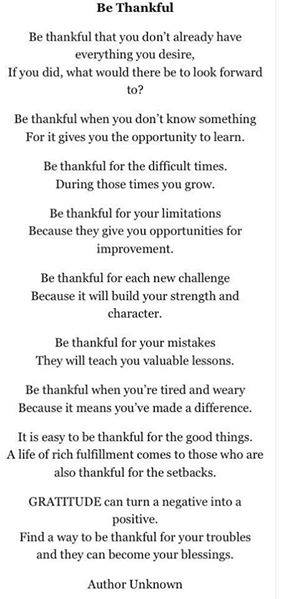
However, I do like the idea of being thankful and using the date as an “excuse” to acknowledge all good things that have happened.

This year, I’m thankful for:

  • First of all, as always, my family. We lost one member, but won another, and another one is on his/her way.
  • Secondly, also as always, my friends, who are like family to me. They are always there for me when I need, always by my side in the good and the bad moments.
  • My professional life. I work with something I love the way I have always dreamed of. I wouldn’t change it a tiny bit.
  • The incredible year I had, both professionally and personally. I achieved many goals and accomplished wonders. I also completely changed my health life, and now have a perfect exercise and diet routine.
  • Meeting wonderful people who acknowledge my work and are incredible human beings. And all the other colleagues, for still being there and brightening up my day, every day.
  • And last but not least, you, my readers, of course, for reading, liking, commenting and sharing my posts.

10375496_10205094817747483_1130751864766952836_n

After writing this year’s list, I read last year’s. It is interesting to see the things we were grateful for in the past – what remains the same and what has changed.

Wouldn’t you also like to take this chance to thank for something?

Happy Thanksgiving!

Related resources:
Menu para o Dia de Ação de Graças (English version)
Seven Thanksgiving Related Words and Phrases
The Best Foods to Eat this Thanksgiving (for runners – since I’m into running)
25 Thanksgiving Jokes That Will Get You Through Dinner With Your Family
Give Thanks in 30 Languages (since Portuguese is not on the list: Obrigada!)