Guest post: Dubbing GoT (in Portuguese)

Here we are again, with another guest on our series. The topic today is dubbing, by Dilma Machado.

Welcome, Dilma!

Dublagem de Game of Thrones

Falando um pouco sobre mim

Comecei como atriz com a comédia musical Vida e morte Cidelinda, em Goiânia, em 1985, pois sou bailarina profissional em contemporâneo (tenho graduação em Educação Física) e também canto. Em 1986, me mudei para o Rio de Janeiro, onde fiz um pequeno papel na novela Hipertensão (Rede Globo) e várias peças infantis pela companhia Rick Walker que já não existe mais. Em 1987, comecei a dar aulas de inglês no curso Brasas onde fiquei até 1995, ainda fazendo peças infantis, mas depois parei por causa de minha gravidez. Foi então que resolvi fazer o curso de dublagem com o ator/dublador Alexandre Lippiani e me aperfeiçoei mais ainda com Newton DaMatta. Comecei a dublar, mas com a tradução envolvida, tive de me dividir entre as duas tarefas, me dedicando mais à tradução, mas dublar é uma paixão. Dublo sempre que me escalam.

Em 1997, comecei a traduzir para dublagem por acaso. Fui à Cinevídeo para me apresentar como “aspirante” a dubladora e, por acaso, comentei que fazia tradução, quando, na verdade, só tinha feito o curso de tradução do IBEU. Três dias depois, recebi meu primeiro trabalho. Como não existia nenhum curso de tradução para dublagem, tive de ser autodidata, mas o tempo e a curiosidade me fizeram especializar em tradução e ter uma formação acadêmica.

Já traduzi mais de 350 títulos, entre séries, filmes, desenhos e documentários nesses 18 anos de profissão. Entre eles:

Séries: White Collar, Desperate Housewives, In Plain Sight, Regular Show, Gumball, Zack and Cody, Game of Thrones, Horrible Histories.

Alguns filmes/documentários: Era do Gelo 3, Tom and Jerry’s Giant Adventure, The cabin in the woods, Fall to Grace, Game Changed, The last campaign e acabei de traduzir e ser assistente de direção do filme Festa no céu, que estreia em outubro nos cinemas, dublando também em uma pequena participação.

Embora o tradutor de séries, filmes e documentários para dublagem não precise necessariamente ser dublador, é essencial que ele faça um curso de dublagem para aprender melhor o processo que acontece no estúdio; com isso, a tradução melhora muito. E ainda sugiro que façam um curso de tradução para legendagem que ajuda a resumir as falas mais rápidas. Tudo é importante para ser um tradutor de dublagem mais completo.

Game of Thrones

Eu já estava traduzindo para a MG Estúdios quando entraram em contato falando da série e se eu gostaria de traduzi-la. Não fazia ideia do que era, então logicamente corri para a internet para me inteirar do assunto.

Eu nem sabia da existência dos livros. Só fiquei sabendo depois de já ter entregado dois episódios e, com isso, houve até um conflito na tradução do “Hand of the king” que, na legenda e no livro ficou “Mão do rei” e na dublagem ficou “Conselheiro do rei”. Eu pedi para trocar, mas a HBO não aceitou e disse que era para manter do jeito que estava. Até concordo, porque a dublagem já estava feita e ficaria estranho mudar um termo de uma hora para a outra.

O livro para mim serve apenas como um guia, mas não uma cópia. Primeiro por causa de direitos autorais e segundo porque são trabalhos diferentes, os diálogos são diferentes. Faço a minha tradução e procuro manter os nomes dos personagens e locais iguais aos do livro, mas nem todos. Um exemplo é “King’s landing” que mantive no original e no livro ficou “Porto Real”. Devo esclarecer que existe uma aprovação do meu trabalho pela HBO, além da interferência do diretor de dublagem que também muda algumas coisas em estúdio. O resultado final da dublagem não é só meu, tem a ajuda do diretor e até mesmo dos dubladores.

Como a série tem sido exibida simultaneamente no mundo inteiro, tenho pouquíssimo tempo para traduzir. Geralmente, depois que recebo o script e o vídeo, entrego o episódio em dois dias. Mas esse tempo não é em relação à exibição, pois a tradução é apenas o primeiro passo até o episódio chegar às telas. Tem todo o processo de produção envolvido: tradutor (tradução, marcação de entrada de todas as falas, adaptação); diretor (marcação de loops, escalação dos dubladores, direção de dublagem); dubladores e operadores; edição, aprovação do cliente (pois pode haver retakes) e, finalmente, a exibição.

Não só em GoT como em todas as séries que faço, eu crio um glossário. A maioria dos tradutores que conheço não o faz e isso é um crime, na minha opinião. Cada um é cada um, mas meus alunos aprendem comigo que o glossário é importante!

A maior dificuldade em traduzir a série é nas partes que não estão no script e você tem de fazer de ouvido. Os scripts são incompletos, pois são de pré-produção, então é preciso muita pesquisa para não traduzir errado. O maior problema são os nomes de locais ou pessoas que ainda não tinham aparecido e, de repente, aparecem, então pesquiso até encontrar o nome certo. No entanto, a série exige pesquisa, seja no livro ou na internet, o tempo todo.

Quanto ao uso de palavrões e de linguagem obscena presente no original, normalmente não reproduzidos pela dublagem brasileira, ele não é censurado pela HBO devido ao horário de exibição. Portanto, temos a obrigação de colocar todos os palavrões traduzidos sem pensar duas vezes. Daí a série passar tão tarde.

A dublagem de GoT é apontada como uma das melhores dublagens da atualidade. Sempre digo que o trabalho de dublagem é um trabalho em equipe e essa equipe precisa estar unida. A tradução é o alicerce da obra, se ela é bem feita, a construção será forte e o resultado final será magnífico!

Thanks for telling us a bit more about dubbing, Dilma! I’m sure GoT fans will love your post!

About the author
Dilma4Dilma Machado é tradutora/dubladora/cantora/professora de inglês. Especialista em tradução inglês/português pela PUC-Rio. Dedica-se há 18 anos aos serviços de tradução e dublagem para as empresas: Doublesound, Cinevídeo, MG estúdios, Som de Vera Cruz, Gigavoxx e Bravo. Já prestou serviços para várias outras empresas como: Delart, Drei Marc, Herbert Richers, Dublamix. The Kitchen e Gemini Media. Tradutora de livros para Ed. Rocco e Ed. Fundamento. Associada da ABRATES. Professora do curso “Técnicas de Tradução para Dublagem” na PUC-RJ e no Aulavox (online).

Não espere que as coisas caiam do céu. Vá à luta e corra atrás delas!

Let’s start the last week of October with a new translation from English into Brazilian Portuguese by Esther Dodo, our frequent contributor to translating the blog posts. This time, the post Don’t wait for things to fall from the sky. Go and get it! was the chosen one. Enjoy!

picjumbo.com_IMG_1275

Esta publicação sobre a importância de ter ou não formação acadêmica suscitou um saudável debate sobre a relevância de ter um curso superior em tradução ou não e, consequentemente, o que os cursos universitários estão deixando a desejar. Portanto, desta vez, decidi falar sobre essa “lacuna”.

Lembro-me bem do meu primeiro projeto. Foi para uma agência de tradução, era uma apresentação em PowerPoint. Como era iniciante, eu ainda não tinha nenhuma ferramenta CAT, portanto, além de traduzir, tive que arrumar a formatação. Sejamos realistas: o PowerPoint não é o melhor amigo do tradutor, principalmente quando o coitado (o tradutor, quero dizer) é totalmente inexperiente.

Entretanto, até aqui, tudo estava indo bem.

O problema é que havia imagens não editáveis no arquivo. Entrei em pânico. O prazo de entrega era curto, foi durante um final de semana, e eu não tinha a mínima ideia de como traduzir aquelas imagens! Eu não sabia o que fazer. Não era possível entrar em contato com ninguém da agência para pedir ajuda, pois era sábado à noite. Acabei inserindo a tradução sobre a imagem.

Resumo da história: o projeto voltou porque eu obviamente não sabia (e como deveria saber?) que as imagens não editáveis deveriam ser traduzidas nos comentários. Naquela ocasião, foi exatamente isso que pensei: “Como eu deveria saber? Ninguém nunca me falou a respeito disso!”

É isso mesmo, o bacharelado e o mestrado em tradução não ensinarão os aspectos práticos necessários para quando você estiver trabalhando como tradutor.

Seria isso um problema? Seria isso algo que os cursos carecem? Não tenho certeza.

Normalmente, os professores universitários são acadêmicos, pesquisadores, não tradutores profissionais. As aulas são práticas e teóricas, mas não direcionadas ao ato tradutório em si. Você traduz e, no máximo, aprende uma coisa ou outra sobre essa ou aquela ferramenta CAT. Nada mais. Você não aprende sobre gerenciamento de projetos e como lidar com eles, não aprende nada sobre contabilidade, muito menos sobre branding/publicidade.

Como aprendemos sobre tudo isso? Praticando. Ou participando de aulas extracurriculares, cursos, congressos, eventos, palestras, lendo blogs, participando de grupos profissionais, perguntando, pesquisando, etc. Em outras palavras, buscando por si próprio, não esperando que as coisas caiam do céu.

Isso não é algo complicado. Na verdade, a internet faz com que tudo seja muito simples. Você só precisa estar disposto a dedicar um tempo para as mídias sociais.

Aqui estão algumas dicas sobre como aprender a fazer isso:

  • Siga as pessoas (tradutores, agências, empresas) nas mídias sociais (Facebook, Twitter, Google+, LinkedIn, etc). Também há grupos específicos para tradutores no Facebook dos quais você pode participar. Eles oferecem boas dicas e discussões, além de permitir que você faça suas próprias perguntas para os outros membros.
  • Siga blogs de tradutores. Você encontrará todos os tipos de informações úteis em publicações de blogs.
  • Participe de eventos de tradução, como congressos, simpósios, etc. As mídias sociais podem ajudá-lo a se atualizar com os eventos que serão realizados próximos de você.
  • Aproveite seu curso ao máximo. Veja se sua universidade oferece atividades extracurriculares que possam lhe interessar.
  • Por último, mas não menos importante, interaja com pessoas, crie redes de contatos. Faça perguntas quando tiver alguma dúvida. Sempre tente aprender com a experiência dos outros.

Na verdade, seria perfeito se as universidades oferecessem palestras práticas sobre como administrar o nosso trabalho e como lidar com clientes, ou se houvesse uma especialização em gerenciamento na área tradutória. Mas como esse não é o caso (ainda?), temos que fazer a nossa parte e tentar buscar as respostas por conta própria.

Artigo relacionado:
Story of a Translator Student: You are in ControlofYour Life

Qual é sua opinião sobre esse assunto?

Thanks for another great contribution to our blog, Esther! Looking forward to your other translations. 🙂

About the translator
Esther PicEsther Dodo é paulistana, formada em Administração de Empresas, tradutora freelancer e, atualmente, está prestes a obter certificação como tradutora no par inglês-português na New York University (NYU). Reside nos EUA desde 2001. Entre em contato com ela peloLinkedIn e pelo Facebook.

Guest post: Social media and translation

Why does a day have only 24 hours? Why???

Here’s the guest post that was supposed to be published on Tuesday. Well, better late than never, right?

Our guest today has already translated one of our posts, so I invited her to write a guest post as well.

Welcome, Alessandra!

social-media-419944_640

The Growing Importance of Social Media Translation

Social Media has completed changed the relationship between people and brands allowing people to share their interests so brands can come to understand customer behavior and adapt in order to reach customers needs. When we talk about social networks, we think of the most common, which are English-based, like Facebook, Twitter, LinkedIn, Google Plus, Instagram and Pinterest. But countries like Russia and China use different social network websites, such as VK in Russia and Renren in China.

Businesses nowadays are thinking globally and are looking to reach out internationally, their Social Media platforms must follow. And it is very important to help build trust among customers, showing signs of respect by getting to a more personal approach. Companies want to reach to as many customers as possible so they must be where their customers are. They need to acquire Internet Users in Emerging Markets; by doing so, they’ll know which ones to market to and in which language. China ranks number 1 followed by South American countries. According this report published by The British Council on Languages for the Future, Portuguese is ranked the 6th most useful language for business.

In terms of social networks, Brazil has the 2nd largest contingent of Facebook and Twitter users. This is great news for translators of Portuguese. Social media combined with language skills can offer great opportunities to translators as there is a lot of material about it to be translated with content being generated and shared constantly.

In Social Media Translation you end up dealing with many words that do not have an equivalent in another language. So the challenge of translating social media content lies in its new introduced terminology. Due to its peculiar terminology, many words end up keeping its English root or being translated directly such as the verb “to tweet”, which in Portuguese became tweetar and “to tag” = taguear. This way many English words are simply integrated into the target language.

A positive aspect of coming across translations when the target language lacks a lot of terms is to see how creative the language itself can be with the new introduced slang. It is also very interesting to observe what languages do naturally, even if English words end up being used as “loan words”, which means they are not translated, such as hype = “dando o que falar”, justnow = “nesse momento”, weouthere = “é nóis”. The use of Urban Language expressions is huge in social networks as they are considered synonyms of cool chatting.

In online communication, there is a need for quick and condensed language, so verb phrases have become common acronyms used in everyday settings, such as ”rolling on the floor laughing” = ROFL, “talk to you later” = TTYL, “laugh out loud” = LOL, “throwback Thursday” = TBT… You always come across a new acronym being used in order to cut down on the number of words to successfully reach a greater speed when communicating or to simply adapt to character limitations when writing posts.

In Social Media translation, the most important is to make the concept clear. In this process, translating can also be led by an instinct technique. Think about different cultural contexts when translating, if it still sounds familiar in the target language then go for it. It is important to provide your reader with the same enjoyable experience that they could have using social media networks in the English language. Always keep in mind that people are looking for fun and culture while interacting online; on a daily basis, we are all exposed to fast-growing modern ways of communicating. And for me this is the most colorful dynamic in working with different languages.

Thanks for accepting my invitation and taking the time to write something interesting to our readers, Alessandra! 🙂

About the author
Profile PicAlessandra M. Silva é formada em Letras – Tradutor/Intérprete pela Unilago e em Jornalismo e Estudos de Mídia pela CMI – Dublin. Atuou como professora de idiomas por mais de nove anos no CCAA nas franquias de Santa Fé do Sul, São José do Rio Preto e São Paulo. Atualmente, trabalha com tradução e como consultora de moda de luxo. Também se interessa por Marketing Digital e Divulgação de Marcas. Reside na Irlanda desde março de 2008. Entre em contato com ela peloLinkedIn.

In-house or freelance translating? It’s up to you!

Hi, dear followers! How are you doing? I know I’ve been absent from the blog – it’s been three weeks since my last weekly post. I’m sorry! Working a lot, no time left for writing, unfortunately! 😦 This week is less busy, so I promise there will be a post on Thursday. Stay tuned!

For now, we have another translated post. This time, from Portuguese into English, for a change. The source is Traduzir in-house ou traduzir como freelancer? Só depende de você! Today’s translator is Viviane Real.

picjumbo.com_Smooth-Touch-Workspace

When I got Carol’s invite to take part in her guest posts, I immediately decided to talk about how I see the possibilities of ”working freelance” vs ”working for a translation company”’. However, only after learning that translator Mariana Sasso had chosen the same topic and after reading her text did I start to think about how to approach different aspects from those she had already tackled in her post. So, in this text I’ve tried to talk about the same subject from a different point of view and I hope I was able to pull it off. 🙂

The first time I came across these two kinds of professional possibilities was right after I got my Master’s degree and entered the translation market.  An agency was offering both internal positions and freelance opportunities. Since I didn’t have any experience and was eager to get in the market, I applied for both. I ended up being selected for one of their internal positions so my first experience was as an in-house professional translator.

The experience as an in-house translator was, undoubtedly, invaluable, since it allowed me to take my first steps in the profession and to learn how the technical translation market works. I can also say that this job helped me to complement the sound education my BA in Languages specialized in Translation provided me. Back then, in my opinion, one of the biggest advantages of working in-house was the stability and safety provided by formal employment. In fact, I used to be quite wary of the possibility of working and making a living as a freelancer. I used to think to myself, ””Is it possible to make enough money working from home? What if there is no work? What if there are no clients? What if…?”.

I worked at the company for almost a year and when I left, my second professional experience started: this time as a freelancer. To my surprise, the fears of being self-employed I used to have before soon became meaningless, because right from the start, I can say that there was always frequent and uninterrupted work. Soon, I came to notice some aspects that, in my opinion, are advantages over in-house work. As a freelancer, I could truly dedicate myself to what I like the most: translating! That might seem obvious, but it isn’t. As an in-house translator, besides translation itself, professionals are also responsible for several stages through which the text must go until and after its final delivery to the client: revision (comparing the original to the translation), proofreading (reading of the translated text only), implementation of updates/corrections/alterations/client feedback, etc. These changes are not motivated only by problems with terminological or linguistic quality. For instance, the client frequently asks for changes in the source after the translation has started or even after delivery, thus an update is necessary so that it matches the new source. Some other times, even though the client or reviser often recommends important alterations that improve the overall quality of the final text, there are situations when the suggested changes are questionable in terms of relevance, such as replacing a noun phrase with a verb phrase – ”chocolate cake” becomes “chocolate flavored cake”, and it is up to the in-house professional to accept/reject and implement or not these modifications (bearing in mind that in case of rejection, it is necessary to justify the decision). It is important to highlight that I don’t think these post-translation stages are less important, and I believe that enjoying or not these other tasks depends on the translator profile. Now I know I am one of those professionals who don’t like them. Thus, one of my first and happiest discoveries as a freelancer was that I could just translate and feel free to refuse working with revision, implementation, updating, etc.

For four and a half years, I worked as a freelancer. During this period, I started and kept solid partnerships with some companies and was also able to focus on technical areas I like the most, namely IT and marketing.  After that, I felt the need for a change, for doing something different so I started to consider the possibility of getting back to in-house translation. Even though there were not many problems with the freelance translator routine and work remained plentiful, the “wind of change” was blowing again and I decided to follow it.

I got back to working as an internal translator for another company. I can say that, in this second in-house experience, I missed the time when, as a freelancer, I used to ask to take a look at a text before accepting the job and if it was a gyratory crusher’s hydraulic pump, I could simply refuse it and wait until something less “overtly technical” came along. This time, besides the impossibility of refusing texts about themes I was not quite familiar with and the endless demands for alterations in translation that I mentioned before, another side of working for an agency started to really get to me: the lack of subject variety in the material to be translated. I reckon it is appropriate to mention the importance of text variety in order to keep the technical translator’s work routine a healthy one. In my opinion, translators rest from one translation not only after it’s delivered and they can take a day off. When we start working on another text about a whole different subject, in a way, we are taking a break from the previous one. However, in a translation agency, such variety is rather limited, for the company has their client portfolio and naturally, those with the highest demands will take up most of the staff time. Generally, texts from the same client tend to be about the same subject. So, for a few more months I implemented countless relevant and non-relevant alterations and translated the same old things all day every day, until I realized that life as an in-house translator was not fit for me anymore or I wasn’t cut out for it, or both. In less than a year, I decided to go back to my freelancer life and that is how I do business today.

It’s crystal clear to me that affinity (or lack of it) for freelance or in-house work is really a matter of personal preference, without absolute advantages or disadvantages, just like Mari Sasso stressed on her post. In spite of the benefits, such as interpersonal relationships with coworkers and guarantee of frequent work provided by the company contract (which Mari Sasso also pointed out), in order to assure my own satisfaction and good professional performance, the most crucial facts are having the power to decide whether or not to translate a particular text; being able to dedicate exclusively to tasks I enjoy and knowing that I will always profit from subject variety. Nevertheless, I admit that another professional might have a totally distinct experience, appreciating the advantages of life in a company, which surely are real.

Currently, even when I am capable of understanding very clearly that I ”wasn’t born” to be an in-house translator, I see that both experiences I’ve had as such in addition to both freelance experiences were equally necessary and relevant to make me come to this conclusion. I believe that, if I hadn’t given myself the right to change when I was longing for it, even though I was satisfied with being a freelancer, then I might still be flirting with the idea of getting back to working in-house. In other words, I believe that some “certainties” are just conquered after we give ourselves the right to try out different options and possibilities. Therefore, for beginning translators who are still entering the market or for those who know only one of these sides, I’d say it’s necessary to experiment with both in order to find out which one suits your professional profile better.

Thank you, Viviane, for kindly volunteering to translate a post for our blog! 🙂

About the translator
10721040_755978441140302_412829723_nViviane has a degree in Pedagogy by the University of São Paulo. She holds a Cambridge Proficiency as well as CELTA and DELTA certificates which have helped her build a 13 year career in English Language Teaching. In 2013, she felt it was time for a change and started a course at PUC-SP to become an Interpreter and this year, she joined the DBB course for translators. Nowadays, she is a freelance translator living in Jundiaí, SP, Brazil.

Guest post: How to understand your internal body clock

Welcome back to each and every one of you! How’s October going so far? Getting ready for Halloween? I’ve just returned from a trip to visit a friend and today I’m getting back on track with my beloved routine. There’s nothing better than following a carefully planned routine to work, right? Today’s guest, Nora Torres, will help us understand our internal body clock to plan our day accordingly.

Welcome, Nora!

Graphic by Nora Torres

First of all, Caroline, many thanks for inviting me over!

I’d like to take this opportunity to share with your readers some interesting facts I came across while looking into how to improve my time management skills, productivity, and life enjoyment by getting my daily schedule in sync with my body’s internal clock. Bottom line is we can manage to get more done each day if we do everything at the right time.

A 24-Hour Guide to Planning Your Day in Sync with Your Body’s Internal Clock

Have you ever heard about such thing as the suprachiasmatic nucleus? The SCN, the human body’s master clock, lies deep inside the hypothalamus, behind the eyeballs, and controls circadian rhythms. In lay terms, the SCN instructs the pineal gland to increase the production of melatonin (a hormone that regulates the body’s natural sleep-wake cycle by promoting sleepiness and reducing motor activity) when daylight fades, and to decrease it when the SCN receives daylight information from the optic nerves. This process regulates many different body functions over a 24-hour cycle.

The guide below can help you plan your day following your circadian rhythm:

  • In natural conditions, your body temperature begins to rise just before you wake up, and continues to rise until noon. The sharpest increase in your blood pressure occurs in the morning, on awakening. With daybreak, melatonin secretion is inhibited. All this prepares you to start your day off!
  • Working memory (the system by which data input is brought into the brain, interpreted, and sorted), alertness, and concentration improve gradually during the first morning hours.
  • Mid-morning is usually the time when your concentration, alertness, and working memory are at their best. Research has shown that 8 to 11 a.m. are the best hours to tackle the day’s toughest intellectual projects, with mental alertness peaking at about 10 to 11 a.m.
    Tip: Use this period of time to take care of high-order problem solving and other intellectually challenging work, leaving relatively easier tasks for later.
  • 11 a.m. to noon: Focus and concentration normally begin to decrease, but alertness remains high.
    Tip: This would be a great time for a business meeting. With good part of the most challenging work for the day already done, you are still in a good position to make complex decisions and solve tricky problems.
  • Verbal reasoning skills hit their highs at noon.
    Tip: This would be the best time for an argument. Do you still have to make that phone call to claim a long-outstanding payment? Go for it at midday!
  • From noon to about 2 p.m., cheerfulness is usually at its best, just right for business socializing.
    Tip: If you wondered whether it would be better to discuss that collaboration agreement over a working breakfast or a business lunch, you now have the answer.
  • From about 2 to 3 p.m., your metabolism slows down and your sleepiness increases, which makes this the ideal time for a short nap.
    Tip: Taking a 20-minute ‘power nap’ at this time of the day can improve your alertness and motor skills.
  • Long-term memory peaks at about 3 p.m.
    Tip: This would be an excellent time to go over the glossary and reference material for an upcoming translation project or interpretation assignment.
  • From 4 to 6 p.m., alertness gets a new boost.
    Tip: You can plan to finish your important work for the day at this time. Alternatively or additionally, you can answer non-rush e-mails, do your billing, and schedule your next day.
  • The period from about 3 to 7 p.m. is usually the best time for physical performance.
    – Blood circulation, hand-eye coordination, reaction times, and muscle strength hit their highest point in this period.
    Tip: Plan to play your favorite sport, have your workout session, or just go for a brisk walk at this time of the day, and you will get much better results. Keep in mind that:
    – Fastest reaction time occurs at about 4 p.m.
    – Greatest cardiovascular efficiency and muscle strength, at about 5 p.m.
    – Joints and muscles are warmer and more flexible (reducing the risk of injury) in the late hours of the afternoon.
    – Your blood pressure reaches its high at about 6:30 p.m.
    – Your highest body temperature occurs at about 7:00 p.m.
    Very important tip: Evenings are the ideal time for a glass of wine, as your liver is better able to metabolize alcohol at that time.
  • Melatonin secretion begins with sunset, in response to fading light.
  • You may be surprised to hear that, for most mortals, creativity peaks at about 9 to 10 p.m. When you start to get low on energy just before bedtime, your frontal cortex (part of the brain responsible for things such as attention, planning, and working memory) gets less involved in processing what is going on around you. Instead of concerning yourself with your current projects (that tight deadline that is driving you crazy, a challenging interpreting assignment scheduled for the next day), your brain is able to wander more freely, and think in non-linear ways.
    Tip: Problems requiring open-ended thinking are best dealt with at this time.
  • Deepest sleep occurs at about 2:00 a.m.
  • Lowest body temperature, at about 4:30 a.m.

All this may vary, of course, based on your own chronotype and energy cycle (i.e., whether you are a morning or evening person (a “lark” or an “owl”), but most of us are right about the middle.

At this point, I know what you may be thinking— We do not always get to choose what time we do things. But having this knowledge can help you tune your schedule to the ticking of your internal clock as much as you can. I do hope you can give it a try and would love to hear your findings.

References:
Harriet Griffey: The Art of Concentration: Enhance focus, reduce stress and achieve more. Pan Macmillan, 2010.
Melatonin: A Closer Look, The American Heritage® Science Dictionary, Houghton Mifflin Company.
Sue Shellenbarger (for The Wall Street Journal, Work and Family Section): The Peak Time for Everything: Pack More in a Day By Matching Tasks To the Body’s Energy. Updated 09/26/2012, Accessed: 09/18/2014. http://online.wsj.com/news/articles/SB10000872396390444180004578018294057070544
Josie Padro (for alive Interactive): Your Body Clock. February-March 2014. Accessed 09/18/2014. http://interactive.alive.com/february-march-2014/your-body-clock/#
Stephanie Dutchen (for the U.S. Department of Health and Human Services, National Institutes of Health, National Institute of General Medical Sciences): A Light on Life’s Rhythms. Accessed 09/18/2014. http://publications.nigms.nih.gov/findings/sept11/lightliferhythms.asp
Bob Condor (for The Chicago Tribune): The Body Clock. Published 10/31/1994, Accessed 10/02/2014. http://articles.chicagotribune.com/1994-10-31/features/9410310028_1_body-clock-circadian-chronobiology
Kayte Nunn (for The Sydney Morning Herald): Reset your body clock. Published 06/02/2012, Accessed 10/02/2014. http://www.smh.com.au/lifestyle/diet-and-fitness/reset-your-body-clock-20120206-1r0h6.html#ixzz3Ez0sM1qw
Tanner Christensen (for Creative Something): Why You’re More Creative At Night And How To Reproduce The Effect. Posted 09/07/2013, Accessed 10/02/2014. http://creativesomething.net/post/54997033332/why-youre-more-creative-at-night-and-how-to-reproduce
Belle Beth Cooper (for Buffer): Why Most Olympic Records are Broken In The Afternoon: Your Body’s Best Time For Everything. Posted 07/18/2013, Accessed 10/03/2014. http://blog.bufferapp.com/your-bodys-best-time-for-everything-how-to-eat-sleep-and-work-more-efficiently

Thank you for accepting my invitation and kindly taking the time to write such an enriching and informational post! The topic is extremely interesting and useful to all of us, freelance translators, who have to manage our own time. It helped me understand my internal body clock better, and I’m sure it will help my readers as well. 🙂

What did you think of the topic? Do you think your personal internal body clock has a similar schedule? Would you like to ask us any questions?

About the author
A 24-Hour Guide_NTorres_pictureNora Torres is an English-Spanish translator, expert back-translator, localizer, proofreader, quality manager, and linguistic validation consultant. She holds a B.A. in Translation with a Major in Law from the University of Buenos Aires, and has been in the translation industry for over 30 years now. Initially an in-house translator for the largest publicly-held bank in Argentina and a classroom-based and distance-education Teacher of English for International Trade, she became a freelance translator in 1992. Nora was Vice-President of FairTradeNet, a Geneva-based association of freelance translators and, as such, was part of the delegation representing FTN at the World Summit on the Information Society in December 2003. She became a certified life-sciences linguist in 2007 and is currently co-owner of Translartisan, a translation studio specializing in biomedical translation. You can find her on FacebookTwitterPinterestLinkedIn, or contact her through her website.

Guest post: Advice on how to begin (in Portuguese)

Hi, dear readers! Hectic day at the office today! I’ve just delivered a project and, before I pack to travel, I took some time to publish our guest post. This week’s guest is Raphael Palermo, a translation student and beginner in the career.

Welcome, Raphael!

Source: picjumbo

Lidando com o início de carreira

Olá a todos!

Antes de qualquer coisa, gostaria de agradecer à Caroline pelo convite. Obrigado, Carol!

Bom, dentre os temas propostos, resolvi falar um pouco sobre a minha experiência profissional como tradutor iniciante. Sou aluno do quarto ano de Tradução da UNESP de São José do Rio Preto. Minha recente (e inexperiente) carreira como tradutor começou em janeiro deste ano quando coloquei na cabeça que gostaria de começar a trabalhar para sentir como a profissão realmente era na prática, mesmo não sendo formado. Enviei currículos para várias agências e esperei até que alguém entrasse em contato. Recebi meu primeiro teste, passei e comecei a trabalhar para uma agência, com a qual trabalho até hoje, além de outras.

Fazendo uma análise desses meses de trabalho, percebo o quanto a minha decisão foi importante. Digo isso porque tive muito apoio dos professores (agradeço à professora Érika, que deu dicas e revisou meu currículo, e à Zavaglia pelas boas indicações!) e de colegas que também estavam fazendo o mesmo. Começar sempre é muito difícil e, como qualquer outra pessoa, eu tinha muitos receios e dúvidas. A UNESP nos oferece uma formação sólida, e colocar em prática tudo o que aprendi é uma tarefa contínua.

O fato de eu ainda estar cursando o quarto ano me ajuda muito neste processo. Eu não tinha ideia de quanto cobrar, como negociar prazo, como negar um projeto ou como gerenciar meu tempo. Acredito que neste início de carreira é normal errar, receber feedbacks e ter dúvidas. E, para todos esses aspectos, eu tive a quem recorrer. Pude compartilhar meus erros com colegas que também passaram pela mesma situação e pude tirar dúvidas com professores. E, nesta fase, é importantíssimo para o tradutor iniciante saber aprender com tudo isso. Receber um feedback ruim não deve ser motivo para desânimo. Claro que nos chateia, mas devemos sempre levar como aprendizado.

Já cometi erros bobos por medo de ser barrado no mercado logo de cara. Por exemplo, antes de pegar meu primeiro trabalho, eu não sabia como seria minha produção máxima por dia. E, por esse motivo, já ralei muito para conseguir entregar traduções no prazo. Também já aceitei trabalhos por preços mais baixos daqueles que eu gostaria. Porém, com o tempo, você começa a aprender como administrar sua produção diária e a fixar um preço mínimo por palavra. Sei também que, muitas vezes, a carreira de tradutor com a qual sonhamos não corresponde àquilo que temos no momento. No começo, é comum aceitar projetos dos mais variados tipos, textos técnicos, jurídicos, legendagem, etc. O importante é adquirir experiência e, a partir disso, modelar a sua área de interesse e se livrar daquilo que você não gosta de fazer.

Outro aspecto que considero importante é o uso das ferramentas de tradução. Muitas vezes, ou na maioria das vezes, a ferramenta usada por aquela agência X é exatamente aquela que você não tem ou não sabe mexer. Isso aconteceu muito comigo e confesso que foi desanimador. Porém, o que acontece na maioria das vezes é que a agência oferece a ferramenta para você usar, e tudo o que você deve fazer é quebrar a cabeça para aprender a usá-la. Hoje, por exemplo, uso até quatro ferramentas diferentes, dependendo do cliente.

Concluindo, esse início de carreira para mim é um importante momento de aprendizado. Com certeza ainda terei muitos desafios, mas sei que estou ficando cada vez mais preparado. E ver que ao seu redor há colegas passando pelo mesmo processo é muito animador. Talvez se eu tivesse deixado para começar depois de formado as coisas teriam sido um pouco mais difíceis. Portanto, desejo muito sucesso a todos que, como eu, estão entrando na carreira nesse momento.

Thank you, Raphael, for accepting my invitation and taking the time to write something nice to our readers. 🙂 I’m sure beginners and students will benefit a lot from your experience. As always, researching and learning from our mistakes are extremely important on this stage.

About the author
Raphael Palermo é aluno do quarto ano do curso de Tradução da UNESP. Tradutor em início de carreira, trabalha com as línguas inglês e italiano.

My impressions on the Abrates conference

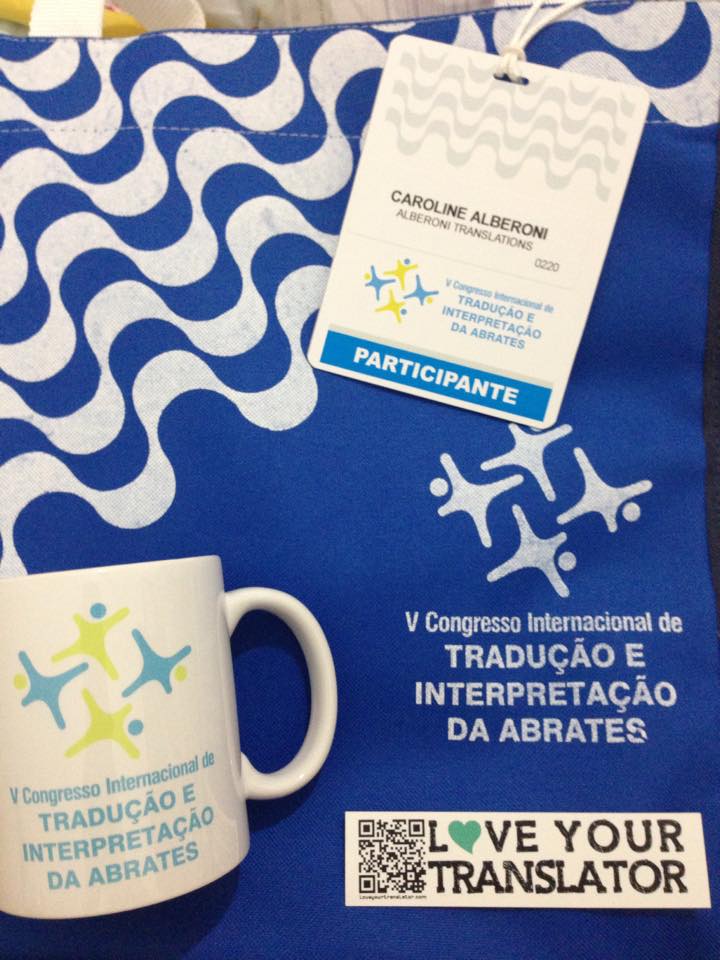
Kit

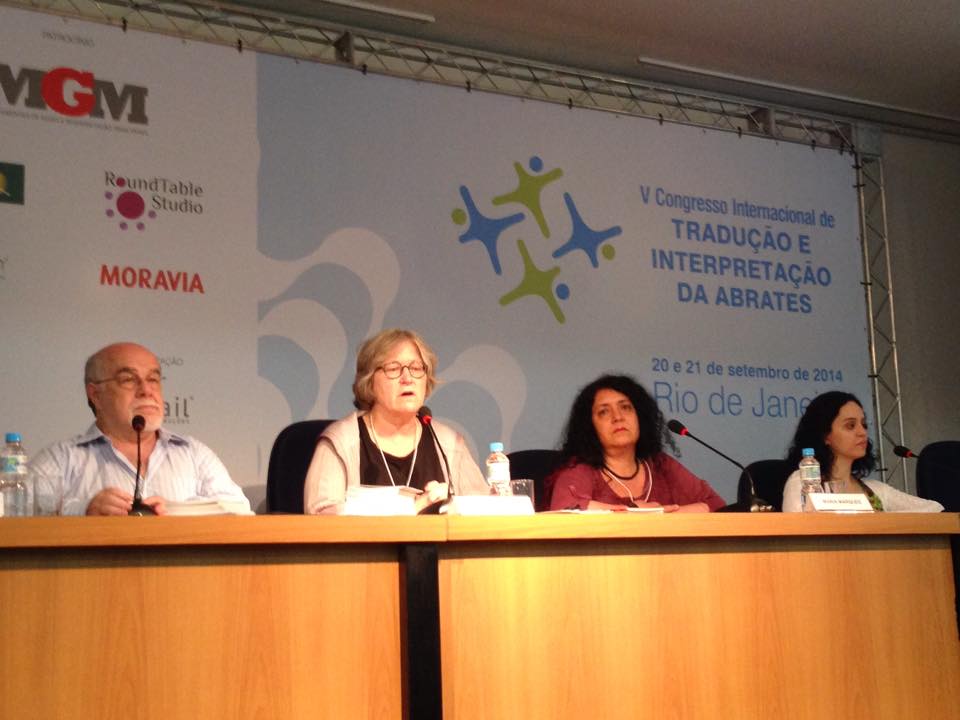
After a one-week pause due to the XXXIV Semana do Tradutor & I SIT (Translator’s Week & International Translation Symposium), we’re back with our weekly posts. But before the Translator’s Week, there was the V Abrates International Translation and Interpreting Conference, I also attended. Therefore, today, I’ll write a bit about the Abrates conference. Next week, I’ll write about the Translator’s Week (it’s too much information for only one post).

The Abrates conference was held on September 20th and 21st, Saturday and Sunday, in Rio de Janeiro. According to the organizing committee, there were 450 attendees, and about 80 on the waiting list. Last year, there were 390 attendees, when the event was held in Belo Horizonte.

Cap. Israel

The conference started with a keynote by Cap. Israel Alves de Souza Júnior, Captain of the Brazilian Army. He talked about translating, but especially interpreting, in peacekeeping missions, with examples of the current mission in Haiti. His presentation was moving and touched every single heart in the room. The audience was so impressed by his stories that gave him a much deserved standing ovation. The most important lesson I learned from his talk was: the first time the Earth was photographed from space, the only thing you could see was the Earth itself, with its oceans and lands, no human could be spotted, showing we are tiny creatures, all equal, and we should, as such, help and cooperate with each other.

Maria Helena Brenner-Kelly

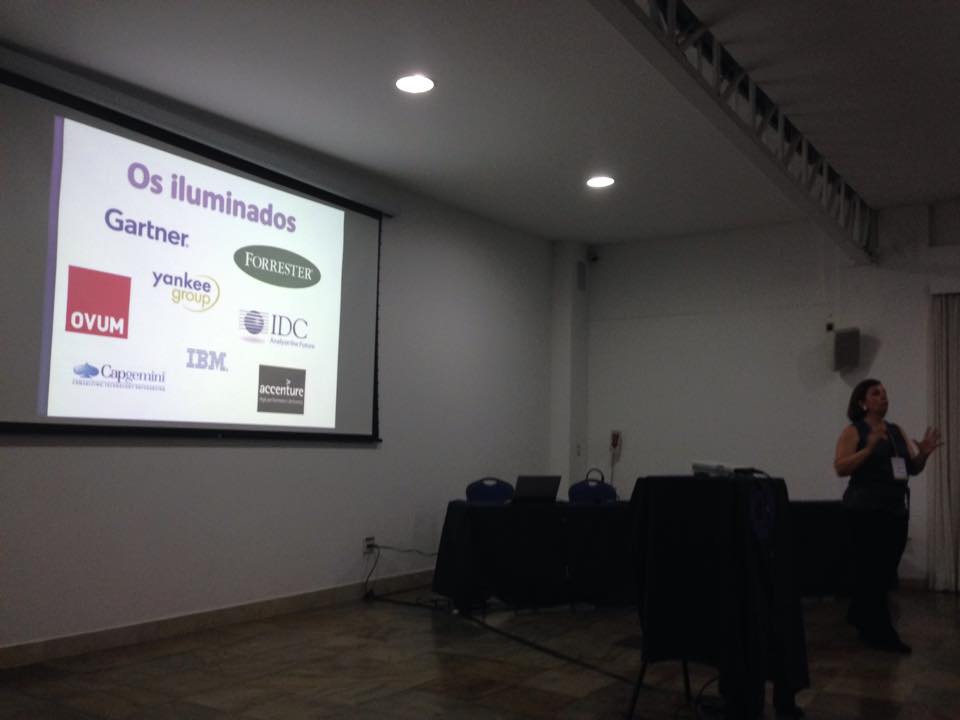
The rest of the morning and the afternoon of our first day of conference were filled with talks we had to choose from. There were three to four talks at the same time. I especially enjoyed Maria Helena Brenner-Kelly’s on the IT terminology of the future. She gave precious tips to how we can keep up-to-date with the always changing terminology and talked about some current terms and their translations, such as gamification, big data, VoIP, fog, appification, application, cognizant computing, wearable devices, consumerization. We also had other contributions from the audience.

Chris Durban

The first day was wrapped-up by another keynote, this time by Chris Durban, who talked about “The right numbers – and the wrong ones”. According to her, translators should know some important numbers in order to leave the bulk market and get into the premium one. One of these numbers is: 5 to 10% of our annual sales should be spent on training and professional development. And to leave the bulk market, we have to write better than 95% of the population. Chris Durban is great! Extremely funny and talkative, she has also kindly autographed two copies of the book 101 Things Translators Should Know – one for me and another for a lucky winner of my Translation Day Sweepstake (revealed on Tuesday, International Translation Day: Valéria Carlini). I loved meeting her in person!

Jorge Rodrigues

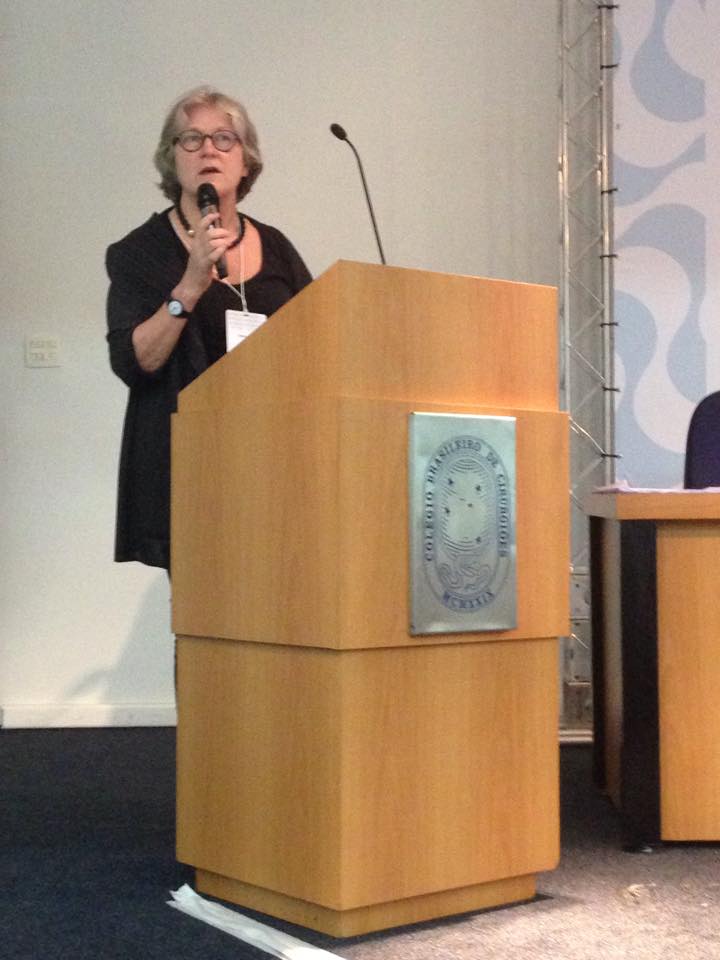
On the second day, we had some quite nice talks by amazing people, such as Jorge Rodrigues, about the internationalization of the translator’s career; Fernanda Rocha, about the redundancy in saying we are “professional translators”; Sheila Gomes, about how to use the Internet to place ourselves in the market; Isa Mara Lando, about the main translation mistakes from English to Portuguese (I had some good laughs on this one); Ricardo Souza, about the relationship about translators and translation agencies; and João Vicente de Paulo Júnior, about what we need to be able to translate for premium markets. However, there were some equally great talks I was not able to attend, such as Paula Ianelli’s on game localization, Dilma Machado’s on translating series and Daniel Estill’s on TradWiki, to name a few.

Danilo Nogueira, Chris Durban, Maria Marques and Kelli Semolini

As a wrap-up to the conference, Chris Durban talked about her booklet Getting it Right. Danilo Nogueira and Kelli Semolini also talked about their translation of her booklet, Faça a escolha certa. The project’s proofreader, Maria Marques, was also part of the discussion. The booklet is a guide to prospects, with instructions to people who need translation services on how to make the right choice when hiring a translator.

Jéssica Alonso, Jorge Rodrigues, myself and Paula Ianelli

The event was also a fantastic chance to see and talk to some friends I hadn’t seen in a while, meet new people, meet people who know me from the blog or from the social media. It was great to see Thomaz Vilela, Sheila Gomes, Jorge Rodrigues, Paula Ianelli, Thiago Araújo and Jéssica Alonso (I hope I didn’t forget anyone). It was equally a pleasure to meet Dilma Machado, Ernesta Ganzo and Chris Durban in person.

Next year’s venue has already been disclosed. The VI Abrates International Translation and Interpreting Conference will be held in São Paulo. The date is yet to be determined, but, as always, I’ll keep you posted.

Should you have any questions, please let me know. And also feel free to add your own impressions of the event, in case you have attended it.

Guest post: Translation video blog

And we’re back with our guest post series. First of all, I’d like to wish you all an amazing International Translation Day! May St. Jerome bless you with lots of great projects with reasonable deadlines and rates.

Now let’s welcome our guest today, the interpreter Gala Gil Amat.

Welcome, Gala!

trans

A new platform for translators and interpreters: video blogs

First of all, thank you Caroline for inviting me to write on your blog, it’s such a pleasure!

In this post, I would like to talk about why I decided to create a video blog and the incredible opportunities this fact has brought me.

Well, the idea of creating a conventional blog was recommended by almost all our university professors since they told us that we had to contribute to enrich the industry and also to make us visible within our community. However, I decided to wait to create this blog because I wanted to have enough time to write a few entries so as to not to leave it abandoned.

Finally, I felt it was time to give it a go. When I looked around, I realized there were already thousands of interesting blogs on translation and interpreting and that I could do something a bit different. Moreover, I am a really talkative person and I enjoy letting people know me better, so I thought I could do something more interactive. The final and definitive reason was the possibility to show colleagues and maybe future clients (who knows!) my language skills (since the videos are in English and not in my mother tongue) and that I was not afraid of speaking publicly either on a screen or on real life since I would like to become a professional interpreter in a near future.

These three reasons were the main ones for creating my video blog, Transgalator.

My first idea was simply to upload videos of me talking about some topic related to this profession I had come across due to some particular reason, like for example, the one I did about volunteering as a translator or about the creative CVs. However, one day, one interpreter I know told me it could be a magnificent idea if I interviewed him in order to show, above all, students how the world of conference interpreting worked.

Due to the huge success of this video, I thought I could do some other interviews like that one and from then on, I had had the honour to interview a wide range of professional translators, interpreters and terminologists who have shared their knowledge and some valuable tips with all my followers and of course, with me.

Having this video blog has provided me with unforgettable experiences, for example, the opportunity to do a study visit at the European Parliament in Luxembourg or to get to know how the UEFA interpreters work, so through this blog I have learned some things which you can’t study and that’s why I will keep on with my video blog throughout my career so as to help other professionals with useful and valuable knowledge.

Thank you, Gala, for accepting my invitation and writing for our blog about such an amazing idea. A special Happy Translation Day to you! 🙂

Well, you know, comments are always welcome. 😉

About the author
ggGala Gil Amat is a translator working from English and French into Spanish, who combines freelancing with the studies in Translation and Interpreting in the University of Alicante (Spain). The fields she usually deals with are business, human resources, journalism, and marketing. She has worked for several companies such as Procter and Gamble and for international institutions like the UN.

Erros comuns em traduções do inglês para o português

Hello, dear followers! Missed our posts last week? Unfortunately, I didn’t have time to publish anything, because I was attending two translation confereces (Abrates, in Rio de Janeiro; and Semana do Tradutor, in São José do Rio Preto). I also presented at the latter. I’ll soon write about both of them and about my debut as presenter. Stay tuned!

Today, we have another translation from English to Portuguese, this time of the post Common translation mistakes from English to Portuguese, by Esther Dodo.

picjumbo.com_IMG_5992

Eu já havia escrito uma publicação sobre alguns erros gramaticais comuns que os brasileiros normalmente cometem em português. Hoje, decidi escrever sobre alguns erros comuns que os iniciantes normalmente cometem quando traduzem do inglês para o português brasileiro.

Segue uma lista com 10 exemplos de erros comuns com os quais me deparei ao longo da minha vivência como tradutora (a maioria relacionados com textos de TI).

  1. Please
    Em inglês, é muito comum nos desculparmos por tudo. No entanto, em português, não é. Portanto, você deve simplesmente ignorar quando a palavra aparecer na sua tradução.
  2. Eventually
    Essa palavra é um falso cognato: nunca deve ser traduzida como eventualmente (que, na verdade, significa ocasionalmente),mas  como finalmente ou consequentemente. 
  3. Sincerely
    Sinceramente não é usado no encerramento de cartas ou e-mails em português. Em vez disso, devemos utilizar atenciosamente.
  4. Information
    Embora os substantivos incontáveis apresentem-se na forma singular em inglês, em português, eles são expressos no plural, portanto, a tradução correta é informações.
  5. Delete
    Excluir, não deletar.
  6. Enter
    Digitar, não inserir. 
  7. Sensible
    A tradução correta não é sensível (sensitive), mas sensato. 
  8. Verify
    Confirmar, comprovar, garantir, não verificar (check).
  9. Application
    Em TI, significa aplicativo, não aplicação. App é  a forma abreviada, portanto, é uma palavra masculina, não feminina: o app.
  10. Address
    Jamais é traduzido, embora você possa, dependendo do caso, traduzir o nome da cidade e do país, se aplicável.

Lembrando que todas essas opções de tradução dependem do contexto, mas, elas se aplicam em geral. É importante que você sempre consulte o material de referência do cliente, os guias de estilo e os glossários, e que sempre faça uma pesquisa abrangente, mesmo quando pensa que sabe a tradução de um termo. Os tradutores devem ser sempre extremamente cautelosos.

Eu mesma, quando era iniciante, também cometi a maioria desses erros, mas aprendi com a prática, sempre prestando muita atenção nos feedbacks, tentando assimilá-los e aprendendo com eles. Jamais cometo o mesmo erro duas vezes, e se você tem a possibilidade de nunca chegar a cometê-los, por que então perder a oportunidade, não é mesmo?

Você teria algum outro termo para adicionar nessa lista?

I’d like to thank Esther, for kindly translating several posts for our blog. You rock! 🙂

About the translator
Esther PicEsther Dodo é paulistana, formada em Administração de Empresas, tradutora freelancer e, atualmente, está prestes a obter certificação como tradutora no par inglês-português na New York University (NYU). Reside nos EUA desde 2001. Entre em contato com ela pelo LinkedIn e pelo Facebook.

Palestra com a intérprete dos presidentes

painel de ajuste de entrada e saida de som

Já encerrei os projetos da semana e, enquanto termino de preparar a minha apresentação da XXXIV Semana do Tradutor e I SIT da UNESP de São José do Rio Preto e preparo-me para viajar para o Rio de Janeiro para o V Congresso da Abrates, escrevo a publicação semanal de hoje.

Hoje, na verdade, falarei sobre uma palestra online (diretamente de Washington, EUA) que o Centro de Idiomas Brasillis promoverá com a Sheyla Barretto, a intérprete dos presidentes.

Data: 30 de setembro de 2014 (terça-feira)
Horário: 19h às 20h15
Tema: A influência da interpretação remota sobre o mercado de interpretação simultânea e consecutiva: potencialidade e realidade

Neste mês, o Centro de Idiomas Brasillis inaugura seu Núcleo de Estudos Avançados em Tradução e Interpretação (NEA/Brasillis). A intérprete internacional Sheyla Barretto será a primeira convidada do Núcleo.

O projeto também conta com um lado social. O evento é gratuito, mas os participantes são solicitados a levar 1 kg de alimento não perecível (no dia) a ser doado ao projeto Vidiga na Social, que ajuda moradores do Morro do Vidigal, no Rio de Janeiro.

As vagas são limitadas! Há 25 vagas presenciais para assistir à palestra no telão do auditório do Brasillis: Visconde de Pirajá, 487 (sobreloja), Rio de Janeiro. Também é possível assistir à palestra online. Basta solicitar o link de acesso para se conectar à plataforma virtual.

Reserva de vagas: brasillis@brasillis.com.br ou pelos telefones (21) 2529-8104/2512-3697/98304-1620/98304-9824.

Sheyla_foto para perfilSobre a palestrante: Sheyla Barretto de Carvalho é sócia-fundadora do Brasillis; tradutora e intérprete de conferência desde 1992; advogada e administradora de empresas com MBA em Gestão Empresarial; tradutora, revisora e intérprete da Organização dos Estados Americanos (OEA); Profª do curso de mestrado em Interpretação de Conferência do Glendon College; membro da ABRATES, do SINTRA, da ATA, da AIIC, da OAB-RJ e do CRA-RJ. Ela mora há cinco anos nos EUA. Já participou de grandes eventos e foi responsável pela tradução simultânea de personalidades como o presidente dos EUA, Barack Obama. Coordenou a equipe de tradução do ex-presidente do Brasil Luis Inácio Lula da Silva.

Ótima maneira de comemorar o Dia dos Tradutores, principalmente para os intérpretes. Participem! E não se esqueçam que as vagas são limitadas, portanto, não espere para reservar a sua.