Guest post: What translation really is (in Portuguese)

Hi, there! Hope you’re all having a great beginning of September. August was a hectic month here at my sweet home office, but September is our month, right? So why not love it?

Today, let’s welcome Marianna Destro, a former project manager, current Brazilian freelance translator.

Welcome, Marianna!

breakingNão, não sou professora, sou tradutora

Quando você fala que é tradutora:

Tradução? Ah, você é professora de inglês?
Traduz essa música pra mim?
Mas você trabalha com o quê?
Como fala (aí vem aquela palavra mais absurda, que você nunca ouviu na vida) em inglês?
Ah, você traduz filme?
Amiga, traduz esse e-mail pra mim? (você responde que sim, e recebe praticamente um relatório inteiro de uma empresa química…)

Depois que me formei, acabei me acostumando a sempre explicar o que é de fato a minha profissão, mas não julgo essas pessoas. Quando eu estava na faculdade, também tinha uma ideia bem diferente e vaga do mundo real da tradução e tudo o que ela envolve. Na minha imaginação cor de rosa, eu achava que me formaria e traduziria livros (romances, claro!). Também acho que o tradutor está sempre um pouco escondido, e muitas pessoas se esquecem que, por trás dos filmes, livros, manuais, revistas, artigos, tem sempre alguém quebrando a cabeça para que elas sempre recebam exatamente a mensagem que o autor quis passar.

A realidade, e o que eu acho mais legal, é que muito ao contrário do que eu pensava, a profissão de tradução permite que a gente aprenda coisas novas todos os dias, dos mais variados assuntos! E aquela menina que detestava tecnologia, hoje ama os assuntos mais técnicos e aqueles manuais que antes pareciam impossíveis de serem entendidos.

O tradutor tem a responsabilidade de passar para outro idioma não apenas palavras, mas ideias e pensamentos da maneira mais fiel possível, e para isso, não bastam dicionários. É preciso muita cultura, muita sensibilidade e muito carinho à língua. Ele deve respeitar a estrutura do texto de partida, sempre ter em mente o público-alvo de seu trabalho e paciência para pesquisar termos específicos e estruturas gramaticais diferentes das do português, mantendo assim a fluência do texto.

Qualquer erro, por menor que seja, pode mudar completamente o sentido do texto original, por isso, é muito importante que o tradutor permaneça extremamente concentrado durante seu trabalho.

Além disso, a língua é viva, então precisamos estar sempre acompanhando suas mudanças. Aí eu chego nas famosas ferramentas de tradução automática! Não, elas não são o sonho de qualquer tradutor. Na verdade, elas podem se tornar até mesmo um pesadelo! Um texto traduzido por uma ferramenta automática requer muito mais tempo de revisão, já que a escolha das palavras, a estrutura gramatical e as ideias não partiram de um cérebro, e sim de um programa. Uma máquina não acompanha a evolução da língua e não consegue interpretar as emoções e intenções do autor. Temos que pensar, e muito, para que seja passada a mesma mensagem, independente do idioma em que ela está escrita.

Muitas pessoas, quando voltam de uma temporada no exterior, começam a traduzir para ganhar um ”dinheirinho” a mais. Citei apenas alguns exemplos que comprovam como a nossa profissão é complexa e como não basta saber, por exemplo, inglês e português muito bem. Isso se aplica a qualquer área. É a mesma coisa uma pessoa saber os procedimentos de primeiros socorros e achar que já pode encarar uma cirurgia: a pessoa morre e o texto também! Não queremos que isso aconteça, certo?

Thanks a lot for your participation on our blog, Marianna! We loved your contribution! 🙂

Feel free to ask her or us anything on the comments below. 😉

Author’s bio
Marianna

Marianna Destro é tradutora freelancer formada em Letras, Tradução e Interpretação pelo Centro Universitário Ibero-Americano.


Guest post: Love Your Translator

Welcome back to our guest series! Today we actually have two guests: Anja Müller and Marie-Luise Groß, the minds and (green) hearts behing the Love Your Translator campaign.

Welcome, Anja and Marie! 🙂

10369739_405385286269922_6122693952057373133_n

Caroline has been one of our very first supporters. She opened the door for us to the lively Brazilian community of professional translators and interpreters. Therefore, we would first of all like to thank you, Caroline, for your support and for having us here today!

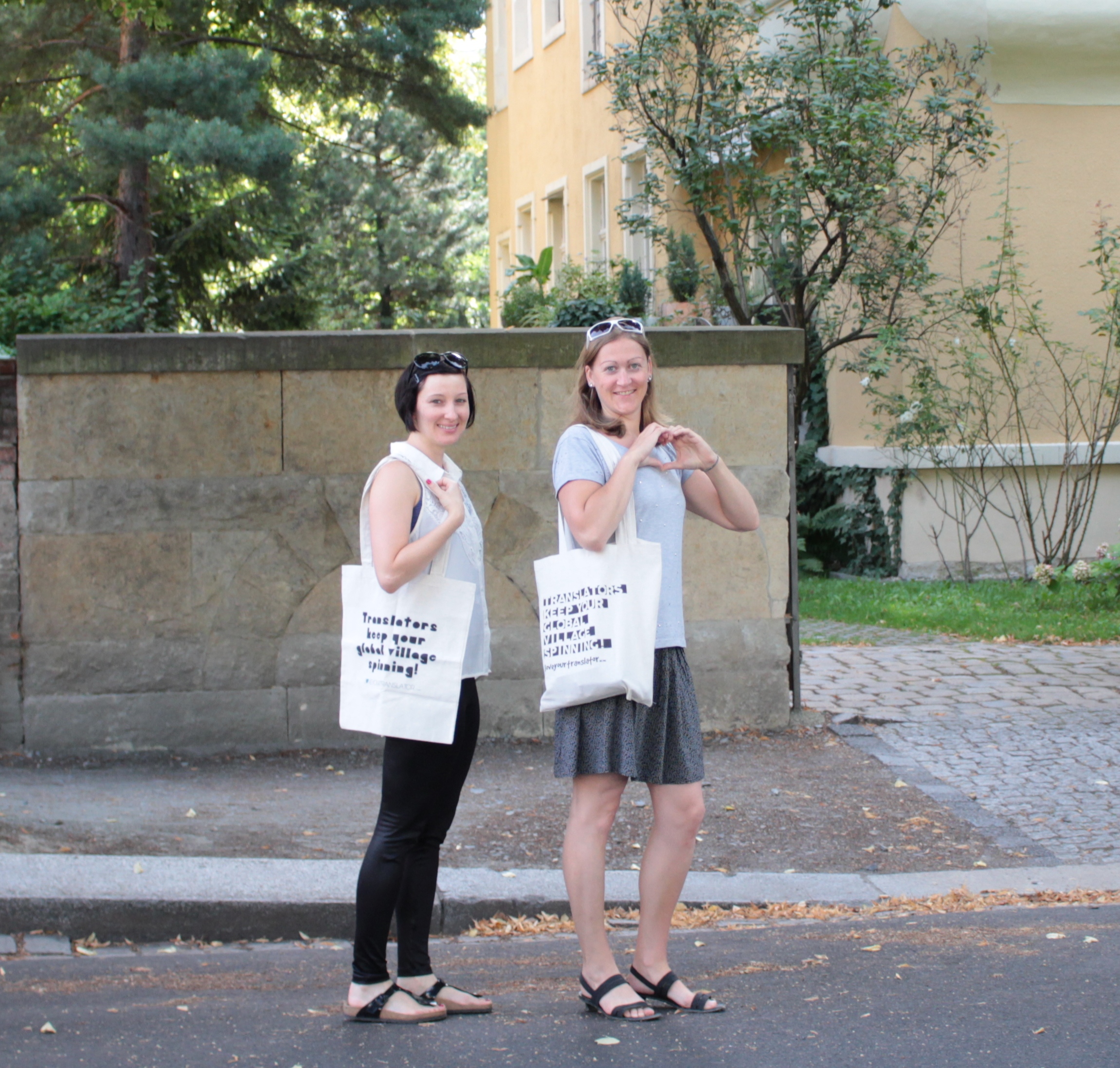
When you walk through your city, maybe on your way to work early in the morning or to meet a friend in your favorite street café in the late afternoon, do you pay attention to the grafittis, posters and stickers on walls and street lamps? Never really thought about it? Well, you should definitely keep your eyes open, because you might spot a sticker with a green heart, telling you to “LOVE YOUR TRANSLATOR”.

About ten months ago, we had the idea of bringing the discussion of translators’ lack of visibility in our society to a different level. We wanted to call attention to this phenomenon by involving people from all over the world. We wanted them to talk about translation. We wanted them to reflect about who the “people behind the texts” (as Andrew Chesterman referrs to translators) are, how they work and which role they play in our globalized world.

Last year, Marie talked about fair translations at the Falling Walls Lab, an international conference for young researchers, in Berlin. We decided to start our sticker campaign at the lab and hoped that at least a few conference participants would take stickers back to their countries and do some sticker bombing for us. So, within only a few days, we had 200 prototype stickers printed, set up a Facebook page and a blog and we were ready to go.

The first stickers traveled to Israel, the USA and to some cities in Germany. We gave everyone who wanted to support us two or three stickers to attach them to a street lamp (or anything else) near a famous sight in their city. And we asked them to share a picture of their sticker online, as a reference. The original plan was to give stickers to people we already know. But word of the LOVE YOUR TRANSLATOR campaign spread so quickly into the international translators’ and interpreters’ community that we were left almost speechless.

Only within a few days, many translators, interpreters, international literature lovers, Translation Studies scholars and others sent us requests for stickers and we realized that a few hundred stickers would by far not be enough. So, we had 5000 new stickers printed and sent them to Spain, Portugal, the Netherlands, France, Albania, Brazil, Argentina, Canada, Australia and other countries. It was amazing! Sometimes, we had sent away more than 50 letters a week. We are still receiving so many pictures, that we can hardly keep up with updating our galleries.

When we look at the numerous tweets and e-mails we have received over the past ten months from all over the world, we are so humbled by the massive support we are getting from the global translator community. The pictures and messages mirror a diverse and international, caring and closely interwoven professional community.

Earlier this year, when sending away stickers has become really expensive for us and our budget was too tight to have new stickers printed, many of our friends and supporters had donated money through a crowdfunding campaign at betterplace.org and we could continue with the LOVE YOUR TRANSLATOR campaign.

We have also received some critical feedback, which we appreciate just as much. We are aware of the fact that LOVE YOUR TRANSLATOR remains mainly within the translators’ bubble. We also realize that patting each others’ backs might not have a massive impact on how much translation buyers are willing to pay.

But, on the other side, we have talked with many of our friends, business partners and coworkers about translation and about this sticker bombing campaign. People ask us about what they have to consider when they need a translation and whether we know good translators. So, there’s a little bit of progress there. If we look at our website or Facebook page, we see a growing community. It is small and it might not have a lobby. But maybe language professionals can be their own lobby. They stand up for themselves and connect with each other. They share best practices and professional norms. So, staying within the bubble might not be such a negative thing, as long as it encourages translators to be proud of their professional role. We believe that spreading the word for more appreciation for language professionals’ work, while having fun and building a community is one small step into the right direction.

If you have not requested your LOVE YOUR TRANSLATOR stickers yet, visit our website and drop us a note.

It was a great honour to feature you both on our blog! Thank you for accepting my invitation and taking the time to write about such a lovely campaign. You girls rock! I’m a big fan of you both and great supporter of your initiative.

If you haven’t heard of the campaign before, check it out. Order your stickers and stick them around. Spread the love. And for those who have already ordered, received and sticked them already, please help the girls by donating for the campaign. Any amount is much appreciated.

About the authors
LYT_usMarie-Luise Groß is a Ph.D. candidate at the Center for Translation Studies of the University of Vienna. Her research focus is on the impact of the social web on freelance translators’ social networks, on internet entrepreneurship in the Creative Industries and internet-enabled business models.
Anja Müller is a freelance translator for English, Polish & German in Dresden, Germany. “During my very interesting and challenging work I often face […] lots of prejudices against my profession”, she says.  With LOVE YOUR TRANSLATOR, Anja wants to promote greater understanding and appreciation for all her colleagues and herself.

Guest post: Technical translation (in Portuguese)

Welcome back to our series of guest posts! Today’s guest is Melissa Harkin, Brazilian translator, who wrote about technical translation and the difficulty in finding good translators.

Welcome, Melissa!

words


O mercado de traduções técnicas e a escassez de bons profissionais

O tradutor é um profissional que carrega grande responsabilidade. Uma única palavra errada ou fora de contexto pode ter consequências desastrosas. 

A mesma responsabilidade reside com o cliente em relação à necessidade de contratar um tradutor profissional e competente, fornecer material completo e preciso para a tradução, obedecer ao prazo dado pelo tradutor (ao invés de pressioná-lo para entregar antes do prazo acordado) e trabalhar em parceria com o tradutor contratado no que diz respeito a terminologias técnicas, tom de voz do texto e perspectivas culturais da linguagem. 

Estes aspectos ficam ainda mais evidenciados quando o texto é técnico. Manuais de operação, relatórios médicos, estudos de impactos ambientais e sociais, procedimentos de segurança e outros tantos tipos de documentação técnica não podem, de forma alguma, conter erros. 

A tradução técnica é conhecida por ser um dos mais difíceis tipos de tradução escrita. O tradutor tem de dominar a difícil tarefa de traduzir o texto técnico com habilidade e de forma correta para não perder o significado de uma palavra ou expressão, não alterar o contexto e nem cometer erros que podem levar não só a danos aos equipamentos, como também colocar em perigo a saúde ou mesmo a vida de outras pessoas. 

Não é necessário ser engenheiro ou médico para traduzir determinados conteúdos, mas é necessário conhecer e entender o assunto a ser traduzido. 

O tradutor não deve aceitar traduzir tudo o que aparecer pela frente. Ele só deve traduzir um texto médico, por exemplo, se realmente entender e/ou conhecer o assunto. O mesmo vale para outros tipos de conteúdos técnicos. 

A palavra de 71 milhões de dólares – Em 1980, Willie Ramirez, então com 18 anos de idade, foi internado em um hospital da Flórida em coma. Seus amigos e familiares tentaram descrever sua condição para os paramédicos e médicos, mas eles só falavam espanhol. A tradução (interpretação) foi realizada por um membro da equipe médica que era bilíngue e traduziu “intoxicado” como “intoxicated”. Um intérprete profissional saberia que “intoxicado” assemelha-se mais com “envenenado”, e não apresenta conotações de uso de drogas ou álcool que a palavra “intoxicated” carrega. A família de Ramirez acreditava que ele estava sofrendo de uma intoxicação alimentar. Ele estava na verdade sofrendo de uma hemorragia intracerebral, mas os médicos procederam como se ele estivesse sofrendo de uma overdose intencional de drogas – quadro que pode apresentar alguns dos sintomas do paciente na ocasião. Por causa da demora no atendimento, Ramirez ficou tetraplégico. Ele recebeu uma indenização por imperícia médica no valor de 71 milhões de dólares. 

Já é difícil achar bons tradutores no mercado, afinal, não basta ser bilíngue para saber traduzir. Mas encontrar [bons] tradutores técnicos é ainda mais complicado.

O tradutor técnico é aquele que trabalha com conteúdos científicos, de tecnologia ou engenharia. Ele precisa não somente conhecer e entender o assunto a ser traduzido como também, muitas vezes, ter a habilidade de escrever de diferentes formas, usando um tom de voz mais acadêmico ou uma escrita mais parecida com a de manuais. 

Há uma verdadeira escassez desses profissionais no mercado de tradução. E isso faz com que cada vez mais conteúdos sejam traduzidos por pessoas sem o devido domínio e/ou conhecimento do assunto. 

Mas também não basta o tradutor técnico ser proficiente nos idiomas que traduz e conhecer o assunto a ser traduzido. Ele precisa buscar o desenvolvimento e aperfeiçoamento contínuos, mantendo-se atualizado nos conteúdos e inovações técnicas das áreas de conhecimento que traduz através de jornais, revistas, cursos, palestras e visitas técnicas. 

O cliente, por sua vez, precisa conhecer o histórico profissional do tradutor para ter certeza de que o profissional escolhido é realmente o mais indicado para traduzir seu conteúdo.

Thanks a lot, Melissa, for accepting my invitation and taking the time to write such a great piece! It was a real pleasure to feature you on our guest series. 🙂

Please feel free to comment or ask her anything. 😉

About the author
melissa-harkinBacharel em Direito e pós-graduada em Gestão Estratégica (MBA) pela FMU, Melissa Harkin trabalha como tradutora desde 1997, tendo também atuado por vários anos em outros mercados (Óleo e Gás, Aviação, Farmacêutico, RH, Construção, Energia e Meio Ambiente) antes de se dedicar em tempo integral à Tradução.
Melissa é membro da American Translators Association (ATA) – a maior associação profissional de tradutores e intérpretes nos Estados Unidos, e é filiada à Federação Internacional de Tradutores (FIT), com mais de 10.000 membros em 90 países.
www.melissaharkin.com

Guest post: A translator when…

Hi, there! Here we are, on yet another guest post. Do you know the Tumblr Um Tradutor Quando? Well, if you do, you’ll like today’s guest, Michele Santiago, the mind and creativity behind the Tumblr.

Welcome, Michele!

tumblr_n1cwbfjn0V1ttbxdso1_400

Marketing has many forms, my friend

The sentence “no man is an island” acquires new meanings when it comes to online presence and marketing. If you are a freelance translator, knowing these words and adding them to your vocabulary is a must. Some find it easier to keep an online presence via website (and we all should have one, keep that in mind), statically. Many others also try blogging. Unlike Caroline, I found out keeping a blogging schedule was too hard. And the thing is we forget about other possible means to connect with our audience.

Your audience can be your target clients, or your colleagues. If you are more like me, then you are not comfortable with this topic. Having to show yourself out there, maybe even talking to strangers, starting a conversation – I am more of a tech-kind-of-girl, feeling more comfy in front of the computer screen. If this is your case, then let us change it. You do not have to become a party person overnight, but you must find a new zone where you feel OK (maybe even happy?) with putting yourself out there. After all, you are offering a service, but if the word is not out there, how will your potential clients find you?

Two years ago, I started a Tumblr called Um Tradutor Quando (something like “a translator when…”). It was supposed to be only a way of making fun of the weird things that happen to us, translators. But we all have our limitations and one of mine is creativity. So I shared the Tumblr address in a Facebook forum asking for contributions. And it worked. I started receiving lots of interesting ideas. And it started to grow.

I kept this project as “something aside”, reluctant to see it as another online presence tool for my work. Because that meant work, and it was supposed to be only for fun, when I had nothing else to do. The first time I noticed this was actually a good means for publicity was when I met a colleague in an event and she recognized me, and introduced me to another colleague as “Michele from that Tumblr”. That situation gave me a hint on how important this side project was.

On another occasion, a colleague approached me asking if she could refer me to a client of hers, who was looking for a Brazilian Portuguese translator for a specific project. It was a project that required some level of creativity (oh, the irony!), and that she felt my Tumblr could serve as a good portfolio.

The third time was really the charm. It was in a conference called Café com Tradução, in Brazil, April this year. I was not there, unfortunately, but I was following everything online. A colleague was giving a talk about social media as a commercial tool, and she mentioned my Tumblr as a good example for online marketing. The first Tumblr in Portuguese about translation (this is the post where I thank her for the mention, too bad the video is not available anymore – http://goo.gl/zmzqIu). This is when I realized I needed to be more serious about it, schedule posts more often, look deeper for new GIFs and ideas. And if you visit http://umtradutorquando.tumblr.com/, you will notice that I have not posted very often lately, but the reason is there as well.

There were other memorable occasions in which I was reminded of all that, such as a nomination for the ProZ.com Awards, and the invitation from Caroline to write this (thank you!), but I am sure you got my point.

My intention with this text is not to assemble an army of translators with Tumblrs. You do not have to do that to keep a good online presence – or if you feel like it, then do it. The most important thing is to acknowledge the power of social media, and that there are so many platforms you can test drive to find your unique tool, the one that works for you and feels like a fun project. Start looking for it.

Thanks a lot for accepting my invitation and kindly taking the time to write this post, Michele! It’s a real honor to feature you on our blog.

If you still don’t know her Tumblr, don’t waste any more time. Check it out now!

Comments, questions, doubts?

Author’s bio
MiSantiagoMichele Santiago is an English and Spanish into Brazilian Portuguese translator and localizer. She specialized in Life Sciences, Business and IT texts. Holds a MA Degree in Translation from the University of Porto (2013). Michele is a member of American Translators Association (ATA) and Associação Brasileira de Tradutores e Intérpretes (ABRATES), and trainer and mentor in ProZ.com. She is also the author of the Tumblr Um Tradutor Quando. You can contact her via email (michele@santiagotranslations.com), Twitter or LinkedIn.

Guest post: Audiovisual translation

Hi, there! How have you been? For those of you who live up North, enjoying the summer break? And for those who are on vacation, hope you find a minute or two to read today’s guest post. Valentina Ambrogio, Italian, is our first foreign translator guest.

Welcome, Valentina!

file5091340639221

Audiovisual Translation: Subtitling vs Dubbing

If there is one thing I have learnt in my experience as Audiovisual Translator is that I will never be able to watch foreign movies – or any TV programs for that matter – the way I used to. Yes, because now I pay attention to every small translation-related detail! Imagine how thrilled my boyfriend must be when I start complaining about mistranslations or wrong subtitle segmentation, when the only thing he wanted to do was relax after a long day.

Let me tell you something about my specialisation.

What Audiovisual Translation is

Audiovisual Translation (AVT) is the translation of any audio, visual or audiovisual material to facilitate its distribution in a different market. When we talk about AVT we usually refer to dubbing, subtitling, localisation, and media accessibility (audio description, subtitling for the hearing-impaired).

Most of my workload deals with subtitling and dubbing, so I will focus more on these two subjects and my experience with them.

Subtitling

Subtitles help the audience understand the ‘spoken part’ of a movie while listening to the original dialogues. The widespread practice of fan-subbing made people think that subtitling is an easy job. Sorry to disappoint you, but it is not! As any other translation specialisation, the translator needs proper training, and the existence of degree courses on this subject should be a clear hint! Subtitling is not just mere translation (what is it after all?), and the subtitler has to pay attention to, for instance:

  • Character length – usually each line cannot exceed 40 characters, and two lines maximum can form each subtitle.
  • Duration – the viewer must have the time to read all subtitles appearing on screen. Average duration is 1.50 – 2 seconds for very short subtitles (one or two words) up to 6 seconds for longer subtitles.
  • Synchronisation – there must be a close correlation between film dialogue and the presence of subtitles on screen.

Audiovisual Translation is not just about translating dialogues though. There are other important elements -such as signs, letters, captions and other written text – which are often fundamental to the plot and therefore need to be translated. This becomes an issue when you have important pieces of dialogue and, at the same time, a relevant sign coming up on screen. In cases like this, the subtitler has to make an important choice and omit what he/she considers less relevant to the plotline. Good subtitles are like tailor-made dresses: they fit perfectly, but the tailor’s work is not visible.

Dubbing

Dubbing is the translation and adjustment of dialogues – or better, adaptation – to the mouth movements of the actor (lip synchronization), which is also one of the major constraints of dubbing. Once I read that dubbing is like an illusion that the characters talk in the target language. The translation approach varies significantly from subtitling. For instance, the translator has to give as many indications as possible to the voice-over actor, such as:

  • Name of the character;
  • Short/long pauses;
  • On-screen or off-screen dialogue – even within the same sentence.

There are a lot more, these are just a few. The final translation looks a lot like a movie script, but much more detailed than that. Other factors to take into account are body movements and non-verbal elements. Dubbing takes place during the post-production phase. It involves an entire team of experts, which is why dubbing costs are considerably higher than those of subtitling.

Subtitling or Dubbing?

There is a long and ongoing discussion about the pros and cons of these two very different techniques. In a nutshell: on the one hand, subtitling allows the viewer to enjoy original dialogues, which is good both in terms of language learning and even just for a matter of enjoying original voices and all their different nuances. Moreover, it is faster than dubbing, thus allowing earlier access to the media. On the other hand, not everyone enjoys a good movie with subtitles, which are perceived as a distracting element. This situation is more common in those countries where dubbing is the most common practice.

In Italy, some major dubbing companies managed by a small group of families take care of 80% of all movies and related dubbing work, including the translation part. The result is that all movies not only speak the language, but also use the same voices. This is, in my opinion, one of the major downsides of dubbing. Don’t get me wrong, voice-over artists are true professionals. They are impeccable and just as good as screen actors, but I believe dubbing interferes too much on the essence of the movie.

Well, I root for subtitling. My latest subtitling work involved adaptations of movies for international film festivals. Translating foreign movies allows me to get in touch with different cultures and different cultural movie styles. Sometimes I feel a real connection with these movies and I get really sad when I realise my job is done – this is how much I love this job. Isn’t this the best feeling?

Thanks a lot for your rich contribution to our blog, Valentina! I’m really glad you accepted my invitation and took the time to write something interesting to us. 🙂

Valentina also has a newly launched blog herselft. Check it out!

Comments or doubts?


About the author
fotoValentina Ambrogio is a professional English to Italian translator, localiser and subtitler, and director of Rockstar Translations. She is currently based in Rome, where she works as in-house translator. She (proudly) describes herself as TV-series addict, anglophile, potterhead and whovian. You can find her on Twitter, LinkedIn and Facebook. Valentina has recently started a blog, called “The Translation Cauldron”.

Guest post: Semana do Tradutor da Unesp

Olá, estimados leitores! Sejam bem-vindos a mais uma publicação convidada! É sempre um prazer receber cada um de vocês no meu blog. Como o assunto de hoje é um evento brasileiro de tradução, resolvi fazer a introdução também em português.

O convidado de hoje é o Fábio Bianchi, aluno do curso de Tradução da Unesp e presidente da Comissão Organizadora da Semana do Tradutor da universidade. Convidei-o para falar um pouco mais sobre o evento de tradução mais tradicional do Brasil, além de também ser um dos melhores. Como ex-aluna, com orgulho, da universidade e do curso, é um prazer poder recebê-lo aqui, Fábio. Seja bem-vindo!

10569606_604962609616305_628551887_o

XXXIV Semana do Tradutor e I Simpósio Internacional de Tradução

A Semana do Tradutor é um evento realizado anualmente, desde 1981, por discentes e docentes do curso de Bacharelado em Letras com Habilitação de Tradutor, da UNESP de São José do Rio Preto (IBILCE). É um dos mais tradicionais eventos entre os tradutores, em que pesquisadores e profissionais da área são convidados a ministrar minicursos, proferir palestras e participar de mesas-redondas, promovendo a integração entre pesquisadores, profissionais, especialistas e estudantes. 

Ao longo dos anos, a convenção tem constantemente se evoluído e, neste ano, após várias reuniões, a Comissão Organizadora optou por expandir o diálogo criado no evento para o âmbito internacional. Assim, foi decidido que, simultaneamente à XXXIV Semana do Tradutor, seria realizado o I SIT (Simpósio Internacional de Tradução), procurando reunir profissionais de diversas partes do mundo para ampliar a troca de experiência entre os tradutores.

O Simpósio, cujo foco principal é a Tecnologia na Tradução, trará palestras e minicursos ministrados por profissionais internacionais, como Lynne Bowker, Prof.ª Dr.ª na University of Ottawa; Jorge Díaz-Cintas, Prof. Dr. na UniversityCollege London; e Yves Champollion, desenvolvedor do Wordfast, famoso software de memórias de tradução.

Além de grandes nomes estrangeiros, a Semana também contará com fortes nomes nacionais, entre eles Márcia Martins (PUC-RJ), Caroline Alberoni, Dilma Machado, Paula Ianelli, Pablo Simpson (UNESP), Andreia Menezes (UNIFESP) e Claudia Mauro (UNESP).

A parte de apresentação de trabalhos também se destaca no evento. São mais de duzentos trabalhos inscritos (nacionais e internacionais) em onze linhas temáticas, como tradução literária, tradução audiovisual e lexicografia.

A XXXIV Semana do Tradutor e o I SIT acontecem de 22 a 26 de setembro no campus da UNESP de São José do Rio Preto, SP. As inscrições para ouvintes estão abertas, e o valor promocional estará disponível somente até dia 31 de julho. Participe!

Mais informações:
www.semanadotradutor.wix.com/principal
www.facebook.com/semanadotradutor

Muito obrigada por sua participação, Fábio! Será um enorme prazer poder participar como palestrante em um evento em que já participei como aluna. Sempre é bom poder dividir nosso conhecimento, por menor que seja, com os alunos que desejam realmente ingressar no mercado.

Não se esqueçam: o valor promocional é somente até quinta-feira, 31 de julho. Depois disso, ele aumentará. A Semana é uma ótima oportunidade de networking e troca de experiências em cinco dias repletos de informações úteis.

Para os interessados, minha apresentação será na quarta-feira, dia 24 de setembro, às 14h, sobre Branding, marketing e mídias sociais.

Author bio
10567588_604552796323953_1442520886_nFábio Bianchi está no terceiro ano do curso de Bacharelado em Letras com Habilitação de Tradutor (cursando inglês e italiano) na UNESP de São José do Rio Preto. Desde 2012 faz parte da Comissão Organizadora da Semana do Tradutor, em que hoje ocupa o cargo de presidente.

Guest post: Sworn translators and interpreters

Hello, readers! Hope you’re all doing fine.

Today, we’ll welcome our guest Jorge Rodrigues, a Brazilian sworn translator.

Welcome, Jorge!

Certified-Translation1

Sworn Translators and Interpreters: What are they, how to become one of them, and what do they do?

It was a pleasure and honor to receive Caroline’s invitation to write a few words about sworn translations in Brazil, but not an easy task at all. I will do my best to provide her readers with at least the main insights regarding the profession. 

Beginning at square one, a Sworn Translator and Interpreter (the official title in Brazil is Tradutor Público e Intérprete Comercial – TPIC) is a professional translator and interpreter who seats and passes commissioning examinations (concurso público) held from time to time by the Business Registry (Junta Comercial) of each Brazilian state, and there are specific statutes governing their activities in the country, namely Federal Executive Order no. 13609/1943 and DREI Regulatory Guidance no. 17/2013. In addition to that, each Business Registry also issues its own specific statewide regulations regarding the profession and its technical and operational procedures. 

There are not any specific schedules for the commissioning examinations, and in some cases time spans between them may reach many, many years. In my specific case, I passed my examinations in English and Portuguese in the Brazilian northeastern state of Sergipe in December 2013, and was sworn-in and inaugurated in office in March 2014. 

As to the examinations, they comprise two phases: a written test containing a translation from the foreign language of your choice into Portuguese, and a translation from Portuguese into the foreign language. The legislation requires that the translation into Portuguese involves a technical document, such as a power of attorney, an excerpt from a charter party or from a company’s articles of association, for instance. For the translation from Portuguese into the foreign language, on the other hand, a good literary text must be used. My examinations involved a power of attorney into Portuguese and an excerpt from A Morte e a Morte de Quincas Berro d’Água (The Double Death of Quincas Water-Bray), by Jorge Amado, into English. The power of attorney was a relatively trivial task for me, but the “Quincas Water-Bray” thing was really hard – it almost burned my two brain cells down. 

About a month or so after the results of the first phase are announced, successful candidates seat the second phase of the examinations. It is an oral test before a bench of examiners, with three sections: reading aloud, sight translation, and a presentation in a foreign language with questions and answers in Portuguese and in the foreign language. The examinee receives two short texts, each of them a paragraph-long, and has a few minutes to read and analyze them silently. Then, both texts should be read aloud in the source language, which is section one of the test. Afterwards, each text has to be sight-translated orally into English and Portuguese, respectively. That is the second section. Finally, in the third section, a number between one and five must be chosen by the examinee. Each number corresponds to a topic with respect to which a short presentation must be given by the examinee, after a brief lapse of time for preparation. When the presentation is finished the examiners ask questions switching languages, one of them in Portuguese and the other one in the foreign language, and their questions must be answered accordingly. This was very stressful, almost painful for me, as I always get very nervous when I have to seat oral examinations. The load of subjectivity involved in this type of test scares me. But eventually it turned out all right. 

After successfully seating the commissioning examinations, some bureaucratic procedures are to be followed: documentation submission, enrollment, sworning-in, and the formal inauguration ceremony. Over a month to collect, gather, organize, prepare, and submit a ton of documents to the Business Registry. Hard work indeed! And many people think sworn translators make easy money. How unfair! Nothing could be farther from reality. 

Well, after inauguration, Sworn Translators and Interpreters are vested with “nationwide public faith” all over Brazil, that is, their translations and interpreting assignments enjoy full faith and credit throughout the country. Despite their work being valid nationwide, they have specific jurisdictions and venues: they can only work in the state where they passed their commissioning examinations and were enrolled and sworn-in. Except in cases of transfers to other states, which although possible are neither simple nor frequent. 

All documents issued abroad must be translated by a TPIC in order to be legally valid and lawfully binding in Brazil, and conversely it is advisable, although not always required, that these professionals also translate any documents issued in Brazil intended to be used abroad. TPICs can also be called to act in Court as translators, interpreters, surveyors, or expert witnesses, and to accompany process servers and bailiffs in various judicial service of process procedures. Common civil registry formalities, such as marriages and the granting of all sorts of deeds and documents, when involving foreign nationals must also be assisted by a Sworn Translator and Interpreter. In a nutshell: whenever and wherever a translation or interpreting assignment is supposed to cause legal effects, a TPIC’s assistance is required. 

Sworn translations must be printed on the Sworn Translator and Interpreter’s official paper, initialed, signed, stamped, bound in books and kept filed for official purposes, in a procedure very similar to that adopted by civil and real estate registries in Brazil. Such books are submitted to the Business Registry for validation and inspection from time to time or upon official request. Should the TPIC die, resign or be removed from office, their books must be placed under the Business Registry’s custody. 

As far as fees are concerned, each Business Registry publishes, enforces and from time to time adjusts a specific sworn translation and interpreting price list which is lawfully binding on them. Compliance with such price lists is mandatory, and any infringements regarding thereto may give cause to a TPIC’s removal from office. 

On balance, by and large it is a rewarding and gratifying career. If this is something that you would fancy doing, just go for it. Study hard, and the next time there be commissioning examinations somewhere in Brazil it may be your opportunity to join the club.

Thank you for accepting our invitation and for taking the time to write such an interesting and enlightening post, Jorge! It was a pleasure featuring you on our blog. 🙂

Please feel free to comment and/or ask any questions below. Jorge is also available to answer questions or doubts via e-mail (jorgerpr@uol.com.br).

About the author
Jorge RodriguesJorge Rodrigues is a professional translator of English, French, Spanish, Italian and Portuguese since 1992, specializing in the legal, commercial, financial, business, corporate and marketing areas. English<>Portuguese interpreter. Translator and Interpreter with the Federal Courts of Brazil, translator with the Federal Court of Accounts – Brazil (TCU), Sworn Translator and Interpreter (TPIC) of English and  Portuguese, and surveyor of the Court of Appeals of the State of Sergipe (Brazil). Currently studying for a BA in Translation and Interpreting at Universidade Católica de Santos. Volunteer translator and reviewer with Translators without Borders, and active member of several translation and interpreting communities, such as ProZ.com (moderator), Translators Cafe, LindkedIn, Facebook, and others. Member of ABRATES, ATA, and SINTRA.

Guest post: Multitude (in Portuguese)

Welcome back, dear readers! Did you like the World Cup final? Congratulations to all our German followers! You totally deserved to win the cup! 🙂

Back to business, our guest today is Sheila Gomes, Brazilian translator behind the project Multitude, about which she will write.

Welcome, Sheila!

yt

Multitude, um site educacional para tradutores e intérpretes

Lá nos idos de 1976, quando eu tinha 5 anos de idade, meus pais fundaram uma das primeiras escolas de idiomas da minha cidade natal, Joinville. Foi quando comecei a estudar idiomas e conviver no meio educacional. Foi também onde nasceu o amor pelos livros e pelo aprendizado, primeiro como aluna, depois como professora. Mesmo depois que meus pais se aposentaram e de a escola encerrar as atividades, em 2001, ainda continuei sendo professora e trabalhei em várias outras instituições de ensino privadas e públicas, num total de 23 anos de ensino. Como sempre tive interesse em áreas variadas, também trabalhei com produção de teatro, comércio e locação de livros, e venda de equipamentos de informática. A tradução foi uma atividade secundária por algum tempo, depois assumida como atividade principal e na qual acabei descobrindo não só um meio de sustento, mas aquilo que hoje sei que era meu destino: construir pontes e servir como ponte.

Assim, a ideia de criar todo o projeto no qual o Multitude se baseia já vem de longa data e é uma extensão dos objetivos da minha própria carreira de tradutora profissional: ligar objetivos concretos e possíveis caminhos para alcançá-los, ser uma referência entre tradutores e intérpretes iniciantes e veteranos, buscando aprimorar a formação deles e promover as profissões de tradutor e intérprete. E, principalmente, contribuir para alçar a tradução e a interpretação a um patamar cada vez mais profissional e ao reconhecimento da área como um trabalho essencial para o desenvolvimento econômico, o congraçamento de culturas e a difusão do conhecimento.

Por que “Multitude”? Dois fatores nortearam a escolha do nome: (1) estabelecer um conceito que refletisse a abrangência e diversidade do trabalho de tradutores e intérpretes e (2) deixar claro o objetivo de intercâmbio pessoal do site, um serviço que envolve muitas pessoas, tendo-as sempre como meio e fim, do primeiro atendimento à resolução de dúvidas e dificuldades, sem fórmulas institucionais padronizadas nem de venda de “pacotes de ensino”. O logo também levou isso em conta, incluindo visualmente a importância das pessoas envolvidas e a sigla T(&)I, para representar o público.

Desde que foi lançado, em março de 2014, o Multitude já trouxe vários resultados concretos e importantes para o  mercado de T&I, como uma parceria com a ABRATES – Associação Brasileira de Tradutores para difundi-la e promover formação a preços diferenciados e vários clientes satisfeitos que hoje são multiplicadores da promoção da profissão, pois enquanto encaminham-se na carreira, também formam novos grupos de compartilhamento por meio de mídias sociais, ampliam a rede de contatos e difundem a profissionalização.

Assim como os clientes, os colegas que colaboram ministrando webinars e cursos e oferecendo consultoria são pessoas de engajamento notório com a profissão, com experiência comprovada nas áreas de conhecimento dos serviços que oferecem. Nomes conhecidos por sua experiência, mas também sua solicitude em ajudar iniciantes e veteranos em suas dúvidas, como Danilo Nogueira, Patricia Franco, Reginaldo Francisco, Kelli Semolini, Adauto Villela, Diego Raigorodsky, além de outros que estão para participar de projetos futuros. Na parceria com a ABRATES, a primeira iniciativa é uma série de webinars com Paulo Henriques Britto, que fará a versão virtual de sua oficina sobre tradução de diálogo na ficção.

Além dos webinars, cursos e consultoria comercializados no site, o Multitude também divulga informações com um blog que publica semanalmente histórias de tradutores e intérpretes já estabelecidos e, nos vários perfis de mídias sociais, informações gerais ligadas à tradução e interpretação. Os projetos são sempre divulgados nos grupos de tradutores e por meio de uma newsletter enviada por e-mail aos cadastrados no site.

Sobre o Multitude
O Multitude é um site educacional para formação contínua de tradutores e intérpretes, que oferece webinars, cursos e consultoria voltados ao aperfeiçoamento profissional tanto no trabalho específico das respectivas áreas de atuação quanto nas questões empresariais relacionadas a mercado e gestão de carreira. É administrado por Sheila Cristine Gomes, autora deste artigo.

Thanks, Sheila, for having accepted my invitation and taken the time to write about such a great project to our blog. It was such an honor to feature you here! 🙂

Have you heard of Multitude before? If not, bookmark it and don’t miss out on anything else anymore.

If you have any questions, you know what to do. 😉

About the author
foto+logoTradutora de inglês e português com 19 anos de experiência. Também foi professora de inglês como idioma estrangeiro por 23 anos. Atualmente, trabalha com localização de software, sites e jogos e tradução de textos na área da saúde e biotecnologia, além de ser administradora do Multitude, um site de webinars e consultoria para tradutores e intérpretes. É bacharel em Turismo com ênfase em meio ambiente, pós-graduada em Tradução de inglês para português e graduanda em Informática biomédica na UFPR. Membro da ATA e IAPTI e representante regional da ABRATES na região sul. Reside em Curitiba, PR.

Guest post: Subtitling (in Portuguese)

Hello, dear readers! Hope you’re having a great beginning of the week. As of me, I’m quite anxious with the World Cup, as it has been for more than three weeks now. Today, Brazil plays on the first semifinal against Germany at 5pm (UTC -3). Who are you supporting?

Meanwhile, let’s welcome today’s guest, Jéssica Alonso, who wrote about subtitling.

Welcome, Jéssica!

film_archives_large_2

Legendagem: muito além de uma simples tradução

Se você costuma assistir a séries ou filmes legendados – seja no cinema, na televisão ou na internet – e gosta de prestar atenção também ao idioma falado pelos atores, muito provavelmente já se indignou ou formulou questões sobre uma ou outra escolha tradutória. É verdade que erros de tradução podem acontecer, mas muitas vezes as críticas acontecem por desconhecimento sobre a tradução específica para legendagem, uma forma de tradução audiovisual com características bastante peculiares.

Começarei abordando uma questão técnica: devido ao tamanho da tela, normalmente as legendas devem ser compostas por no máximo duas linhas de aproximadamente 32 caracteres cada, contando os espaços. Isso significa que, não importa quantas informações o falante diga, sua fala deve caber no espaço limitado destinado para aquela legenda. Surge então o primeiro desafio: a velocidade de fala é maior que a velocidade de leitura. Por esse motivo, o legendador muitas vezes vê-se obrigado a simplificar e reduzir o conteúdo do que foi dito oralmente, precisando selecionar as informações mais importantes a serem passadas para a linguagem escrita. É um excelente exercício de síntese e é sempre bom ter um dicionário de sinônimos por perto, já que quase sempre vale a pena optar por palavras de significado semelhante e menos letras.

Outro fator norteador ao se produzir legendas é o tempo mínimo necessário para a leitura. Pesquisas indicam que o brasileiro precisa de 1 segundo para ler, em média, no máximo 15 caracteres. Dessa forma, 1 segundo é o tempo mínimo que uma legenda deve permanecer na tela, considerando-se que um período mais curto fará com que a legenda “pisque”, impossibilitando a leitura. Então, se uma pessoa consegue ler no máximo 15 caracteres por segundo, uma legenda de 30 caracteres precisará ficar visível por no mínimo 2 segundos para que o telespectador tenha tempo de realizar uma leitura confortável. É aí que entra na legendagem, para a surpresa de uma tradutora formada em Letras, a matemática! (Nada que uma regrinha de três não resolva, mas, ainda assim, são cálculos!) O tradutor deve atentar para a proporção entre o número de caracteres e a duração da legenda. Se o tempo disponível for muito curto, cabe ao legendador achar uma solução, seja reduzindo mais o texto, seja unindo a legenda em questão com a anterior ou a posterior.

Após a tradução do vídeo segundo o que é ouvido – às vezes com o auxílio de um roteiro escrito –, o legendador deve também realizar a marcação do momento em que a legenda entra e sai da tela, processo chamado de timing. Por se tratar de um tipo de tradução que agrega diferentes estímulos, o visual pelas imagens e pelo texto escrito e o auditivo pelas falas e sons, o espectador espera que a tradução daquilo que é ouvido entre e saia simultaneamente com a fala do personagem. Há nesse quesito também outra convenção bastante adotada pelas produtoras: a duração da permanência da legenda na tela deve variar entre 1 e 6 segundos, uma vez que um tempo maior pode fazer com que o espectador releia a legenda, o que não é aconselhável. O tradutor, nesse caso, deve optar por “quebrar” a fala do personagem em mais de uma legenda com durações mais curtas, utilizando as respirações e pausas feitas pelo falante para auxiliá-lo na divisão das legendas.

Além das limitações em relação ao número de caracteres por linha, aos tempos mínimo e máximo de duração da legenda na tela e à velocidade da fala versus a velocidade da leitura, há também as restrições impostas pelas próprias produtoras. Assim como grande parte das agências de tradução ou dos clientes, muitas produtoras desenvolveram ao longo dos anos seu próprio guia de estilo, documento que deve nortear algumas das escolhas do tradutor legendador. Como você já deve estar imaginando, este documento é o responsável, na maioria das vezes, por sua revolta ao ouvir um “F*ck!” saindo da boca de algum personagem enfurecido com uma arma na mão em um filme do Tarantino e ler algo como um simples e inocente “Porcaria!“. Muito provavelmente o tradutor sabe a correspondência mais adequada para a expressão em português, mas seu “chefe” não admite o uso de linguagem de baixo calão em suas produções.

Muito ainda poderia ser dito sobre o fazer tradutório na área de legendagem. Há a questão dos diálogos, das onomatopeias, das palavras ditas sem som – como um cochicho –, dos sotaques em um mesmo idioma, da tradução de músicas, da divisão ideal das legendas, de seu formato, cor e posicionamento, entre muitas outras. Acredito, porém, que, abordando os quatro pontos acima, consegui desmistificar e esclarecer um pouco o trabalho do legendador, trabalho este que exige muitos cálculos e jogo de cintura para lidar com questões intra e extralinguísticas. Por isso, da próxima vez que for incomodado por uma questão tradutória ao ver um filme, lembre-se dos tantos outros aos quais você assistiu e leu sem nem perceber. Pois estes são os trabalhos de melhor qualidade: aqueles em que o tradutor entra no escurinho do cinema com você, sussurra as falas em seu ouvido e sai de fininho antes que as luzes acendam-se novamente!

Thanks a lot for your excellent contribution to our blog, Jéssica! I loved learning a bit more about subtitling, and I’m sure those who don’t work with it did too. It was a pleasure hosting you here. 🙂

Would you like to ask any questions to Jéssica? If not, feel free to make any comments as well.

Author bio
10525058_4433273566003_2109372173_nJéssica Alonso é tradutora formada em Letras com habilitação em português e alemão pela USP e pós-graduada em Tradução de Inglês pela Estácio de Sá. Fornece serviços de tradução desde 2011 e legendagem de vídeos em inglês e alemão para o português desde 2013. Já legendou diversos tipos de produções audiovisuais como séries de comédia e suspense, documentários sobre biologia, reportagens sobre automóveis e vídeos institucionais. E-mail: jessicatradutora@gmail.com. Perfil do ProZ.

Guest post: Conveying your image as translator (in Portuguese)

Welcome back, dear followers! Working/studying a lot? Well, take a quick break and read our guest post today, by Thiago Araujo.

Welcome, Thiago!

Image

Gentileza gera gentileza e a regra de três da comunicação virtual

A vida é cheia de surpresas e uma delas certamente foi o convite da Carol para fazer este post. Sou ótimo para um bate-papo entre amigos, mas a vida de freelancer me deixou com um quê de bicho do mato. Ainda assim, gosto bastante de trocar ideias, experiências e ajudar com o que posso. Daí o motivo de topar o convite.

A tarefa que me foi incumbida: falar sobre como gerenciar nossa persona virtual por meio da nossa comunicação.

Não, não é um post sobre branding e marketing no sentido estrito, mas pode até ser, se pensarmos de maneira mais ampla. Afinal, o que escrevemos na rede e a forma como nos expressamos é o que somos para quem nos lê. É e acabou. C’est fini. Não há o que fazer a respeito disso.Aliás, depois do que escrevi até aqui, aposto que vocês já me imaginaram de algum jeito, talvez até mesmo a minha voz. Ou me enganei? Acho que não.

Mãos à obra

Como tempo é dinheiro, vamos para a parte prática: o que eu faço, Thiago? Vamos acompanhar os seguintes casos:

Primeiro

Joãozinho e Zezinho traduzem documentos de recursos humanos, participam ativamente de grupos profissionais e tentam comentar sempre que possível. Nessa situação hipotética, os dois são igualmente competentes.

Por um lado, Joãozinho só faz posts relevantes, inclui dicas de cursos, dá opiniões fundamentadas, é cordial com os colegas de grupo e já recebeu indicações para trabalhos por sua conduta.

Zezinho, por outro lado — mesmo sendo excelente profissional— é um pouco relaxado quando faz comentários. Ora trata os outros participantes com intimidade indevida, ora comenta tudo sem nenhum rigor gramatical e, vez por outra, manda uma resposta atravessada por não reler o que disse e estar na correria.

Segundo

Mariazinha e Josefina são tradutoras aptas e entregam trabalhos de qualidade na área de biomedicina. A primeira é uma mulher de poucas palavras e de pouco tempo, enquanto a segunda, embora também não tenha muito tempo, gosta de conversar e é sempre muito agradável.

Em sua lista de tradutores, uma agência de tradução verifica que as duas têm as mesmas qualificações, então envia uma mensagem para cada uma, perguntando se podem fazer uma tradução que deve ser entregue no dia X.

Mariazinha está disponível e responde com um catatônico “Estou. Posso entregar para o dia X. Avise-me se devo prosseguir com o trabalho”, ao passo que Josefina envia: “Olá, Cliente X, como vai? Obrigado por me consultar. Estou disponível para o dia X, então posso fazer seu trabalho. Avise-me se devo prosseguir com o trabalho. Até mais e bom dia” como resposta.

Terceiro caso

Rodolfo e Astolfo são tradutores de textos financeiros que têm sites sobre tradução. Rodolfo é muito ligado às tendências do mercado, tenta ir aos eventos do setor financeiro sempre que possível e a comunicação do seu site está toda concentrada no linguajar das finanças, além de publicar e comentar notícias sobre economia no Facebook.

Astolfo, com nível de especialização equivalente, também tem um site claro e direto sobre sua experiência com tradução financeira, mas sua página pessoal é impregnada de piadinhas sobre o governo atual e conteúdo que poderia ser omitido de usuários desconhecidos.

Notou as sutis diferenças?

Eu explico: se temos dois prestadores de serviços cujo trabalho tem qualidade idêntica, o fator decisivo será 1. o preço ou 2. o valor agregado. Se o preço for igual, qual é o valor agregado?

Ora, o que vem a mais com o trabalho, um leitor mais astuto dirá. E o que seria isso? Nos exemplos acima, podemos citar a gentileza, a cordialidade e a forma como nossos colegas tradutores Joãozinho, Josefina e Rodolfo se apresentam aos clientes.

Pode parecer muito óbvio para quem já coloca isso em prática, mas gentileza gera gentileza! E, digam o que quiser dizer, mas todo mundo gosta de ser bem-tratado (Joãozinho), sentir-se especial (Josefina) e ter a certeza de que seu trabalho está em boas mãos (Rodolfo).

No lugar de um colega tradutor, gerente de projetos ou mesmo a pessoa responsável pela terceirização de serviços, eu só passaria trabalho para quem conheço, confio e, por que não, gosto.

Essas três historinhas foram criadas para destacar três comportamentos, que muitas vezes são esquecidos na vida on-line: respeito, gentileza e relevância.

E as piadinhas? Ué, são permitidas, mas não precisam ser visíveis para todo mundo. Basta restringir o conteúdo para amigos daquele vinculado à sua persona virtual.

Thanks for your lovely contribution to our blog, Thiago! I loved reading your post, and I’m sure our readers will too.

Comments, anyone?

About the author
ImageThiago é tradutor, revisor e tester. Traduz conteúdo criativo e localiza jogos, mas também trabalha com a área de negócios, marketing e turismo. Em novembro de 2013, formou a LingoHaus (LinkedIn).