Boosting Productivity and Removing Distractions

In our last post, we talked about tools for minimizing the effects of working all day long in front of a computer. Today, we will see some tools for helping us keep focused and free of distractions.
Image

We usually spend 8 or 10 hours per day – or sometimes even more than that – in front of the computer. However, it is quite difficult and it requires an extreme effort and discipline to stay focused and not check your email every 5 minutes (or less!), check what your friends/colleagues are tweeting about, see what people are posting on Facebook, read that (giant) infographic about productivity (how ironic!) on Google+, see who has viewed your LinkedIn profile, chat on Skype about your weekend adventures with a friend, browse Pinterest to find something cool, watch Beyoncé’s new video clip on YouTube, see who has commented on your blog. Phew! Talk about distractions! And the list goes on. Besides distracting and not allowing you to focus on your work, those are dangerous time-wasters if you are not careful.

Well, if you are one of those addicts who have a hard time keeping yourself away from online distractions, it may be a good idea to go hardcore.

StayFocusd is a Google Chrome browser extension that limits the time you spend on sites that, as predetermined by yourself, make you waste your time. Set the maximum amount of daily time you allow yourself to spend on each site and, after that, you are not allowed to access any of them for the rest of the day.

It is scientifically proven that our brain remains attentive only for a limited amount of time (and on a limited amount of information). To avoid overloading our brains with information or working long hours on a task non-stop, it is advisable to split your time in productive chunks and breaks. You can actively work for say 25 minutes knowing that you will have say a 5 minute-break to do whatever you prefer. After all, rewarding yourself is also important.

Strict Workflow is a Google Chrome extension similar to the Pomodoro technique – but as the name says – stricter. It enforces you to work 25 minutes in a row, blocking a list of websites set by you. After that period is over, you are allowed to access those blocked websites for 5 minutes. You can repeat that as necessary and change the timer duration.

Now if you want to have a better idea of the time you spend actually working and the time you spend on social media and the like, the software Visual TimeAnalyzer tracks all your computer usage (work time, pauses, internet use, etc.) and provides detailed reports of all your activity. You can find out how much time you spend on Facebook, working on projects, and even daydreaming!

If you just need to focus on writing your blog post, preparing your next presentation or writing a book, Ommwriter is a free text editor app for Mac OS (CreaWriter for Windows) that runs in full screen. You can change the font type and size, and the background image. Just indulge yourself in a calm distraction-free environment to be highly focused on your writing only.

Good luck and stay productive!

Do you know any other tools that help us keep up the good work and stay aways from distractions? Don’t be shy and share your thoughts with us.


Guest post: Proofreading (in Portuguese)

Hello, dear followers! Today we start February with exciting news in our blog: kicking off a guest series. I have invited friends and fellow translators to write about something they are good at, passionate about or simply related to their area of expertise. The idea popped up because many of them work in specific domains, and I thought it would be interesting if we had them talk about it to know more about other fields as well.
Our first guest is Beatriz Camacho, who is a professional proofreader and will be talking about her job (in Portuguese).

Welcome, Beatriz!

Image

O (incompreendido) revisor

O perfil do profissional

Dizem por aí que todo revisor sofre de TOC. Será? Piadinhas à parte, ser detalhista é sim condição fundamental para quem almeja seguir a profissão.

E, além do alto grau de atenção aos detalhes, gostar de ler também deve fazer parte do pacote. Mas gostar somente não basta; tem de amar. Incondicionalmente. Afinal, você alternará seus dias entre vampiros, zumbis, fórmulas químicas, mapas, receitas de bolos, milionários sadomasoquistas e não terá como fugir!

Recomenda-se ainda ao revisor cultivar um viveiro de pulgas atrás da orelha: duvidar de tudo e de todos. Nenhum dado ou grafia pode passar batido. Ao menor sinal de desconfiança, deve-se deixar todas as supostas certezas para trás e pesquisar como se não houvesse amanhã.

E, tocando num ponto delicado: como saber a hora (e a real necessidade) de intervir no texto e a hora de respeitar as escolhas alheias? Revisor sofre…

*pausa dramática*

Bom, vamos lá: como agir numa situação em que você precisa ter um olhar crítico sobre um texto e, ao mesmo tempo, aceitar escolhas de outras pessoas, mesmo não concordando com elas? Bom senso. Fácil assim? Hum… mais ou menos. Na revisão, a prática não leva à perfeição (o que me mata de catapora!), mas pelo menos nos ensina a tomar algumas decisões mais conscientes e maduras, como o desapego. No início, é difícil pro revisor entender/aceitar que ele não precisa necessariamente mexer em tudo (mostrar serviço, poxa!). Mas que também se não mexer em nada deve desconfiar de que há algo errado (sempre haverá erros!). Esse meio termo é o que embola tudo e, às vezes, acaba deixando autores/tradutores com raiva!

Mas vamos com calma, gente!  Depois de alguns anos de experiência, aprendi basicamente que: o que for facultativo deixa como está; se quiser incluir alguma sugestão que você considera relevante, um recadinho a lápis (ou balão de comentário) não faz mal a ninguém, mas quando houver ERRO… aí pode baixar a Stabilo vermelha!

Por fim, precisamos ter em mente que cada profissional tem seu papel dentro do processo editorial, o que parece óbvio, mas na prática não é bem assim. O revisor é o primeiro leitor de uma obra. Um leitor mais crítico, uma espécie de filtro para o público. É ele quem vai escolher palavras, ajustar frases, corrigir vícios de linguagem, enfim, deixar o texto fluido na língua nativa do leitor comum.

Uma revisão criteriosa, mais que simples perfumaria, é o cartão de visitas de um livro.

O trabalho

De um modo (bem) geral, o trabalho do revisor consiste em corrigir erros ortográficos e gramaticais.

Ah, se fosse só isso… *suspiro profundo*

Agora, inclua aí: verificar coesão e coerência, eliminar traços remanescentes da língua estrangeira, ambiguidades, repetições e vícios de linguagem, analisar a disposição dos elementos na página (se não há buraco ou estouro), conferir os pesos dos títulos e a paginação, bater o sumário com o miolo, acertar o tamanho das letras e as fontes etc. etc. etc.

UFA!

Viu, gente? Não é só trocar ‘esTe’ por ‘esSe’, não!

E é importante mencionar que os trabalhos citados acima, na maioria das vezes, são divididos em etapas: preparação (copydesk), primeira revisão, segunda revisão, releitura e controle de qualidade. Nem sempre todas elas são contempladas no processo, seja por falta de orçamento ou prazo, o que impossibilita uma divisão exata da função do revisor em cada uma.

Perspectiva de carreira

O campo de atuação do revisor é extenso: editoras (livros em geral, revistas, jornais, material didático), agências de publicidade, universidades, escolas, agências de tradução, produtoras editoriais, gráficas etc.

As editoras literárias (sonho de consumo de 9 entre 10 revisores) não costumam contar com uma equipe interna. Geralmente, o trabalho é terceirizado, por meio da contratação de freelas. Já em editoras que trabalham com livros didáticos, é muito comum haver uma equipe contratada trabalhando internamente.

A carga horária do revisor deve ser de 6 horas por dia, segundo norma do sindicato, mas nem sempre isso acontece.

Bom, acho que é isso…

Gostaria de agradecer à Carol pelo convite e parabenizá-la pela iniciativa de discutir assuntos que envolvem a tradução.

Espero que tenham gostado! E caso tenham alguma dúvida ou queiram conversar mais sobre o assunto, meu e-mail é: beatrizfcamacho@gmail.com.

You’re more than welcome, Beatriz! Thank you for being so kind and enthusiastic about my invitation (and for being the first guest). I loved learning more about the life of a proofreader. 🙂

Our next guest will be Carolina Ventura, who will be talking about medical translation, on February 11. 

Are there any other proofreaders out there that would like to add something? Please feel free to share your thoughts.

About the author
ImageSou graduada em Tradução e mestre em Linguística pela Unesp. Desisti de seguir na carreira acadêmica e, em busca da minha real vocação, acabei descobrindo que a tradução era apenas a porta de entrada para o incrível mundo editorial. Hoje, oficialmente, sou revisora de livros didáticos, mas também edito, preparo e traduzo, como freelancer, para várias editoras.

PROFT 2013 – Part II

Image

In August 2013, I started a series of blog posts about a symposium I participated here in Brazil – PROFT 2013 (III Simpósio Profissão Tradutor). Due to the event’s interesting topics and the interest of my Facebook followers who could not attend it, I decided to write a summary of the presentations I liked the most. After a long break between them, here’s the second part.

The first one, on the different possibilities of interaction between human and machine translators, by Reginaldo Francisco, was written in Portuguese. However, I decided to write this next topic in English, but please keep in mind the original presentation was conducted in Portuguese.

Comfort Points: Ergonomics, Furniture, Habits
Maria Lucia Cumo

Ergonomics

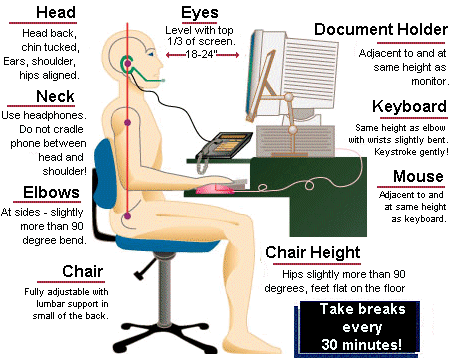
If you work with a laptop, make sure you have a separate keyboard and mouse. The keyboard must be directly in front of you (the letter “B” must be the central point) and the mouse should be next to it, on the same level. Make sure the screen is at eye level (you can easily adapt the computer/laptop’s height with a support or some books), but at a comfortable distance from you. Sitting properly is also important: your shoulders and hips need to be aligned; your knees should be slightly below the hips; the seat height must be slightly below the kneecap; your feet can rest easily on the floor or on a footrest. The translator’s line of sight should be parallel to the window and rows of lights to avoid glared and direct light into the eyes.

These two interactive videos show you a few tips on the right posture of your body in the office and on the move: Part I and Part II.

Image

Furniture

Having an appropriate ergonomic office chair is also a must for people who work in front of the computer. You need to make sure your chair has a comfortable cushion with breathable fabric, adjustable arm rests and seat height, and lumber support.

Ergotron has a Workspace Planner to help you plan your workstation, indicating the right positions, distances and heights of your body and desk components.

Habits

Working in front of a computer all day long can cause damage to your eyes, wrists and body in general. In order to counter the effects of sitting for a long time, stand once an hour and practice some sort of physical activity for about 30 minutes per day (divided in 5 minutes throughout the day). If you want to prevent eyestrain, damage to your wrist and the negative effects of sitting all together, get away from the computer every half hour. You can use this time to walk around the house, do some stretching exercises, have some snack.

The EyeDefender, a freeware eye rest reminder, helps you prevent CVC (Computer Vision Syndrome), among other problems related to computer use, by reminding you when you need to take a break. It also offers four options to enjoy your break. The f.lux is a software that adapts the color of your screen according to the time of day. Besides those resources, here are a few simple steps you can take to “stretch” your eyes:

  • Look away from the screen for a few seconds every few minutes and focus on distant objects
  • Look around
  • Blink several times

It is extremely important not only to rest your body, but also your mind. You do not necessarily need to leave the internet to do so. Here are a few websites that can help you de-stress, and remove anxiety and tension.

Calm
It allows you to choose whether to relax for 2, 5, 10, 15 or 20 minutes. You can also choose a nature scene that accompanies a relaxing background noise. If you prefer, you can opt for the guided relaxation, in which a relaxing voice instructs you on how to relax. An iPhone app is also available for download.

Silk
It allows you to freely draw using the cursor. Everything you draw is mirrored, creating patterns that draw in the eye. A background song follows your interactive art creation. An iPhone and iPad app is available for download.

Do Nothing For 2 Minutes
As soon as you open the link, a 2-minute countdown starts, followed by the sound of waves and a calming background image of the sea. You should not do anything else, besides enjoying the moment. If you do as much as move your mouse, the countdown starts from the beginning again.

Noisli
It allows you to choose from different sounds: rain, thunderstorm, wind, forest, leaves, water stream, seaside, water, bonfire, summer night, coffee shop, white noise, pink noise and/or brown noise. The background color also subtly changes.

The Pomodoro Technique can help you schedule your breaks and stay productive for 25 minutes in a row.

In a nutshell, it extremely important to define your work hours, taking regular breaks throughout your business hours to rest, stretch, relax and eat. Do not forget a good diet, eating something every 2-3 hours and drinking at least 2 liters of water per day also help us be more productive and healthy.

Here are some other related articles on the topic that may help:
The Health Hazards of Sitting
12 Yoga Poses to Undo the Damage of Your Desk Job
How Sitting All Day is Damaging Your Body and How You Can Counteract It

Do you have any other tips and/or suggestions to add? Feel free to comment on your routine as well. 😉

Exordium

Image

The New Year slowly and lazily starts today not only for me but for many other people (although I actually have to admit mine only starts for good after my birthday – which is on the 8th).

Professionally, I cannot complain about 2013. It was the year of changes:

  • I had the opportunity of working work in-house at one of my clients, so now I unquestionably assert I am a pro and proud freelancer. Do not get me wrong: it was an insightful experience. I was able to understand how an agency works and personally met some wonderful people. However, commuting to work, having to follow business hours, producing non-stop – without being able to make stops for social media or for simply walking around the house – and having to accept whatever project fell on my desk are definitely not my strong suit.
  • I stopped working for only one agency and improved – a lot – my client portfolio, including an international agency and an international direct client. You go, girl!
  • I improved my social media presence. I already had my Facebook fan page and my Twitter account since 2012, but my engagement increased last year. In 2013, I e-met some great translators from all around the world on Twitter, with whom I learned a lot, and exchanged experiences and knowledge. I finally got the courage to star my blog, created a Pinterest account and finally gave in to Google+.
  • I attended three translators’ conferences, where I personally met some colleagues, networked and met new translator friends. Besides learning a lot with all the talks, I also visited two cities I have never been to before.

As to 2014, I have a great feeling about it. I am positive it will be a blast, packed with good news, translation projects, new clients, new translation events…

  • I will keep looking for new clients and aiming increasingly higher.
  • A brand new logo is coming up, followed by a redesigned website. With it, I hope I increase my fans and followers, and their engagement in my social media. I also plan on keeping my blog up and running at full speed.
  • Unfortunately, Brazil is a bit too far from Europe, where all the great translation events take place. But I do plan on attending the IAPTI’s Conference in Athens. It would be just incredibly fantastic to meet all the great translators in person! Besides, there are the national events, which I will undoubtedly attend.

All in all, we always hope the new year is greater than the previous one, right? Why not hope that this one will also be surprisingly better?

A happy, productive and successful 2014!

Unwrap Your Memories

Image

I was proudly invited by the sweet Meg Campbell, from Destiny USA (Facebook, Twitter), to write a special blog post on my favorite holiday memories/traditions to participate on their Unwrap Your Memories Campaign.

I have loads of cherishing memories from my holidays with my family and friends, but the one I spent in England while living there for my master studies was quite unforgettable. Besides studying hard, I also worked part time as a waitress at a café and at an Italian restaurant. That was from 2009 to 2010. I was so lucky to meet a bunch of great friends from a couple of other countries, with whom I learned a lot and exchanged wonderful experiences that I’ll take with me forever.

I’ll never forget my shifts at the café at the mall, with background Christmas songs or live Christmas carols, gorgeous Christmas decorations with shiny green and yellow balls hanging from the ceiling, and the lovely English customers bustling in carrying bags full of presents for their loved ones.

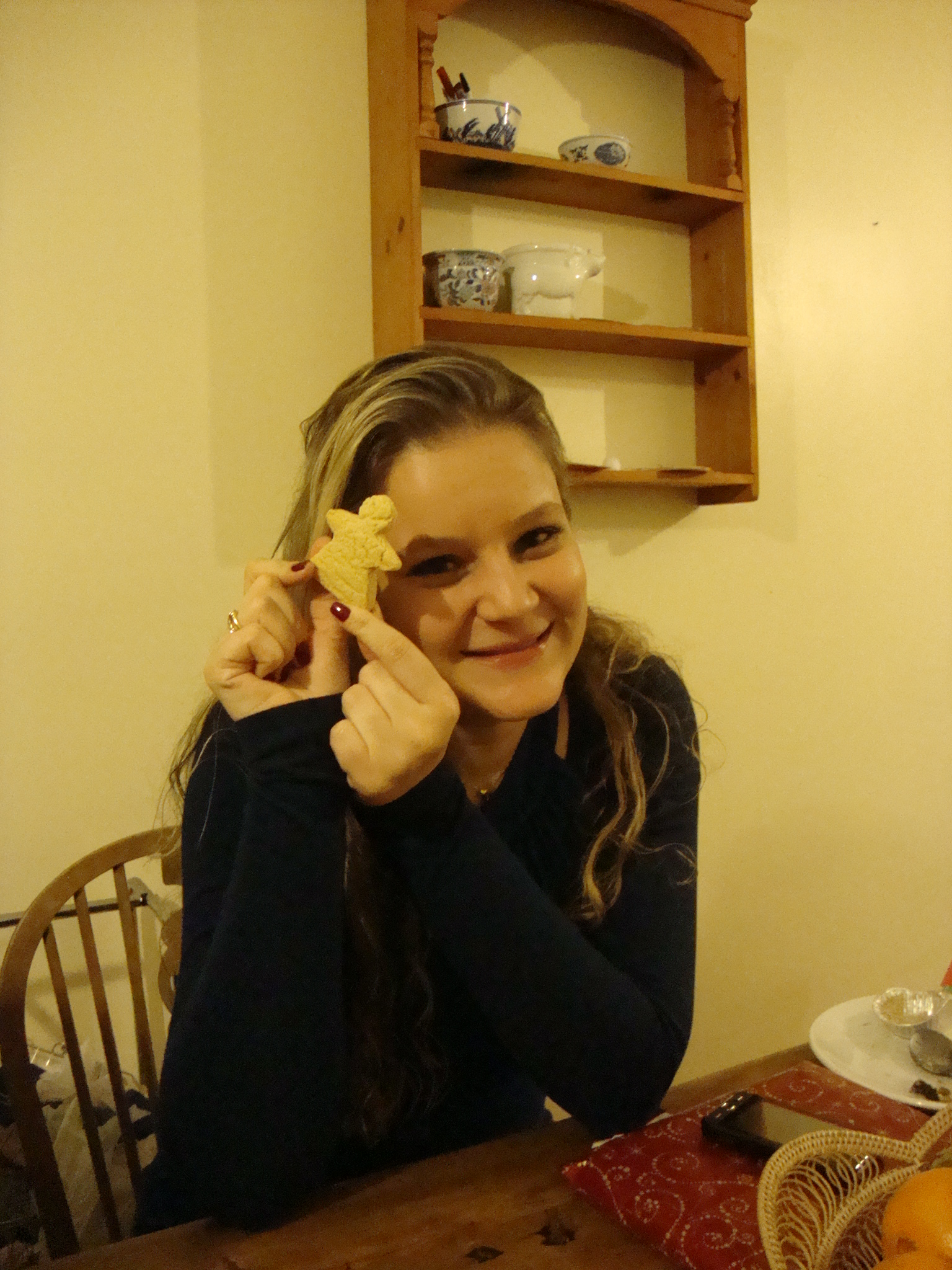
ImageAfter calling it a day at the café, my Christmas Eve dinner was among dear friends from Poland, Italy and Colombia. We ate traditional food from our home countries (e.g. pierogi, from Poland, and tiramisù, from Italy), exchanged lovely presents and pulled Christmas crackers, wearing the golden hats that were inside for the rest of the evening.

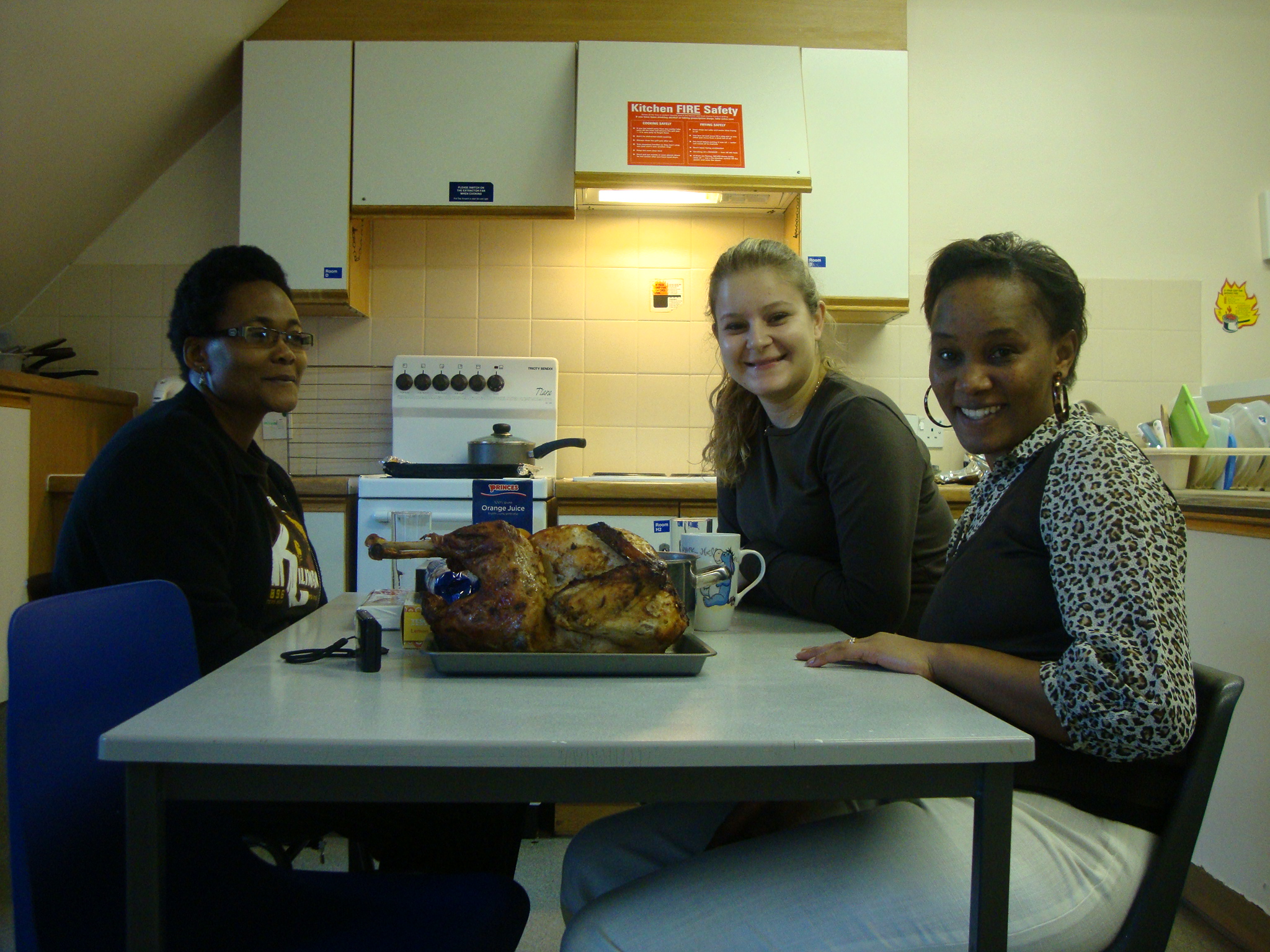
On the 25th, I proudly managed to roast a turkey for the first time! After going to mass early in the morning, I enjoyed a Christmas lunch with two friends from Tanzania who lived with me at the dorm. They also prepared ugali, which they usually eat with their bare hands (that’s why a woman from Tanzania will only paint the nails of one hand, leaving the one they use to eat clean).

Image

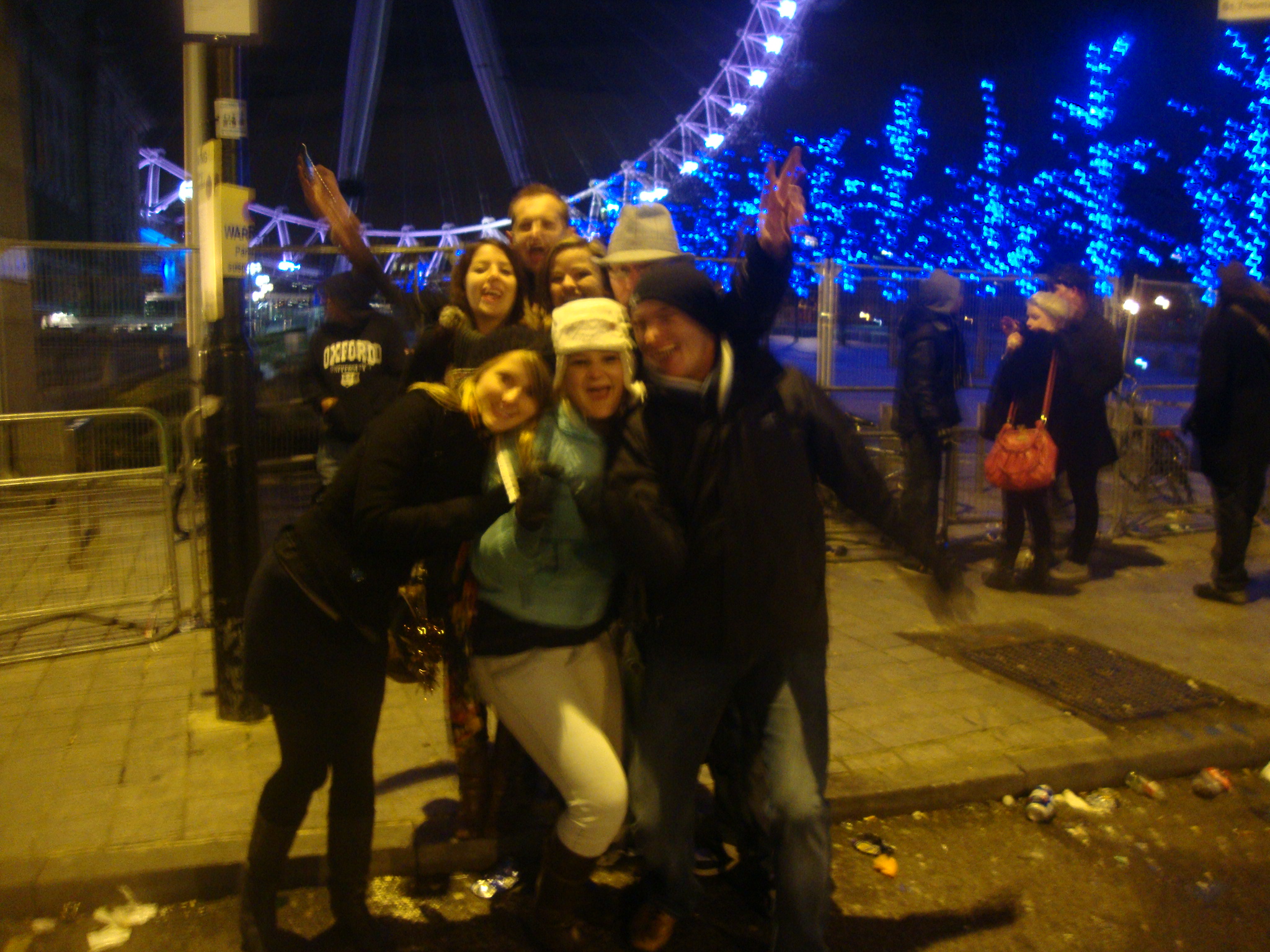
On New Year’s Eve, some friends from Poland and Italy, and I went to London to see the fabulous fireworks. However, we never got to the river Thames and couldn’t actually see them! lol The place was crowded and the police were blocking the streets that would lead to the river. Nevertheless, we had so much fun roaming around London streets, taking pics with strangers, laughing our hearts out and celebrating the brand new and promising year. Before taking the train back home, we stopped for a hot dog, and it magically started snowing! It was so cool! When you come from a Southern country where people usually spend their holidays at the beach, wearing shorts, tank tops and flip-flops, being able to get the real holiday feeling with snow is something special.

Image

Being away from home, especially during holidays, is really difficult, but the friends I made and the moments I spent with them turned them into the most special holidays I’ve ever had.


Why don’t you also share your holiday memories with us? I would love to hear your story! 🙂


How Many Things You Love Can You Share in 10 Minutes?

Image

This post is a challenge I gladly accepted from Alina Cincan (Inbox Translation). As you can see on her post, she was inspired by Olga Arakelyan’s (Your Professional Translator) idea, posted here. Olga, in turn, got the idea from Judy Lee Dunn’s post “Can You Name 99 Things You Love in 10 Minutes?“. After listing the things she loves, Alina turned the whole idea into a tag game and challenged some friends of hers, including me.

The challenge is to list as many things I love as I can in 10 minutes. So here’s my list:

1. Translation (I know: duh?).
2. Languages (especially British English).
3. Japanese food (especially salmon sashimi).
4. Playing tennis.
5. Guinness.
6. Pink colour.
7. Mac products.
8. Social media. I love posting things and managing all my social media at the beginning of each day. And I do have a favourite one, Twitter. I guess it allows more interactivity and networking.
9. Watching series. I’m currently addicted to Smallville. I’ve bought the box with all the seasons, and spend my free time watching several episodes in a row. I also watch The Vampire Diaries, and still have to watch Dexter‘s last episode.
10. Reading books.
11. England.
12. Traveling.
13. A good wine (I’ve learned to love the Italian ones better).
14. Mugs.
15. Going to the movies (with a huge bowl of popcorn).
16. Hanging out with friends.
17. My nephews. I have two: a 5-year-old one, Victor, and a 5-month-yet-to-be-born one, Pedro. I’ll be Pedro’s godmother.
18. Fresh orange juice.
19. Spending my summer vacation on the beach (especially the ones in Northern Brazil).
20. Managing my brand.

It was so much fun! Thank you a lot, Alina, for turning this into a fun tag game and inviting me!

Here are some people who have already made their lists:
Plamena Nikolova
Joseph Lambert
Lloyd Bingham
Emeline Jamoul

How about you? Why don’t you also accept the challenge and write the things you love in 10 minutes?

Christmas Traditions in Brazil

Image

The blog Love Your Translator is celebrating the 24 days in anticipation of Christmas with an intercultural Advent calendar on their Facebook page. Starting on December 1st, every day they are posting a Christmas tradition from one country – it can be a short story, a recipe, or a picture of how people celebrate Christmas around the world.

I decided to take part in it and share Brazilian traditions.

I must admit I had a bit of a hard time trying to think on something particularly Brazilian. We celebrate this time of the year in a very similar way as the US and the rest of the world. We decorate our houses and the streets with Christmas trees, Santa Claus (called Papai Noel), and even “snow” (since it is summer here, we have to improvise); we exchange gifts and have a great dinner on Christmas Eve with the family, in which turkey is also present. However, we do customize our dinner with plenty of fresh fruits and rabanada (Brazilian-style French toast – find the recipe below).

ImageBesides, at this time of the year, supermarkets are packed with panettones (a type of sweet bread loaf originally from Italy). They are most commonly made with candied fruits and raisins, but you can also find chocotones (made with chocolate, instead of candied fruits).

Brazilians also like to play Secret Santa (amigo secreto – secret friend), in which members of a group (at work, or amongst friends or family) are randomly assigned a person (by a raffle) to whom they should buy a gift (the price range is usually established). The entire process is secret, and people only find out who their secret friend is when the gifts are exchanged, usually at a get-together – if not on Christmas Eve. We also have some variations of the game. One of them is secret enemy, in which we poke fun at our friends giving them something unusual, exotic and funny that she/he should never use. Another is amigo-ladrão (thief-friend), in which you do not know who your secret friend is: participants buy generic gifts that can suit both men and women. The raffle is conducted at the get-together, and you can choose your gift from the pile – without unwraping them though. If you do not like what you’ve got, you can “steal” gifts from those who already have theirs. The problem is, if you are one the first, you run the risk of having your gift stolen not only once, but several times. It’s so much fun!

Recipe
Rabanada

Image

Ingredients
1 medium sweet baguette or 1 medium sourdough baguette
3 large eggs
3/4 cup sweetened condensed milk
6 tablespoons whole milk
1/2 teaspoon vanilla extract
1/2 teaspoon kosher salt
1/2 cup granulated sugar
1 tablespoon unsweetened cocoa powder
1/4 teaspoon ground cinnamon
3 -4 cups vegetable oil (for frying, estimated)

Preparation
Cut bread into 1-inch thick slices on the bias. You should get about 16 pieces. If you have more, adjust other ingredients to compensate. Whisk together the eggs, condensed milk, whole milk, vanilla extract, and salt until well mixed. Coat bread slices on both sides in the egg mixture, and place coated bread in a shallow pan or pie plate, add any remaining egg mixture to it. Cover with press and seal wrap or foil and place in the refrigerator to soften overnight. Mix together sugar, cocoa and cinnamon in a small shallow bowl big enough to hold one slice bread. Heat oil in a deep skillet to about 2-inches until it reaches 330F (use a candy thermometer to check). Lift the bread from the egg mixture until it stops dripping, and pan fry the pieces in the skillet on both sides until golden and crispy. Keep the oil hot while frying (check temp), raising the heat if needed. As the pieces are removed from the skillet, drain on paper towels then dredge in the spicy sugar mixture.

Enjoy!

You can find the three first “windows” of the Love Your Translator blog’s intercultural Advent calendar here:
December 1st – Italy
December 2nd – Canada
December 3rd – Serbia

Did I forget any other Brazilian tradition? Would you like to share your family/region/country’s tradition? Please feel free to comment. I would love to hear your stories!

Happy Thanksgiving!

Happy-Thanksgiving (1)

Make it a habit to tell people thank you. To express your appreciation, sincerely and without the expectation of anything in return. Truly appreciate those around you, and you’ll soon find many others around you. Truly appreciate life, and you’ll find that you have more of it.

Today – as most of you know – is Thanksgiving Day. Here in Brazil, we call it Dia de Ação de Graças, but it is not a holiday nor celebrated, as it is in the US. We do not make any special dinner nor eat turkey. However, I particularly find the main purpose of the day – be grateful – a fantastic attitude. We should be thankful everyday for everything we are blessed with, but since most of us are not, let’s take advantage of this appointed day to do so?

Today, I would like to give thanks for:

– having been able to achieve all my goals so far (graduating as a translator in my preferred choice university, doing a master’s course in Translation in England, working as a freelance translator);
– having the work life I always dreamed of;
– all the wonderful friends I have;
– my blessed family;
– my health;
– my 5-year old nephew who has been an angel to my family and I, and my to-be-born nephew, who will certainly be another little angel in our lives;
– all my colleagues, with whom I learn precious things eveyday and who keep company to me – even if online;
– all my clients, with whom I exchange great experiences;
– you, all my readers, who take some time to read my humble adventures.

Happiest of Thanksgivings! 🙂

And you, what are you grateful for? Share your thanks with us.

*Quote by Ralph Marston

Apologies

I-Am-SorryDear readers,

I would like to break my long absence first of all apologizing for it, before I move on and go back to normal blogging routine. I feel I owe you some explanations as to the reasons that led to my absence.

Some time ago I went through some pretty rough time (I lost my young father all of a sudden) which had me change a lot of things in my life. Because of that, I was not able to think about social media or blogging. I kept working though, and not surprisingly, translation turned out to be my “safe harbor.” It helped me focus on something that is really important in my life, soothing the healing period.

I would also like to ask you, my dear readers, not to give up on me. I promise the blog will be up and running at full speed very soon.

Carol’s Adventures in Translation is my latest and most challenging baby project, and I do not plan on giving up on it that easily.

Stay tuned for new, interesting adventures coming up soon!

Yours truly,

Carol

International Translation Day

Image

Today, September 30, we celebrate, internationally, the Translation Day, on the feast of St. Jerome, the Bible translator who is considered to be the patron saint of translators and interpreters.

St. Jerome’s Day celebrations began in 1953, when FIT (International Federation of Translators) was established. It was FIT Council’s effort to promote the profession worldwide. However, it was only in 1991 that the Public Relations Committee of FIT launched the idea of an International Translation Day. The slogan for 1993 was “Translation, a pervasive presence,” and the press release included some valuable information, such as:

  • Imagine how difficult it would be to assemble furniture or bicycles, or to use video recorders, that you bought in a kit if the instructions were not translated (and everybody knows what problems badly translated assembly instructions can cause).

  • People with allergies to specific products would be at a risk if the ingredients on product labels were not translated.

  • Well-translated labels, instructions and marketing material can enhance a company’s image, while faulty translations will certainly do a company’s reputation no good!

As translators/interpreters, we should be responsible for – ideally every day, but especially today – spreading the importance of our profession for global undertanding, for communication among different cultures and peoples, and for building bridges among them. We should also take this day to show the importance of a well-qualified professional translator/interpreter, as opposed to anyone who can speak a foreign language.

Happy Translation Day to all my colleagues who help build a professional community of excellent translators/interpreters!


Reference: The history of International Translation Day