Transfusão 2014

Logo Transfusão 2014

Olá, queridos leitores! Cá estou eu novamente, em mais uma publicação em português, divulgando outro evento de tradução.

Você já deve conhecer a Casa Guilherme de Almeida, em São Paulo, certo? Pois o Centro de Estudos de Tradução Literária da Casa realizará em setembro o Transfusão 2014 – IV Encontro de Tradutores da Casa Guilherme de Almeida, dedicado à reflexão sobre tradução literária e ao diálogo entre tradutores, pesquisadores, teóricos e interessados no assunto. O objetivo do Centro é promover um intercâmbio entre autores e tradutores, tanto brasileiros quanto de outros países.

Tema: Tradução e Estranheza
Data: 4 a 7 de setembro
Endereço: Rua Macapá, 187 e Rua Cardoso de Almeida, 1943

As inscrições já estão abertas e vão até o dia 2 de setembro, próxima terça-feira. Para se inscrever, basta preencher o formulário cujo link se encontra na página do evento e enviá-lo para o e-mail casaguilhermedealmedia(arroba)gmail(ponto)com.

O Encontro é gratuito!

No primeiro dia, quinta-feira, a abertura do evento será às 19h. Em seguida, haverá a apresentação de um recital. No segundo dia, o Encontro começa às 10h com uma leitura cênica. Em seguida, a programação inclui palestras até às 18h. No sábado, terceiro dia do evento, o início também é às 10h, com uma apresentação de incentivo à arte da tradução na Europa. A programação do dia inclui uma conferência, uma mesa-redonda e uma leitura cênica. Por fim, no domingo, último dia, a primeira atividade será às 14h, com uma palestra. O encerramento será às 18h, com a apresentação de um recital.

Entre os grandes nomes da teoria da tradução presentes no evento estão Jürgen Jacob Becker, vice-diretor do Literarisches Colloquium Berlin; Kathrin Holzermayr Rosenfield, professora adjunta da Universidade Federal do Rio Grande do Sul (UFRGS); Berthold Zilly, ex-professor da Universidade Livre de Berlim; Reynaldo Jimenez, poeta e tradutor argentino; Alzira Allegro, tradutora e professora da PUC-SP; João Angelo Oliva Neto, tradutor e professor livre-docente da USP; e Marcelo Tápia, poeta e tradutor, diretor da Casa Guilherme de Almeida.

Consulte a programação completa aqui.

O Centro de Estudos de Tradução Literária da Casa Guilherme de Almeida é uma instituição da Secretaria da Cultura do Estado de São Paulo gerenciada pela POIESIS – Instituto de Apoio à Cultura, à Língua e à Literatura. A curadoria do Encontro é de Marcelo Tápia e Simone Homem de Mello.

Para mais informações, o telefone do museu é (11) 3673-1883 ou 3672-1391.

Guest post: Love Your Translator

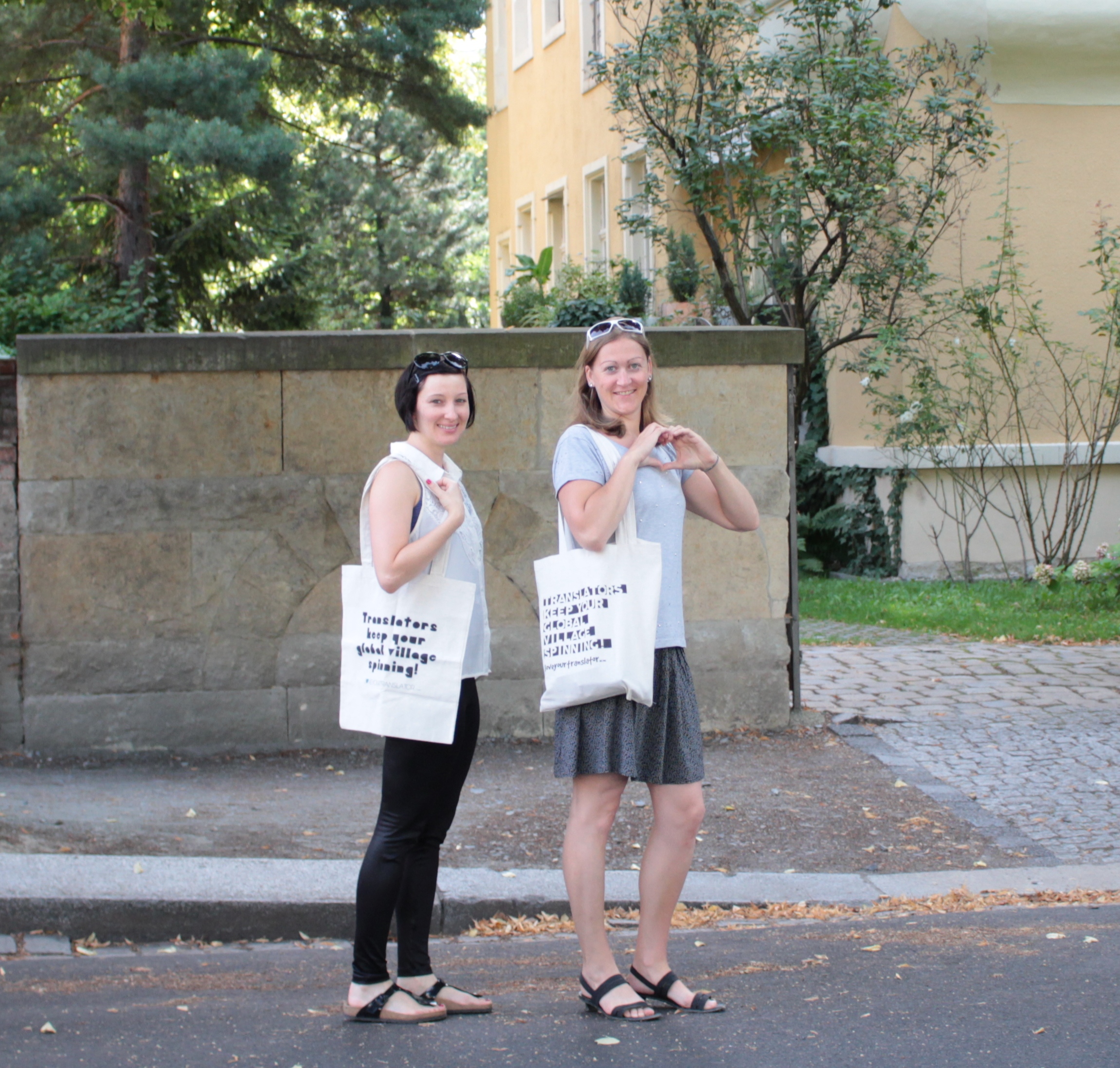
Welcome back to our guest series! Today we actually have two guests: Anja Müller and Marie-Luise Groß, the minds and (green) hearts behing the Love Your Translator campaign.

Welcome, Anja and Marie! 🙂

10369739_405385286269922_6122693952057373133_n

Caroline has been one of our very first supporters. She opened the door for us to the lively Brazilian community of professional translators and interpreters. Therefore, we would first of all like to thank you, Caroline, for your support and for having us here today!

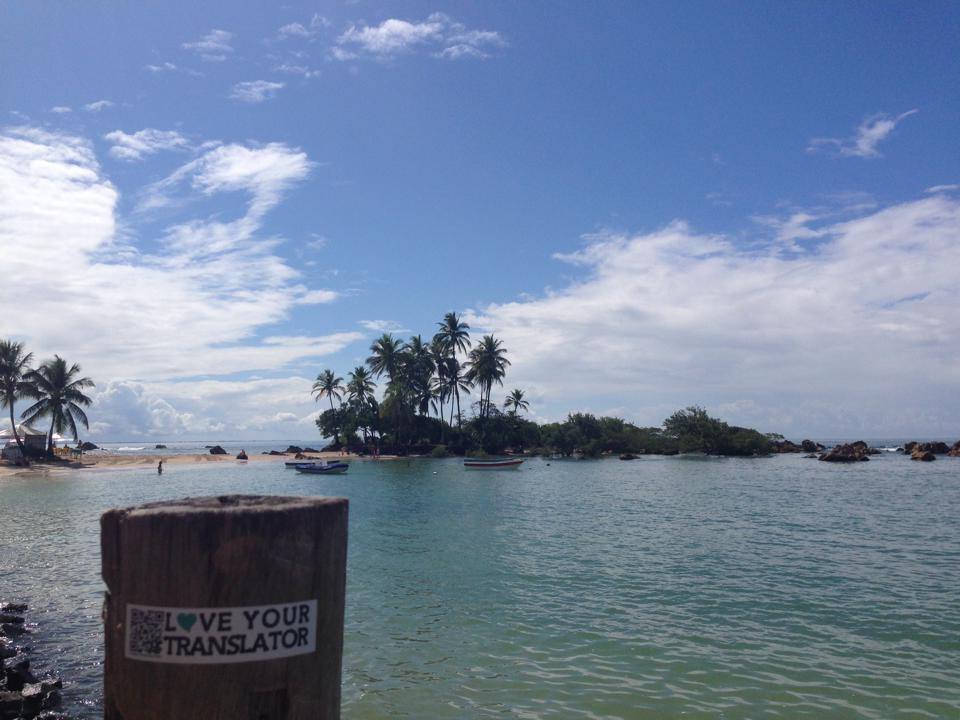
When you walk through your city, maybe on your way to work early in the morning or to meet a friend in your favorite street café in the late afternoon, do you pay attention to the grafittis, posters and stickers on walls and street lamps? Never really thought about it? Well, you should definitely keep your eyes open, because you might spot a sticker with a green heart, telling you to “LOVE YOUR TRANSLATOR”.

About ten months ago, we had the idea of bringing the discussion of translators’ lack of visibility in our society to a different level. We wanted to call attention to this phenomenon by involving people from all over the world. We wanted them to talk about translation. We wanted them to reflect about who the “people behind the texts” (as Andrew Chesterman referrs to translators) are, how they work and which role they play in our globalized world.

Last year, Marie talked about fair translations at the Falling Walls Lab, an international conference for young researchers, in Berlin. We decided to start our sticker campaign at the lab and hoped that at least a few conference participants would take stickers back to their countries and do some sticker bombing for us. So, within only a few days, we had 200 prototype stickers printed, set up a Facebook page and a blog and we were ready to go.

The first stickers traveled to Israel, the USA and to some cities in Germany. We gave everyone who wanted to support us two or three stickers to attach them to a street lamp (or anything else) near a famous sight in their city. And we asked them to share a picture of their sticker online, as a reference. The original plan was to give stickers to people we already know. But word of the LOVE YOUR TRANSLATOR campaign spread so quickly into the international translators’ and interpreters’ community that we were left almost speechless.

Only within a few days, many translators, interpreters, international literature lovers, Translation Studies scholars and others sent us requests for stickers and we realized that a few hundred stickers would by far not be enough. So, we had 5000 new stickers printed and sent them to Spain, Portugal, the Netherlands, France, Albania, Brazil, Argentina, Canada, Australia and other countries. It was amazing! Sometimes, we had sent away more than 50 letters a week. We are still receiving so many pictures, that we can hardly keep up with updating our galleries.

When we look at the numerous tweets and e-mails we have received over the past ten months from all over the world, we are so humbled by the massive support we are getting from the global translator community. The pictures and messages mirror a diverse and international, caring and closely interwoven professional community.

Earlier this year, when sending away stickers has become really expensive for us and our budget was too tight to have new stickers printed, many of our friends and supporters had donated money through a crowdfunding campaign at betterplace.org and we could continue with the LOVE YOUR TRANSLATOR campaign.

We have also received some critical feedback, which we appreciate just as much. We are aware of the fact that LOVE YOUR TRANSLATOR remains mainly within the translators’ bubble. We also realize that patting each others’ backs might not have a massive impact on how much translation buyers are willing to pay.

But, on the other side, we have talked with many of our friends, business partners and coworkers about translation and about this sticker bombing campaign. People ask us about what they have to consider when they need a translation and whether we know good translators. So, there’s a little bit of progress there. If we look at our website or Facebook page, we see a growing community. It is small and it might not have a lobby. But maybe language professionals can be their own lobby. They stand up for themselves and connect with each other. They share best practices and professional norms. So, staying within the bubble might not be such a negative thing, as long as it encourages translators to be proud of their professional role. We believe that spreading the word for more appreciation for language professionals’ work, while having fun and building a community is one small step into the right direction.

If you have not requested your LOVE YOUR TRANSLATOR stickers yet, visit our website and drop us a note.

It was a great honour to feature you both on our blog! Thank you for accepting my invitation and taking the time to write about such a lovely campaign. You girls rock! I’m a big fan of you both and great supporter of your initiative.

If you haven’t heard of the campaign before, check it out. Order your stickers and stick them around. Spread the love. And for those who have already ordered, received and sticked them already, please help the girls by donating for the campaign. Any amount is much appreciated.

About the authors
LYT_usMarie-Luise Groß is a Ph.D. candidate at the Center for Translation Studies of the University of Vienna. Her research focus is on the impact of the social web on freelance translators’ social networks, on internet entrepreneurship in the Creative Industries and internet-enabled business models.
Anja Müller is a freelance translator for English, Polish & German in Dresden, Germany. “During my very interesting and challenging work I often face […] lots of prejudices against my profession”, she says.  With LOVE YOUR TRANSLATOR, Anja wants to promote greater understanding and appreciation for all her colleagues and herself.

V Congresso da ABRATES

rio_de_janeiro_by_kelith81-d5jqv1v

Olá, pessoal! Espero que todos estejam bem.

A publicação desta semana será em português, porque falarei sobre o V Congresso da ABRATES. Já fez sua inscrição? Caso ainda não tenha feito, darei três motivos para que você não espere mais um segundo para fazer:

  1. Networking. O Congresso da ABRATES é um dos maiores eventos de tradução do Brasil e, portanto, sempre reúne centenas de profissionais de várias partes do país. É muita gente e, consequentemente, ele proporciona inúmeras possibilidades de networking. É a chance de você conhecer nomes conhecidos do mercado. Além disso, você também pode conhecer aquele seu colega “virtual” pessoalmente. Não se esqueça de levar seu cartão de visitas e de distribui-lo a todos que conhecer.
  2. Aprendizado. São dois dias repletos de apresentações sobre os mais variados temas, atendendo às mais diversas preferências, como autoria, interpretação, TradWiki, terminologia de TI, língua brasileira de sinais, técnicas de tradução, tradução jurídica, tradução literária, ferramentas, DTP, lexicografia, tradução de economia e finanças, gestão de tempo, internacionalização, ergonomia, interpretação simultânea com texto, profissionalização online, tradução de séries, erros de tradução comuns, empresas de tradução, tradução editorial, interpretação remota, prática acadêmica versus prática mercadológica, etc. Há também presenças ilustres, como Chris Durban, Dilma Machado, Isa Mara Lando, o pessoal de Ponte de Letras, Val Ivonia, entre outros. Uma convidada do blog, a Paula Ianelli, também apresentará no evento. Ela escreveu sobre localização de jogos aqui no blog e falará sobre o mesmo assunto no congresso.
  3. Conhecer/Visitar o Rio. Pois é, o congresso deste ano será na cidade do Rio de Janeiro! Quer desculpa melhor para conhecer/visitar essa linda cidade? E a localização do evento também é ótima: Botafogo, perto do Cristo Redentor e do Jardim Botânico (dica: já tomou café da manhã no Parque Lage?), da Lagoa Rodrigo de Freitas, da Praia de Copacabana e de Botafogo, é claro, e do Pão de Açúcar. Melhor, impossível!

Espero que tenha conseguido convencê-los, pois eu já fiz a minha inscrição e gostaria muito de conhecer todos vocês pessoalmente na Cidade Maravilhosa.

Data: 20 e 21 de setembro de 2014.
Local: Rua Visconde Silva, 52 – Botafogo, Rio de Janeiro (há um Ibis e dois Mercure próximos ao local)
Tema: Um Tour de Force
Valor: associados, R$ 450,00; não associados, R$ 550,00; estudantes, R$ 350,00; participação em apenas um dia, R$ 200,00. Formas de pagamento: boleto, cartão de crédito, PayPal (exceto para apenas um dia).
Site: http://www.congressoabrates.com.br

O Congresso da ABRATES será no fim de semana imediatamente anterior à Semana do Tradutor.

Vejo vocês lá? 🙂

Guest post: Technical translation (in Portuguese)

Welcome back to our series of guest posts! Today’s guest is Melissa Harkin, Brazilian translator, who wrote about technical translation and the difficulty in finding good translators.

Welcome, Melissa!

words


O mercado de traduções técnicas e a escassez de bons profissionais

O tradutor é um profissional que carrega grande responsabilidade. Uma única palavra errada ou fora de contexto pode ter consequências desastrosas. 

A mesma responsabilidade reside com o cliente em relação à necessidade de contratar um tradutor profissional e competente, fornecer material completo e preciso para a tradução, obedecer ao prazo dado pelo tradutor (ao invés de pressioná-lo para entregar antes do prazo acordado) e trabalhar em parceria com o tradutor contratado no que diz respeito a terminologias técnicas, tom de voz do texto e perspectivas culturais da linguagem. 

Estes aspectos ficam ainda mais evidenciados quando o texto é técnico. Manuais de operação, relatórios médicos, estudos de impactos ambientais e sociais, procedimentos de segurança e outros tantos tipos de documentação técnica não podem, de forma alguma, conter erros. 

A tradução técnica é conhecida por ser um dos mais difíceis tipos de tradução escrita. O tradutor tem de dominar a difícil tarefa de traduzir o texto técnico com habilidade e de forma correta para não perder o significado de uma palavra ou expressão, não alterar o contexto e nem cometer erros que podem levar não só a danos aos equipamentos, como também colocar em perigo a saúde ou mesmo a vida de outras pessoas. 

Não é necessário ser engenheiro ou médico para traduzir determinados conteúdos, mas é necessário conhecer e entender o assunto a ser traduzido. 

O tradutor não deve aceitar traduzir tudo o que aparecer pela frente. Ele só deve traduzir um texto médico, por exemplo, se realmente entender e/ou conhecer o assunto. O mesmo vale para outros tipos de conteúdos técnicos. 

A palavra de 71 milhões de dólares – Em 1980, Willie Ramirez, então com 18 anos de idade, foi internado em um hospital da Flórida em coma. Seus amigos e familiares tentaram descrever sua condição para os paramédicos e médicos, mas eles só falavam espanhol. A tradução (interpretação) foi realizada por um membro da equipe médica que era bilíngue e traduziu “intoxicado” como “intoxicated”. Um intérprete profissional saberia que “intoxicado” assemelha-se mais com “envenenado”, e não apresenta conotações de uso de drogas ou álcool que a palavra “intoxicated” carrega. A família de Ramirez acreditava que ele estava sofrendo de uma intoxicação alimentar. Ele estava na verdade sofrendo de uma hemorragia intracerebral, mas os médicos procederam como se ele estivesse sofrendo de uma overdose intencional de drogas – quadro que pode apresentar alguns dos sintomas do paciente na ocasião. Por causa da demora no atendimento, Ramirez ficou tetraplégico. Ele recebeu uma indenização por imperícia médica no valor de 71 milhões de dólares. 

Já é difícil achar bons tradutores no mercado, afinal, não basta ser bilíngue para saber traduzir. Mas encontrar [bons] tradutores técnicos é ainda mais complicado.

O tradutor técnico é aquele que trabalha com conteúdos científicos, de tecnologia ou engenharia. Ele precisa não somente conhecer e entender o assunto a ser traduzido como também, muitas vezes, ter a habilidade de escrever de diferentes formas, usando um tom de voz mais acadêmico ou uma escrita mais parecida com a de manuais. 

Há uma verdadeira escassez desses profissionais no mercado de tradução. E isso faz com que cada vez mais conteúdos sejam traduzidos por pessoas sem o devido domínio e/ou conhecimento do assunto. 

Mas também não basta o tradutor técnico ser proficiente nos idiomas que traduz e conhecer o assunto a ser traduzido. Ele precisa buscar o desenvolvimento e aperfeiçoamento contínuos, mantendo-se atualizado nos conteúdos e inovações técnicas das áreas de conhecimento que traduz através de jornais, revistas, cursos, palestras e visitas técnicas. 

O cliente, por sua vez, precisa conhecer o histórico profissional do tradutor para ter certeza de que o profissional escolhido é realmente o mais indicado para traduzir seu conteúdo.

Thanks a lot, Melissa, for accepting my invitation and taking the time to write such a great piece! It was a real pleasure to feature you on our guest series. 🙂

Please feel free to comment or ask her anything. 😉

About the author
melissa-harkinBacharel em Direito e pós-graduada em Gestão Estratégica (MBA) pela FMU, Melissa Harkin trabalha como tradutora desde 1997, tendo também atuado por vários anos em outros mercados (Óleo e Gás, Aviação, Farmacêutico, RH, Construção, Energia e Meio Ambiente) antes de se dedicar em tempo integral à Tradução.
Melissa é membro da American Translators Association (ATA) – a maior associação profissional de tradutores e intérpretes nos Estados Unidos, e é filiada à Federação Internacional de Tradutores (FIT), com mais de 10.000 membros em 90 países.
www.melissaharkin.com

Uma visão consolidada de como é a Interpretação para o Serviço Público

Estamos de volta com mais uma tradução. Hoje teremos outra tradução do inglês para o português do texto da convidada Silvia Dall’Onder, An inside view of Public Service Interpreting. Espero que gostem!

Tenham todos uma ótima semana!

P1020449

Gostaria de compartilhar com vocês um pouco sobre a minha experiência de trabalhar como intérprete para o serviço público em Londres. Trabalhei nessa função por 14 anos antes de voltar para o Brasil em 2012. Geralmente, quando falo para as pessoas sobre meu trabalho, elas se surpreendem com o fato desse tipo de interpretação existir. A palavra intérprete, ao menos para leigos, sempre os direciona para o glamour de cabines de conferências ou reuniões diplomáticas. Isso está longe da realidade da Interpretação para o Serviço Público (PSI, na sigla em inglês), como vocês verão logo abaixo.

A profissão de PSI surgiu com a necessidade de inserir padrões profissionais em atividades que já existiam por muito tempo, como facilitar a comunicação entre duas ou mais pessoas que não falam um idioma comum. Isso é o que todos os intérpretes fazem, mas no caso dos PSIs, o cenário ou contexto é diferente.

Finalmente, os serviços públicos perceberam que o antigo sistema de aceitar um amigo ou parente de um paciente como intérprete para uma consulta com um médico, por exemplo, era muito informal e cheio de dificuldades. A competência linguística nunca era testada, a confidencialidade era comprometida e, regularmente, as pessoas iam a reuniões ou audiências judiciais sem falarem uma palavra de Inglês (e sem aquele amigo tão necessário). A Convenção dos Direitos Humanos estabeleceu que, no caso do sistema judicial criminal, cada acusado tem o direito de ouvir as acusações e o processo em tribunal em um idioma que compreenda. Londres é uma das cidades com a maior diversidade linguística do mundo, com mais de 250 idiomas falados. Isso dá uma ideia da dimensão do papel do PSI.

Então, quem eram meus clientes? Por um lado, médicos, assistentes sociais, oficiais jurídicos, juízes, enfermeiras (a lista continua) nativos da língua inglesa; e, por outro, qualquer pessoa que não falava inglês ou que tinha domínio limitado do idioma e precisava ter acesso a serviços públicos. No meu caso, pessoas que moravam em Londres vindas de países lusófonos (Angola, Portugal, Brasil e Moçambique). Então, no decorrer do meu trabalho, fui a delegacias, prisões, escolas, cortes e tribunais, e hospitais ao redor de Londres e além.

Como eu conseguia trabalho?

Até aqui, tudo bem, mas como isso funciona? Quem procurava o meu trabalho? Quem pagava por ele? O trabalho era alocado a intérpretes qualificados que estavam nas listas de intérpretes de vários departamentos locais. Eu morava na região nordeste de Londres. A prefeitura local tem um departamento de idiomas que lida com solicitações de intérpretes de prestadores de serviços da área, por exemplo, hospitais locais, departamento de serviço social, escolas etc. Os acordos eram geralmente feitos com antecedência, e poderia haver muitos serviços em diferentes locais no mesmo dia. O trabalho não era limitado a minha área. Registrei-me em outros serviços e, muitas vezes, viajava para outros bairros londrinos. O tempo de deslocamento em Londres é um fator a ser considerado, por isso, tentei limitar meu trabalho a áreas próximas. Também havia trabalhos de última hora, portanto, eu estava sempre de prontidão, caso houvesse uma emergência. O pagamento dos serviços linguísticos vinha do orçamento da prefeitura. Eu era paga pelo número de horas que trabalhava, incluindo o tempo de deslocamento.

National Register of Public Service Interpreting (NRPSI)

Outro ponto de referência para encontrar um intérprete é o registro nacional de intérpretes de serviços públicos (NRPSI, na sigla em inglês) (http://www.nrpsi.org.uk/). O NRPSI é uma organização independente que gerencia uma lista de intérpretes qualificados em idiomas diferentes. As delegacias, por exemplo, usam essa lista para chamar um intérprete quando precisam. Então, se prendem alguém que fala polonês, eles pegam a lista para procurar um intérprete de polonês que esteja mais perto da delegacia. O mesmo se aplica se eles precisarem entrevistar alguém que tenha testemunhado um crime. Como ninguém pode prever que horas um crime acontecerá, podemos ser chamados a qualquer hora do dia ou da noite. Os trabalhos nas delegacias são geralmente longos. Pode haver muita espera, enquanto os policiais lidam com todo o tipo de caso, esperam advogados (e intérpretes) chegarem para, então, conduzirem uma interrogação com a pessoa presa.

Tribunais também usam o NRPSI para chamar um intérprete. Isso é normalmente feito antes da audiência e, às vezes, mas nem sempre, nos informam o nome do cliente e o tipo de crime.  Poucos detalhes sobre a audiência são revelados para preservar a confidencialidade. A falta de detalhes sempre me deixava muito ansiosa porque não era possível fazer nenhum tipo de pesquisa sobre o assunto. Um procedimento semelhante se aplicava quando escritórios de advocacia buscavam meus serviços. Eles normalmente marcavam visitas em prisões para verem seus clientes, levando-me como visitante. Passei pela maioria das prisões de Londres.

Qualificação e treinamento

A qualificação específica necessária para fazer parte do NRPSI e trabalhar como PSI é denominada Diploma em Interpretação para o Serviço Público (DPSI, na sigla em inglês).

Essa qualificação é credenciada pelo Chartered Institude of Linguists. O candidato participa de um curso de treinamento preparatório por um ano que envolve a prática de habilidades de interpretação exigidas pelo exame: interpretação consecutiva, tradução oral, interpretação sussurrada e tradução escrita. Todas as habilidades são testadas nos dois idiomas: inglês e outro, geralmente, a língua materna. Durante o curso, outras habilidades importantes são ensinadas, além das técnicas de interpretação mencionadas acima, como criação de glossários, terminologia e as habilidades profissionais necessárias para ser um intérprete de serviços públicos com ênfase em confidencialidade e imparcialidade. Recomendo o treinamento e exame do curso de DPSI para aqueles que desejam embarcar nessa carreira.

A realidade do dia a dia

Trabalhar como intérprete me deu uma perspectiva de muitas vidas e situações que acredito ser difícil descrever aqui. Também foi muito interessante estar em contato com tantos profissionais diferentes e ter uma visão geral das atividades de cada um deles. Arrependo-me muito de não ter mantido um diário de todos os casos complexos e interessantes que presenciei no meu ponto de vista “invisível” de intérprete. Muitas vezes, voltava para a casa com uma sensação de frustração por não ter sido capaz de fazer mais para ajudar o próximo. Foi uma experiência terrível ver um paciente estrangeiro em uma ala de saúde mental que não conseguia falar uma palavra de inglês. Frequentemente, os clientes estrangeiros não entendiam o porquê eu não poderia aconselhar ou conversar com eles em detalhes sobre a situação deles. É essencial se manter imparcial. Também vi como pessoas sozinhas vivem em um país estrangeiro, especialmente quando não falam a língua nativa. Há vários motivos pelos quais os clientes não falam inglês o suficiente. Na maioria dos casos, não é uma questão de escolha, mas de circunstâncias pessoais.

Havia inúmeros desafios. Um deles era me familiarizar com a terminologia de várias disciplinas, como direito e medicina. Familiarizei-me com muitos termos técnicos em inglês e português. Todos os dias, eu encontrava palavras que não conhecia. Às vezes, os assuntos mais triviais me desafiavam. Costumava ter pavor de usar o sistema imperial de medida. “A faca tinha mais ou menos nove polegadas de comprimento” e uma discussão se iniciava sobre o tamanho real da faca, e o tamanho da lâmina, e meu cliente só sabia descrevê-la em centímetros. Todas as conversões de medidas precisavam ser feitas rapidamente, especialmente em uma audiência.

Já faz dois anos desde a última vez que trabalhei como intérprete em Londres. Ao escrever para esse blog, uma série de memórias ressurgiu sobre uma aventura profissional da qual nunca me arrependi de iniciar. Espero que o que eu tenha compartilhado com vocês tenha aprofundado as curiosidades sobre a profissão e os direcione para uma nova carreira emocionante.

Translator’s bio
Profile PicAlessandra M. Silva é formada em Letras – Tradutor/Intérprete pela Unilago e em Jornalismo e Estudos de Mídia pela CMI – Dublin. Atuou como professora de idiomas por mais de nove anos no CCAA nas franquias de Santa Fé do Sul, São José do Rio Preto e São Paulo. Atualmente, trabalha com tradução e como consultora de moda de luxo. Também se interessa por Marketing Digital e Divulgação de Marcas. Reside na Irlanda desde março de 2008. Entre em contato com ela pelo LinkedIn.
Happy birthday to us!

1-IMG_5719

Yaaaay! Today the blog is turning one year old! How cool is that?

Happy birthday to us!!!

Let’s look back and see what we’ve been through so far.

  • On this day last year I published my very first blog post, Welcome, and launched the blog Carol’s Adventures in Translation.
  • In the beginning of the year, I decided to start an editorial calendar and a series of guest posts. Our first guest post was on proofreading (in Portuguese), O (incompreendido) revisor, by Beatriz Camacho, on February 4. Since then, every Tuesday we have a guest writing about an interesting and specific topic on translation and every Thursday I write our weekly posts.
  • So far, we’ve had 59 posts, both in English and in Portuguese. 25 of them are from beloved guests.
  • Best daily views ever: 648 on March 17. In total, we had 12,060 views.
  • Our top post for all days is a Weekly post in Portuguese, 22 dicas importantes sobre alguns erros comuns em português, with 3,342 views.
  • Our views have come most from Brazil (6,703), and the runner-up is the United States (1,087).
  • The blog has been visited by people from exactly 109 different countries!
  • 41 people follow the blog.
  • There were 24 comments on all posts so far.

Amazing stats, right? And all of them are thanks to you, dear readers! Thank you for always checking back, reading all posts, commenting and sharing! Ow, and now, I also have to thank the blog’s translators! You all rock! 😀

Guest post: A translator when…

Hi, there! Here we are, on yet another guest post. Do you know the Tumblr Um Tradutor Quando? Well, if you do, you’ll like today’s guest, Michele Santiago, the mind and creativity behind the Tumblr.

Welcome, Michele!

tumblr_n1cwbfjn0V1ttbxdso1_400

Marketing has many forms, my friend

The sentence “no man is an island” acquires new meanings when it comes to online presence and marketing. If you are a freelance translator, knowing these words and adding them to your vocabulary is a must. Some find it easier to keep an online presence via website (and we all should have one, keep that in mind), statically. Many others also try blogging. Unlike Caroline, I found out keeping a blogging schedule was too hard. And the thing is we forget about other possible means to connect with our audience.

Your audience can be your target clients, or your colleagues. If you are more like me, then you are not comfortable with this topic. Having to show yourself out there, maybe even talking to strangers, starting a conversation – I am more of a tech-kind-of-girl, feeling more comfy in front of the computer screen. If this is your case, then let us change it. You do not have to become a party person overnight, but you must find a new zone where you feel OK (maybe even happy?) with putting yourself out there. After all, you are offering a service, but if the word is not out there, how will your potential clients find you?

Two years ago, I started a Tumblr called Um Tradutor Quando (something like “a translator when…”). It was supposed to be only a way of making fun of the weird things that happen to us, translators. But we all have our limitations and one of mine is creativity. So I shared the Tumblr address in a Facebook forum asking for contributions. And it worked. I started receiving lots of interesting ideas. And it started to grow.

I kept this project as “something aside”, reluctant to see it as another online presence tool for my work. Because that meant work, and it was supposed to be only for fun, when I had nothing else to do. The first time I noticed this was actually a good means for publicity was when I met a colleague in an event and she recognized me, and introduced me to another colleague as “Michele from that Tumblr”. That situation gave me a hint on how important this side project was.

On another occasion, a colleague approached me asking if she could refer me to a client of hers, who was looking for a Brazilian Portuguese translator for a specific project. It was a project that required some level of creativity (oh, the irony!), and that she felt my Tumblr could serve as a good portfolio.

The third time was really the charm. It was in a conference called Café com Tradução, in Brazil, April this year. I was not there, unfortunately, but I was following everything online. A colleague was giving a talk about social media as a commercial tool, and she mentioned my Tumblr as a good example for online marketing. The first Tumblr in Portuguese about translation (this is the post where I thank her for the mention, too bad the video is not available anymore – http://goo.gl/zmzqIu). This is when I realized I needed to be more serious about it, schedule posts more often, look deeper for new GIFs and ideas. And if you visit http://umtradutorquando.tumblr.com/, you will notice that I have not posted very often lately, but the reason is there as well.

There were other memorable occasions in which I was reminded of all that, such as a nomination for the ProZ.com Awards, and the invitation from Caroline to write this (thank you!), but I am sure you got my point.

My intention with this text is not to assemble an army of translators with Tumblrs. You do not have to do that to keep a good online presence – or if you feel like it, then do it. The most important thing is to acknowledge the power of social media, and that there are so many platforms you can test drive to find your unique tool, the one that works for you and feels like a fun project. Start looking for it.

Thanks a lot for accepting my invitation and kindly taking the time to write this post, Michele! It’s a real honor to feature you on our blog.

If you still don’t know her Tumblr, don’t waste any more time. Check it out now!

Comments, questions, doubts?

Author’s bio
MiSantiagoMichele Santiago is an English and Spanish into Brazilian Portuguese translator and localizer. She specialized in Life Sciences, Business and IT texts. Holds a MA Degree in Translation from the University of Porto (2013). Michele is a member of American Translators Association (ATA) and Associação Brasileira de Tradutores e Intérpretes (ABRATES), and trainer and mentor in ProZ.com. She is also the author of the Tumblr Um Tradutor Quando. You can contact her via email (michele@santiagotranslations.com), Twitter or LinkedIn.

Você não tem dormido o bastante? Cuidado!

Olá, queridos leitores! Como passaram o fim de semana? Empolgados nesta segunda-feira?

Hoje lançaremos a série de traduções de publicações do blog! 😀 A primeira publicação traduzida será do inglês para o português do texto Not getting enough sleep? Be aware! Espero que gostem!

IMG_0049

Normalmente, recomenda-se que as pessoas durmam de sete a oito horas por dia. Algumas pessoas podem precisar de mais ou até menos horas que isso. Entretanto, é muito comum encontrar tradutores trabalhando até tarde da noite ou mesmo a noite toda, sem conseguir dormir nada.  Já passei por isso e posso afirmar que não é bom para a nossa saúde. Hoje em dia, preciso de oito a nove horas de sono por noite para trabalhar adequadamente no dia seguinte. No entanto, sei que sou uma exceção. Foi por isso que decidi falar sobre um tópico tão comum entre os tradutores: a privação do sono.

Privação do sono é a condição de não dormir o suficiente.

A vermelhidão dos olhos é apenas uma das consequências que você pode apresentar quando não dorme o bastante. E as consequências  podem se tornar sérias a ponto de até mesmo modificar os seus genes! A privação do sono pode aumentar…

  • o risco de derrame cerebral
  • o risco de obesidade
  • o risco de diabetes
  • o risco de alguns cânceres
  • o risco de doenças do coração
  • o risco de morte
  • os riscos de se ter um acidente
  • a probabilidade de pegar um resfriado
  • os níveis de ansiedade
  • os níveis de depressão
  • o risco de hipertensão

Ela também pode:

  • estimular a perda de memória
  • causar danos aos ossos
  • diminuir a produção de espermatozóides
  • prejudicar o seu coração
  • debilitar o reconhecimento
  • diminuir a sua expectativa de vida

Uma noite sem dormir fará com que você se sinta cansado e irritado, mas não causará um impacto direto na sua saúde. Diversas noites sem dormir, entretanto, podem afetar a sua saúde geral, e os efeitos mentais tornam-se mais sérios.

Uma boa noite de sono, por outro lado:

  • aumenta a imunidade
  • ajuda na perda de peso
  • aumenta o seu bem-estar mental
  • previne o diabetes

Normalmente, as pessoas dizem que não é possível recuperar o sono perdido. No entanto, é possível se recuperar de noites não dormidas e, depois, criar uma rotina saudável de sono que funcione para você. Para você se recuperar de um período de privação de sono, adicione uma ou duas horas de sono por noite. Vá para a cama quando você se sentir cansado e só acorde quando o seu corpo lhe avisar que já é hora. Se acabar sendo 10 horas de sono por noite, não se preocupe. Com o tempo, você saberá a quantidade exata de horas de que precisa por noite.

Você também pode precisar de mais horas de sono do que o normal se estiver grávida, se recuperando de uma doença ou se tiver passado por um esforço físico extremo.

Manter horas regulares de sono ensina o cérebro a se acostumar com a rotina. Isso será muito mais fácil se você for um freelancer, como eu. Organize sua agenda de acordo com suas necessidades. Se os seus prazos de entrega de trabalhos lhe obrigarem a trabalhar até tarde em uma noite, compense na manhã ou na noite seguinte, ou até mesmo presenteie-se com um dia de folga o mais breve possível. Não se esqueça de que uma das vantagens de ser freelancer é organizar as suas próprias horas de trabalho, não somente para trabalhar mais como também para trabalhar menos, quando necessário.

Além de uma boa noite de sono, o relaxamento é também extremamente importante. Eu, por exemplo, não consigo me deitar logo após desligar o computador. Primeiro, preciso relaxar e me preparar para ir para a cama. Se você for como eu, pode:

  • tomar um banho quente
  • praticar alguns exercícios de relaxamento
  • ouvir músicas relaxantes
  • ler um livro

O que funciona para mim é deitar no sofá e assistir à TV. Assistir à TV me ajuda a não pensar em nada, esvazia a minha mente e me ajuda a desconectar do trabalho. Você precisa encontrar o que sirva para você.

Uma última dica: não trabalhe no seu quarto. Se você não tiver um cômodo que possa ser chamado de escritório, trabalhe na sala de visitas ou em qualquer outro espaço onde possa acomodar uma mesa.

Você tem alguma outra dica para compartilhar conosco? Você pode também compartilhar as suas próprias histórias de privação de sono, caso tenha alguma.

Translator’s bio
Esther PicEsther Dodo é paulistana, formada em Administração de Empresas, tradutora freelancer e, atualmente, está prestes a obter certificação como tradutora no par inglês-português na New York University (NYU). Reside nos EUA desde 2001. Entre em contato com ela pelo LinkedIn e pelo Facebook.

Dear beginner

file3061340932147

Yesterday, I received an email from a young translator who has come across the blog and asked me if I could give her some advice. The questions she asked me were:

  1. Whom or what organization should I contact to start getting work?
  2. All European agencies I have applied for require a minimum of 5 years of professional industry experience. How do I compete with that? How will they hire the graduate over the experienced translator/interpreter?
  3. Where do I need to go to network and whom should I contact to expand my professional network, especially in the freelancing world? Are there reputable forums or advertising platforms?
  4. Do you know anyone who is involved in the specialized translation of libretti or how I can possibly get work?
  5. How much is it reasonable to ask for as a recent graduate: hourly rate, half-day, full-day and travelling expenses (particular to the interpreting world) and per word or other for translation? Especially Luxembourg, Germany and Italy.

Since I know many beginners feel quite lost indeed, just like her, I decided to reply to her email with a blog post, so everyone can have access to.

Well, dear beginner, the first problem is we live not only in different countries but also in different continents, so my reality will be quite different from yours. In spite of that, I’ll (try to) answer your questions in a general way that applies to any translator in the world:

  1. I sincerely don’t know. And the only one who is able to find that out is you. First of all, you need to define what you are looking for: freelance or in-house positions, direct clients or translation agencies (or maybe both), translation or interpreting, national or international clients, field of specialization (I, for example, work with IT, and something in the engineering field would definitely not work for me) etc. After knowing what you are looking for, research, google it, read a lot of blogs, network with people on social media, join translation groups and read what they post. If you find a potential client, send your CV presenting yourself and offering your services.
  2. I have never come across such a requirement in our industry. The ones I have had contact with analyze CVs and send tests. I haven’t even heard of such a thing, but maybe, as I said, the Brazilian reality is different from the European one. The only thing I can think of, in this case, is maybe offer to take a test or make any other offer you may judge suitable for you so they can assess your quality and decide if they want to work with you.
  3. If you read Sara Colombo’s blog, you’re already on the right track. Sara is one of the most influential translators I know. I also suggest that you follow Marta Stelmaszak and Valeria Aliperta, who were both my role models in the beginning (and still are). Emeline Jamoul, Olga Arakelyan and Catherine Christaki are also great professionals who contribute a lot to our field. I could list dozens of great translator influencers, but it will also depend on who you identify yourself with. With time, you’ll find the right people. Don’t forget to follow translators from your home country and from the country where you’re living at as well, so you can have more information about your market. Please keep in mind that these people will only help you with information, not job opportunities.
    Be active on social media (Facebook, Twitter, Google+, LinkedIn etc.), join groups, read a lot of what is shared on those places, talk with peers, join ProZ.com, join professional associations (ATA, IAPTI, ITI etc.).
  4. Unfortunately, I have no idea on how to help you with that. Again, research and talk to people.
  5. First of all, as I said, rates change from one country to another, and also from one translator to another. Rates vary a lot in our industry, and it’s quite complicated to tell you what to charge. When I started, I was offered a price and accepted it because I thought it was enough for me at the time. And it was. In the beginning, a low rate is better than nothing, at least in my opinion. With time, after doing a lot of research and talking to colleagues, I learned to set my own rate. Find translators who live in the same country as you do and ask them, if you feel it’s appropriate, that is. We usually charge per word in translation. I don’t work with interpreting, but I guess it’s per hour. As to travelling expenses, as far as I know, you charge exactly what you have spent on them.

In a nutshell, as you can see, you won’t find the exact answers you’re looking for on one person only. And you won’t find a job if you don’t keep looking. I only found my first client after two months of sending dozens of CVs every day.

Be persistent and never give up.

Some resources that may help you:
Getting started as a freelancer: how long does it take?
How to write a killer resume
Free rate calculator for translators
Searching for jobs on Twitter
Don’t compare your beginning to someone else’s middle
15 tips on how to increase your chances when contacting translation companies
Why do translation rates vary so widely?
Should I have a ProZ.com profile?
Eight unusual tips for newcomers

If anyone has any other tips to give her or knows the answer to any question I didn’t know how to tackle, please feel free to comment below.

Guest post: Audiovisual translation

Hi, there! How have you been? For those of you who live up North, enjoying the summer break? And for those who are on vacation, hope you find a minute or two to read today’s guest post. Valentina Ambrogio, Italian, is our first foreign translator guest.

Welcome, Valentina!

file5091340639221

Audiovisual Translation: Subtitling vs Dubbing

If there is one thing I have learnt in my experience as Audiovisual Translator is that I will never be able to watch foreign movies – or any TV programs for that matter – the way I used to. Yes, because now I pay attention to every small translation-related detail! Imagine how thrilled my boyfriend must be when I start complaining about mistranslations or wrong subtitle segmentation, when the only thing he wanted to do was relax after a long day.

Let me tell you something about my specialisation.

What Audiovisual Translation is

Audiovisual Translation (AVT) is the translation of any audio, visual or audiovisual material to facilitate its distribution in a different market. When we talk about AVT we usually refer to dubbing, subtitling, localisation, and media accessibility (audio description, subtitling for the hearing-impaired).

Most of my workload deals with subtitling and dubbing, so I will focus more on these two subjects and my experience with them.

Subtitling

Subtitles help the audience understand the ‘spoken part’ of a movie while listening to the original dialogues. The widespread practice of fan-subbing made people think that subtitling is an easy job. Sorry to disappoint you, but it is not! As any other translation specialisation, the translator needs proper training, and the existence of degree courses on this subject should be a clear hint! Subtitling is not just mere translation (what is it after all?), and the subtitler has to pay attention to, for instance:

  • Character length – usually each line cannot exceed 40 characters, and two lines maximum can form each subtitle.
  • Duration – the viewer must have the time to read all subtitles appearing on screen. Average duration is 1.50 – 2 seconds for very short subtitles (one or two words) up to 6 seconds for longer subtitles.
  • Synchronisation – there must be a close correlation between film dialogue and the presence of subtitles on screen.

Audiovisual Translation is not just about translating dialogues though. There are other important elements -such as signs, letters, captions and other written text – which are often fundamental to the plot and therefore need to be translated. This becomes an issue when you have important pieces of dialogue and, at the same time, a relevant sign coming up on screen. In cases like this, the subtitler has to make an important choice and omit what he/she considers less relevant to the plotline. Good subtitles are like tailor-made dresses: they fit perfectly, but the tailor’s work is not visible.

Dubbing

Dubbing is the translation and adjustment of dialogues – or better, adaptation – to the mouth movements of the actor (lip synchronization), which is also one of the major constraints of dubbing. Once I read that dubbing is like an illusion that the characters talk in the target language. The translation approach varies significantly from subtitling. For instance, the translator has to give as many indications as possible to the voice-over actor, such as:

  • Name of the character;
  • Short/long pauses;
  • On-screen or off-screen dialogue – even within the same sentence.

There are a lot more, these are just a few. The final translation looks a lot like a movie script, but much more detailed than that. Other factors to take into account are body movements and non-verbal elements. Dubbing takes place during the post-production phase. It involves an entire team of experts, which is why dubbing costs are considerably higher than those of subtitling.

Subtitling or Dubbing?

There is a long and ongoing discussion about the pros and cons of these two very different techniques. In a nutshell: on the one hand, subtitling allows the viewer to enjoy original dialogues, which is good both in terms of language learning and even just for a matter of enjoying original voices and all their different nuances. Moreover, it is faster than dubbing, thus allowing earlier access to the media. On the other hand, not everyone enjoys a good movie with subtitles, which are perceived as a distracting element. This situation is more common in those countries where dubbing is the most common practice.

In Italy, some major dubbing companies managed by a small group of families take care of 80% of all movies and related dubbing work, including the translation part. The result is that all movies not only speak the language, but also use the same voices. This is, in my opinion, one of the major downsides of dubbing. Don’t get me wrong, voice-over artists are true professionals. They are impeccable and just as good as screen actors, but I believe dubbing interferes too much on the essence of the movie.

Well, I root for subtitling. My latest subtitling work involved adaptations of movies for international film festivals. Translating foreign movies allows me to get in touch with different cultures and different cultural movie styles. Sometimes I feel a real connection with these movies and I get really sad when I realise my job is done – this is how much I love this job. Isn’t this the best feeling?

Thanks a lot for your rich contribution to our blog, Valentina! I’m really glad you accepted my invitation and took the time to write something interesting to us. 🙂

Valentina also has a newly launched blog herselft. Check it out!

Comments or doubts?


About the author
fotoValentina Ambrogio is a professional English to Italian translator, localiser and subtitler, and director of Rockstar Translations. She is currently based in Rome, where she works as in-house translator. She (proudly) describes herself as TV-series addict, anglophile, potterhead and whovian. You can find her on Twitter, LinkedIn and Facebook. Valentina has recently started a blog, called “The Translation Cauldron”.