Carol’s Adventures in Blogging

Image

I’m sorry if this is getting boring (me bragging all the time about my – small but steady – achievements), but you are the reason of all these achievements, so I feel I have to share my happiness with you.

You know, being a translator has always been a dream. A dream come true with a lot of hard work, dedication, commitment, sleepless nights, endless mugs of white coffee, working weekends and holidays, and much more. It was not easy, but that’s what makes it even more special.

And after this dream came true, I kept (and still do) learning a lot from my colleagues. I fell in love with branding, social media and networking. I just love managing all my social networks, reading and sharing interesting stuff, engaging and interacting with other translatos and readers. However, it wasn’t until mid 2013 that I finally decided (and got the courage) to have a blog. I was afraid I wouldn’t know what to write, I would sound like a fool, my blog would be just another blog out there, etc. Even after I started it, I wasn’t feeling confident. I would only write when I felt like doing so, i.e. once in a long while. So, in the beginning of the year, I decided to have an editorial calendar and to invite people to write weekly posts. That way, I’d force myself to write and I’d have constant posts. The results I’m having are just amazing! It all started with the very first guest post and it just keeps getting better and, consequently, more exciting!

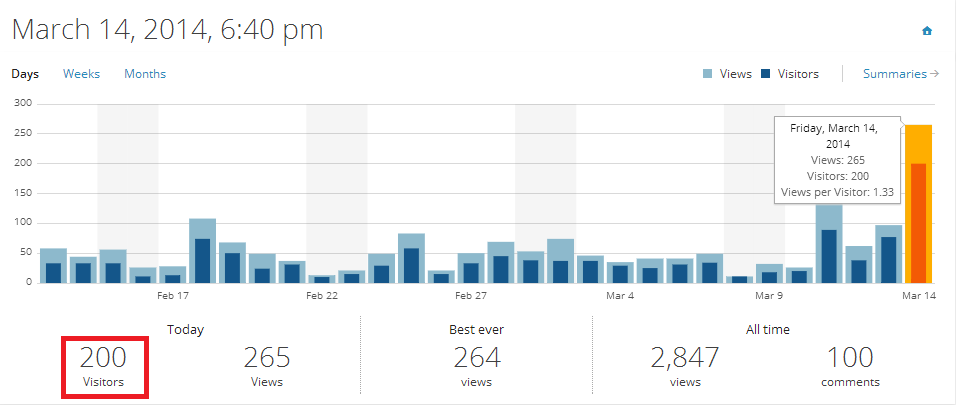
Today, so far, I’ve reached the most visitors of all times: 200! I know some of you may think it’s not such a big deal, but for me it’s a HUGE deal! Besides, people are commenting a lot on my posts, which is absolutely fantastic! You should see the enormous smile on my face every time I get a notification that someone has commented on one of my posts or every time I overcome another milestone of visitors/views. It’s such a rewarding feeling! And this makes me dedicate myself even more in writing interesting posts. It’s a vicious circle.

But all this would be impossible without you, so THANK YOU for following me, reading my posts, sharing them, commeting and giving feedback. You guys rock!

P.S.: By the time I finished writing this post the blog reached 231 visitors: =D

22 dicas importantes sobre alguns erros comuns em português

Image

Tenho cada vez mais observado um fato preocupante: a maioria dos brasileiros comete sérios erros de português. Não estou falando de conhecimento avançado, mas de erros comuns, que se aprendem na escola, dos quais se ouve falar constantemente na internet. Às vezes vejo, inclusive, pessoas com nível superior cometendo esses erros.

Além de ser essencial para dar uma impressão profissional e culta, escrever corretamente também mostra que você se importa com seus leitores, é atento e tem o conhecimento adequado da língua, inspirando confiança. Afinal de contas, não dá para confiar em alguém que escreve errado, não é?

Aqui está uma lista de termos que compilei com base em observações que tenho feito principalmente no Facebook, mas também em outras mídias sociais e em e-mails, além de conversas cotidianas. A numeração serve apenas para facilitar a visualização, não indica nível de importância dos termos.

  1. Através
    Significa “que atravessa”, “de um lado a outro”, “transpor”, “cruzar” e, portanto, não deve ser usado no sentido de “por intermédio de”. Nesse último caso, utilizar “por” ou “por meio de”.
    Exemplo: Esta universidade oferece vagas pelo/por meio do Pronatec.
    Pude contemplar a chuva através da janela.
  2. Há/atrás
    Ambos os termos indicam tempo passado, portanto, é redundante utilizar os dois na mesma frase. Utilize “há” ou “atrás”.
    Exemplo: O cliente enviou os arquivos duas horas.
    ou
    O cliente enviou os arquivos duas horas atrás.
  3. Haver
    No sentido de existir, o verbo é impessoal.
    Exemplo: Não houve feridos no acidente.
    não
    Não houveram feridos no acidente.
  4. Faltar
    Concorda com o sujeito.
    Exemplo: Faltam dois dias para o congresso.
    não
    Falta dois dias para o congresso.
  5. Fazer
    No sentido de tempo passado, não concorda com o substantivo, deve ser usado sempre no singular.
    Exemplo: Faz 24 horas que não durmo.
    não
    Fazem 24 horas que não durmo.
  6. O mesmo
    Não exerce função de pronome pessoal, portanto, não deve ser utilizado para substituir uma palavra anteriormente dita. Sempre utilize o pronome “ele” e suas derivações.
    Exemplo: Ante de utilizar o elevador, verifique se ele encontra-se parado neste andar.
    não
    Antes de utilizar o elevador, verifique se o mesmo encontra-se parado neste andar.
  7. Onde
    Expressa lugar e não deve ser usado para se referir a eventos. Nesse último caso, utilizar “em que”.
    Exemplo: Amanhã teremos uma reunião extraordinária em que será discutido o novo projeto de tradução.
    não
    Amanhã teremos uma reunião extraordinária onde será discutido o novo projeto de tradução.
  8. Qualquer
    Pronome de sentido afirmativo, portanto, não deve ser usado em frases negativas. Seu uso se deve à ideia errônea de que não há dupla negativa no português. Ela não deve ser usada em excesso, quando desnecessário, mas não é incorreta, como no inglês.
    Exemplo: Não há nenhum aluno na sala.
    ou
    Não há alunos na sala.
    não
    Não há qualquer aluno na sala.
  9. Boas-vindas
    Assim como “bem-vindo” e suas derivações, deve ser usado com hífen.
    Exemplo: Bem-vindo ao curso de introdução à interpretação.
    ou
    Segundo o cronograma, o presidente dará as boas-vindas aos convidados antes de cerimônia.
  10. Gramas
    É masculino, não feminino.
    Exemplo: Duzentos gramas de queijo, por favor.
    não
    Duzentas gramas de queijo, por favor.
  11. Ao invés de
    Indica contrariedade, oposição, inverso. “Em vez de” significa “no lugar de”.
    Exemplo: Em vez de ir ao parque, iremos ao shopping. (O parque não é o oposto do shopping, certo?)
    não
    Ao invés de ir ao parque, iremos ao shopping.
    mas
    Ao invés de cair, o preço do produto subiu.
  12. Etc.
    É a abreviação da locução latina et caetera, que significa “e outras coisas”. Como tem o sentido de “e”, não deve ser precedido por essa conjunção. Segundo a gramática moderna, pode ser precedido por vírgula e deve vir acompanhado de ponto, pois se trata de uma abreviação. Seu uso deve ser evitado com pessoas, mas não é considerado errado.
    Exemplo: Comprou vinho, pão, macarrão, etc.
  13. Porque
    Usado para indicar explicação, causa. Separado, “por que”, é um advérbio interrogativo. Acentuado, “porquê”, substitui as palavras “razão”, “causa”, “motivo”. Separado e acentuado, “por quê”, é usado no fim de frases ou quando houver pausa.
    Exemplo: O cliente cancelou o projeto porque não obteve aprovação do departamento financeiro.
    Por que você não vai à festa?
    Não sei o porquê de o meu computador não estar funcionando.
    Minha irmã me disse que você foi demitida. Por quê?
  14. Perca versus perda
    O primeiro é a conjugação do verbo “perder” na primeira e na terceira pessoa singular do presente do subjuntivo e na terceira pessoa singular do imperativo. O segundo é substantivo.
    Exemplo: Não quero que você perca a aula.
    Sinto muito por sua perda!
  15. Aonde
    Só deve ser usado quando o verbo exigir a preposição “a”.
    Exemplo: Aonde você quer ir à noite? (ir a)
    Onde você colocou o carro? (colocar em)
  16. A nível de
    Significa “à mesma altura”. Já “em nível de” significa “de âmbito”, “com status de”.
    Exemplo: Em nível de beleza, as cariocas ganham.
    Esta cidade não fica ao nível do mar.
  17. Anexo
    Deve concordar com o substantivo. Alguns estudiosos condenam o uso de “em anexo”, portanto, prefira somente “anexo”. Se quiser especificar que algo está sendo enviado dentro de um anexo, use “no anexo”.
    Exemplo: Seguem arquivos traduzidos anexos.
    O arquivo solicitado está no anexo.
  18. Esse versus este
    O primeiro é usado para retomar algo já mencionado, indica proximidade ao ouvinte. O segundo é usado para indicar o tempo no qual se está, objeto próximo ao falante, uma ideia nova ainda não mencionada. O mesmo vale para seus derivados.
    Exemplo: Estes tópicos ainda não foram abordados: revisão, edição e diagramação.
    Neste mês, teremos uma surpresa para você!
    A comissão terá cinco membros. Esses membros terão direito a votar.
  19. Seniores
    Embora o singular seja “sênior”, o plural não tem acento. O mesmo acontece com “júnior”.
  20. Horários
    A forma correta de escrever horários é 16h, 16h30 e 16h30min55s. Não há ponto depois das abreviações (h, min, s). Observe que a abreviação de “segundo” é “s”, não “seg”.
  21. Regência
    Chegar a, não chegar em. Exemplo: Cheguei ao hotel de manhã.
    Consistir em, não consistir de. Exemplo: O projeto consiste em cinco etapas.
    Assistir a. Exemplo: Marcos sempre assiste ao programa de culinária.
    Ter de ou ter que. Exemplo: Tenho de/que traduzir 3.000 palavras hoje.
  22. Pronúncia
    Subsídio = subcídio
    Inexorável = inezorável
    Gratuito = gratúito

Você já conhecia todas essas regras? Conhece alguma outra regra que acredita ser importante? Compartilhe conosco!

Leitura recomendada:
100 erros de português frequentes no mundo corporativo
Dicas de português

Guest post: Feedback

And… we’re back with our guest series! Did you miss it? I missed all the engagement you always provide in our posts!
So let’s get back to business! Today’s guest is Cesar Faria, a fellow translator and dear friend who has also studied at the same university as I did. He’ll talk about feedback – in my opinion, a pretty important topic for all translators.
Welcome, Cesar!

Embed from Getty Images

Feedback: Good Even When Bad

It was a warm Friday, 4 p.m., and I had just shut my laptop down after a quite busy week splitting my days into my two careers at that time – English teacher and translator on my first steps. I just wanted some time to relax and take a quick rest to charge batteries for the night to come, but then my cell phone rings…

To my surprise, it was the QA coordinator of the only agency I used to provide services to at that time. I had her as a contact on Skype, but never really had the opportunity to talk to her. Well, once she identified herself, my blood went cold, a rabble of insane butterflies invaded my stomach and I knew that I could not expect anything exciting from it.

And I was right. She introduced herself very kindly and asked me to open my Skype so we could talk about a file I had translated some two months before. It was a big and complex .ppt file about investment funds to be translated overnight, so they offered me a very good rush fee. I had started working as a translator no more than six months before that, but I felt I could do the job properly, since my productivity was fine at that time. I was deadly wrong. Deadline was almost not met, a lot of mistakes were pointed out, the main client returned the file with lots of complaints and a discount penalty was applied.

I couldn’t feel any more frustrated with such unpleasant situation. However, the QA coordinator was quite nice and empathetic, and told me very gently that I could learn from that experience and use it to improve my skills and attention. By then, I had never had any kind of feedback and, mainly because it was a negative one, it served to put me in a very attentive and cautious state before, during and after any translation job. I can sure say that my concerns regarding quality started being built and developed by such traumatic event.

Time has passed, and now a great deal of my jobs consists on project coordination and editing/reviewing, and for most of them I have to provide feedback for the translators involved. As I always remember the extremely polite manner my former QA coordinator handled the aforementioned situation – and since that made me grow professionally as well – I would like to share some hints for translators, especially beginners, on how to deal with feedback:

  • Read all corrections and suggestions, and create a separate file with them. I always keep a feedback file per client and a master file with all the feedback I received. This can help you learn from specialists or clients from very specific fields, and you will always have that ace up your sleeves if a terminology/consistency problem occurs in a future project for the same client.
  • If you don’t agree with something, question it. Naturally, if you think you are right, you are going to do some further research to prove your point of view. Do it politely and don’t forget to include good sources. In our profession, there is no room for arrogance. Everybody knows time is critical and short, and – as human beings – mistakes can happen, even from those who are supposed to correct them.
  • After receiving, reading and agreeing on what was written about your job, do not just turn your back, forget about it and go back to your translations. It is always a good idea to reply to the message. Preparing lists of mistakes, indicating corrections, suggesting ways to improve style, among other things, is very time-consuming and stressful. Particularly, I am not very fond of being responsible for giving someone a negative feedback, but when I have to do it, it is good to know from the person evaluated that everything was understood and next time will be better.

Finally, we all know that translation is an activity that requires continuous learning; we will never know everything; and we should learn from our mistakes. And I am also completely aware that last sentence was a total cliché, but I do believe that all those thoughts are essential to make us more careful and responsible when a job is assigned to us.

Thanks Carol for the opportunity, and I will be tremendously happy to read comments and other stories related to this topic. Feel free to email me as well: cesarhf.translator@gmail.com.

Thank you, Cesar, for accepting my invitation! I really appreciate your taking the time to write something for our blog. Your advice is great, and I hope our followers also enjoy it.

So what do you say? What’s your opinion on feedfback?

About the author
I graduated in Translation in 2004, but started working as an English teacher during and after graduation. In 2009, I quit the job and traveled to Canada to have some fun. There, I played the bass in a heavy metal band in an almost coast-to-coast tour, started dating my wife and working as a translator. When I got back to Brazil in late 2010, I decided that I wanted to be a freelance translator and that is what I am since then.

Learning the Hard Way

Imagem

After a 4-day Carnival break traveling, I come back home eager to go back to work, with 3 projects to deliver the next day. I feel relaxed and ready to work on my best client’s projects. Only to find out, when I turn my computer on, that it is plain, with absolutely no configuration: no wallpaper, only a few links on my desktop, no Outlook, no FTP, no documents… as if it had just been formatted. “Well,” I thought, “I’ll see what happened later on. Let me work on my projects first.” No, no, no! This client’s CAT, Trados Studio, wouldn’t work either!

I called a colleague. He had never heard of such a thing before. I then called my cousin, and we stayed awake until 5 am (from 11 pm) trying to figure out what happened and to fix it. He was able to find all my documents in a hidden folder. Phew! (I had a backup, but not a recent one.) But I still couldn’t open Trados. A friend of mine came over later that day and also tried to fix it. Nothing. We were only able to create another user, in which I could at least work on Trados. Apparently, my Windows crashed my user in an update, all by itself.

Consequences: I had to do something I dread: cancel all my projects. I felt terrible, desperate and miserable. It was a huge volume to allocate last minute and it was my best client, after all. While there was nothing else I could do because the situation was far beyond my reach, we can’t help it, right? We do feel horrible.

Bottom line is we learn some quite important things when catastrophes like this one happen. My lessons this time were:

  • There is no way a professional translator can have only one computer. We must have at least two! I was already planning on buying another laptop. No plans anymore. I’m buying another one right now!
  • Our backup computers must also have all the programs, software, etc. we need and have on our main computer. That is, I will have to buy another Trados license. This may be obvious for some of you, but it wasn’t for me.
  • Needless to say backups are a must. But they take time and we end up doing them less frequently than we should. So I got an idea from a colleague: send important files we use daily  to the cloud, and do it every day. And then we do our overall backups every week or month.

If you, like me, hadn’t thought of the points mentioned above before, please start considering them now. It’s better to spend some money now than to lose important clients (and our heads) in the future.

Has anything bad ever happened to you that taught you quite a lesson?

Guest post: Newbie translators (in Portuguese)

Hello, dear followers! It’s good to have you back. 🙂
We had a slight change in our calendar, so our guest today is Maria Regina Canova, talking about translation difficulties.

Welcome, Maria! 🙂

Image

Conselhos aos tradutores iniciantes

Fiquei muito feliz quando a Carol me convidou para escrever no blog. Decidi falar sobre as dificuldades na tradução, principalmente as que eu encontrei quando comecei a traduzir, mas apesar de eu trabalhar mais com tradução do alemão, esta postagem não é sobre dificuldades exclusivas do alemão, são dificuldades que podem atrapalhar qualquer tradutor iniciante. Apesar de os assuntos que decidi abordar serem óbvios para alguns, acho importante compartilhar as minhas experiências.

Antes de entrar no mercado de tradução, os tradutores devem conhecer bem o mercado, para saber quais oportunidades de trabalho eles podem ter com aquele idioma. O que não foi o meu caso, eu não sabia nada sobre o mercado de traduções técnicas quando decidi me dedicar à tradução. Só depois que consegui o meu primeiro estágio que descobri que São Paulo é o maior polo industrial alemão fora da Alemanha. O que isso significava para mim? Que na área de traduções técnicas do alemão, grande parte dos textos é da área de exatas. Tudo que eu odiava! Ou achava que odiava na época.

Além de conhecer o mercado para saber quais áreas têm bastante trabalho, os tradutores também precisam conhecer a área (ou as áreas) com a qual eles trabalham. Ou seja, não dá para traduzir um texto sobre algo que você não entende no idioma original. O texto vai ficar igualmente ininteligível depois da tradução. Conheço alguns tradutores que fizeram uma segunda faculdade para aprender sobre a área específica que eles desejavam traduzir, mas sei que isso é para poucos. E não acho que fazer uma segunda faculdade seja um pré-requisito para virar tradutor, eu não aguentaria fazer uma faculdade de engenharia. Mas o tradutor deve, pelo menos, pesquisar o assunto na internet e estudar um pouco.

Mas não adianta saber sobre um assunto se você não souber bem o idioma. É fundamental para qualquer tradutor ter fluência nos idiomas com os quais ele vai trabalhar. Lógico que é difícil ter o conhecimento dos termos técnicos quando você começa a trabalhar na área, mas o tradutor deve conhecer as regras gramaticais dos idiomas. Por exemplo, como o alemão é uma língua declinável, a frase não precisa seguir a ordem Sujeito Verbo Predicado. O tradutor deve conhecer as declinações dos artigos para identificar qual é o sujeito e qual é o predicado da frase.

Por último, o tradutor deve lembrar que os dicionários são os seus melhores amigos! Sei que é difícil encontrar dicionários técnicos bons e que eles são sempre caros, mas valem o investimento.

Thanks for accepting my invitation, Maria! It was nice learning a bit more about your experience as a German translator in Brazil.

As always, feel free to comment below. 😉

About the author
ImageSou bacharel em Letras: Português e Alemão pela USP. E sou completamente apaixonada pela língua alemã. Atualmente traduzo textos técnicos de engenharia e mecânica/automotiva.

Don’t wait for things to fall from the sky. Go and get it!

Image

Last week’s post resulted in a healthy debate on the importance of having a higher degree in translation or not, and consequently, on what universities courses lack. So I had the idea of writing about this lack.

I remember my first translation project ever. It was for a translation agency, a PowerPoint presentation. As a newbie, I did not have any CAT tools yet, so I was translating and adjusting formatting. Let’s face it: a PowerPoint preso isn’t a translator’s best friend, especially when the poor thing (the translator, I mean) does not have any experience at all.

However, so far, so good.

The problem was that there were non-editable images on the file. I panicked. Tight deadline, weekend, and I had no clue of how to translate those images! I did not know what to do. It was a Saturday night so it was not possible to contact anyone from the agency for help. I ended up inserting the translation on top of the image.

Cutting the story short, the project was later returned to me, because I obviously didn’t know (and how should I?) that non-editable images should be translated on the comments area. At that time, that was exactly what I thought: “How should I know? Nobody ever told me that!”

That’s right, a BA nor an MA in Translation will teach you practical things you should know when actually working as a translator.

Is that a problem? Is that something those courses lack? I’m not sure.

Usually, university teachers are academics, researchers, not professional translators. Lectures are theory-oriented or practical, but toward the translation act itself. You translate and, at most, you learn one thing or two about one or two CAT tools. That’s it. No project management, no handling projects, no accounting, no branding/advertising.

How are you supposed to know all those things then? Practicing. Or attending extracurricular classes, courses, conferences, events, lectures, reading blogs, joining professional groups, asking, researching, and so on. In other words, going out there and getting it yourself, not waiting for it to fall from the sky on your laps.

This is not such a big deal. The internet makes it quite simple actually. You just need to be willing to spare some time to engage on social media and the like.

Here are a few tips on how to learn those things:

  • Follow people (translators, agencies, companies) on social media (Facebook, Twitter, Google+, LinkedIn, etc.). There are also some specific Facebook groups for translators you can possibly join. They offer great tips and discussions, and allow you to ask your own questions to all the members.
  • Follow translation blogs. You can find all sorts of useful information on blog posts.
  • Participate in translation events, like conferences, symposiums, etc. Social media can also help you stay tuned on events being held near you.
  • Make the most of your degree. Check if your university offers extracurricular activities that may interest you.
  • And last, but not least, engage with people, network. Ask when in doubt. Always try to learn from the experience of others.

It would indeed be perfect if universities offered a practical lecture on management and dealing with clients, or if there was a management specialization on translation. But since that is not the case (yet?), we have to do our part and chase it ourselves.

Related article:
Story of a Translation Student: You are in Control of Your Life

What are your thoughts on this matter?

Guest post: Freelance versus in-house translator

Here we are again, with yet another guest in our series. Today, Mariana Sasso will talk about the differences between a freelance and an in-house translator. I hope you enjoy her writing as much as I did.

Welcome, Mariana!

Image

Working in-house or from home: A few insights

When I graduated from university a few years ago, I had no idea what my future professional life would hold in store for me, but I was pretty sure I wanted to translate for a living. And that’s what I have been striving to do ever since, but not without a lot of support of colleagues and friends who’ve blazed the trail of living as a professional translator before me. Carol is among the dearest of them, so, when she asked me to share my take on in-house and freelance translation with her readers, I was more than glad to oblige.

However, the first thing that crossed my mind was my awareness that my professional experience is still so slender that I was not completely sure I’d be the right person to write about the perks and bereavements of these two ways of working as a translator. But, then I thought of all those who have taken their time to share their own experiences with me and how good it was to just listen and learn from them, no matter how much or how little their professional experiences related to mine. So I figured that it would still be worth (and fun) sharing my ever-under-construction experience here, however small it may be now. So I selected four aspects about working as an in-house and/or a freelance translator that I feel most comfortable exploring (and that I have been experiencing with greater intensity on a day-to-day basis over the last years) to share with you. I hope you enjoy the ride!

So, the first one is PRODUCTIVITY. When it comes to how much a translator can actually produce in a given workday, it goes without saying that too many a variable are involved, so let us focus only on the environmental one here. From working in-house, I found that there are certain things that can be inconvenient about being inside an office, surrounded by other people or professionals from different areas. Concentration breakers, such as overhearing talks and whispers of people around you or being interrupted by a fellow colleague who has a question (or just a comment on the weather) or by the door opening for mail delivery (without mentioning the telephone ringing almost non-stop) are less likely to happen at home. Not that these examples are necessarily bad things (I actually happen to enjoy them and find them important at times!), but, in the silence of your own home office, these things tend not to happen just as much. However, at home, for those living with stay-at-home family members (such as retired parents, siblings, children, spouses) we just can’t say that there’s unbreakable silence, right? In any case, being interrupted or having the train of thought lost by whatever reason it may be is something that people may consider as the primary factor to influence production, so if your productivity is significantly impaired by noise and distractions, you might find a lot of comfort working from home.

WORKDAY FLEXIBILITY. Some people tend to mention the working hour flexibility as the major perk of being a freelance translator. Schedule flexibility can be a reality, but that is not necessarily true every hour of every day. For instance, if you have few clients and are not near consolidated in the market, if you are at the initial stages of your career and still haven’t reached a somewhat fixed number of jobs a day, then you will probably be stuck at working when there’s work to do (nights, weekends or holidays too). But if that is not your case, yes you can have a very eventful life during weekdays and business hours, as long as you arrange your schedule and plan ahead of time. The word of order here is organization. One’s got to be extra, extra organized if they want to work from home and be self-employed. Remember: there’s no one pushing you forward, so you’ve got to do that yourself. If you have, say, a 9-to-5 job at a company, you’re usually guaranteed at least eight hours of work a day and you’ll stay there doing what is needed of you until the end of your work shift, when, more often than not, you will be “free” to go home and do your things. When you’re a freelance translator, however, those regular, specified and guaranteed working hours are not always a reality, so your schedule flexibility will depend on the jobs you have and their deadlines (and, if you have bills to pay at the end of the month, odds are that your expected schedule flexibility will be secondary to your dues).

BEING A REGULAR EMPLOYER versus BEING AN ENTREPRENEUR. I believe that this is the real deal-breaker for a professional translator to decide whether they can live as a freelance service provider for the long run or not. When you work for a company, its HR department will manage pretty much every aspect involved in the bureaucratic part of the employment relationship: collection, preparation and filing of documents; awareness and compliance with labor laws; collection, payment, deposit and transfer of fees, salaries, taxes, bonuses, vacation pay and rights, including the ever-so-needed FGTS (Brazilian Government Severance Indemnity Fund). When you are self-employed, you have to take care of all those things yourself and/or with the services of an accountant. On top of that, self-employed professionals will only “be paid” if they have work to do and, in order to have work to do, they need to develop their entrepreneurial side and literally go after the job; promote themselves and their work; explain and prove why they should be chosen over other professionals; advertise their services and, not rarely, almost literally dig the job from the mines. However, one might argue that this is no different than the reality of every other professional looking for a job. And I agree, but for self-employed translators, that’s the reality in most days, if not every day! There is an undeniable and material difference between working for a company and being the company yourself, in which case, you would need to take entrepreneurship to a whole new level. While some professionals will find this reality a bummer and extremely hard to deal with, others will find it challenging, stimulating, interesting and rewarding. I believe there is no real way to actually know for sure what suits you best unless you’ve experienced both ways. Believing you can be an effective entrepreneur may be proved right or wrong once you’ve experienced the real deal.

INTERPERSONAL RELATIONSHIP. Oh, the wonders of having co-workers by your side, keeping you company, interacting with you all day… (or not! :)). Even though this aspect interfaces with the first one mentioned in this post, this is not about productivity, but mainly about human interaction and being comfortable at your workplace. Some people simply enjoy the company of others as they work, while other people prefer to work by themselves, in the quietness and peacefulness of their own offices, where they can turn the music on, up or down, eat at their desks, not worry about wearing fancy clothes and tight shoes, enjoy the comfortableness of using their own bathrooms, remain quiet if they don’t feel like talking or chatting, and, of course, inevitably revving-up their concentration into full blast productivity. Other people just can’t stand the quietness and solitude: they need company and, sometimes, even noise; they like arriving at the office and dispensing heartfelt “good mornings”, sharing a cup of coffee and cookies in the company of the next-desk friend, gossiping over the latest facts, hearing the latest news, well, ultimately bonding with others during their working hours. That full dose of every-day human interaction at work can be really important and necessary for some (most?) people. Having in-house co-workers can make it easier for people to exchange opinions, experiences, questions, problems, excitements, achievements, frustrations, discoveries; improve and increase their network; learn from other people’s mistakes, you name it. However, in spite of being able to do all that in person, face to face and fairly instantly in an in-house environment, that absolutely does not mean you can’t have most any of those things working from home and using real-time technology to connect you with other people. It all depends on your needs and approach as to how efficiently and productively you want to establish your interpersonal relationships and build a solid network. It is undeniable that there are ups and downs to both ways and that they are not perfectly interchangeable, but I believe that having healthy and productive interpersonal relationships is just as possible at home as it is in the office, if you make it.

Well, there are so many other issues to explore on this topic that I could just go on forever, but Ithought it was best to focus on these four aspects of the topic at hand (Libra as I am, you might figure how hard it was for me to actually make the choice). Please feel free to share your thoughts and comments below and/or contact me at marianasasso@gmail.com.

Best of luck!

Thanks a lot for accepting my invite and for dedicating your time and effort to writing this wonderful post, Mariana! I loved it! 🙂

Our next guest will be Sara Rivera, talking about translation traps between Spanish and Brazilian Portuguese. Stay tuned!

Any in-house/freelance translators who want to share their takes?

About the author
537306_505047499518394_307875091_nI graduated in Translations in 2005 and, soon after that, I moved to the USA where I lived, studied and worked as an AuPair for two years. I completed my specialization in Advanced Studies in English Language in 2012 and I have been working as both an in-house and freelance Eng-Por-Eng translator since 2008.

Love is in the Air

Image

As some (or all) of you know, I’m Brazilian. And in Brazil, Valentine’s Day (Dia dos Namorados) is on June 12. 

Besides, I’m single. 

No reasons to celebrate Valentine’s Day today or even to enjoy all the love being spread on the internet then, right? 

Wrong! 

I actually like Valentine’s Day. I do. Yes, the North-American one, celebrated today. 

In Brazil, the day is celebrated exclusively by those who have a girlfriend/boyfriend, husband/wife. Now that is boring, because, of course, it does not include me. However, the North-American one, on the other hand, embraces the idea of love. And love is not exclusive to lovers per se, but to friends and anything else you might actually… love! Now that includes pretty much everybody (unless you are a grumpy person that does not love absolutely anything). 

Because of that, I decided to treat you with a bonus post this week! I want to share with you my love for… 

  • Translation. I love my job! If you are a translator and also love what you do or if you are not a translator, but love your translator or simply support us, this is a great opportunity to spread the love! Have you already heard of these wonderful initiatives: Love Your Translator and Pro and Proud? Access the links, learn more and help us spread the love. 
  • You! My lovely readers who follow my posts, read them, share them, comment, follow me on social media. I ♥ you!

Here’s a Happy Valentine’s Day full of love to you all! 

My present to you is this great list of love-related articles. Enjoy!

Why writters and bloggers need a lot of love
Be my Valentine!
Do you heart your translation company? Why communication builds a strong relationship
Valentine’s Day: legend, traditions and tips to celebrate it
A whole lot of history behind ‘x’ and ‘o,’ kiss and hug
11 British Chat Up Lines for Single People to Use on Valentine’s Day
Valentine’s Day: How to Talk About Love

Does an academic background really make a difference?

Image

This is a quite controversial issue in the translation sector. Those who have an academic background categorically say it is essential, while those who do not, say it is not. With a BA and MA in Translation, I have to admit I am biased on the subject. Therefore, if you are like me, you will most surely like this post. If you have no academic background though, do not give up on me: keep reading. If I can make you change your mind, great! If not, you can share this post as the most absurd thing you have ever heard of. 😉 

You see, the thing is, unfortunately, in order to become a translator, you do not necessarily need to have a higher degree. If someone masters (or not) two languages, this person can work as a translator (please be aware that I am not discussing quality and professionalism here, just the fact that pretty much anyone can be a translator). As simple as that. If it is fair or not, that is a topic for another discussion. The fact is, since an educational background is not mandatory, people sometimes refuse to “spend” their time and money sitting on a chair, doing plenty of reading and writing, and practicing translating. 

After all, what’s the point in studying Translation? I’ll give you some reasons: 

  1. The theoretical knowledge you learn will help you build your translator self, your identity as a professional who knows about all the history and theories behind the art of transforming a bunch of words in one language into a beautifully crafted text in another.
  2. You will have plenty of practice translating several types of texts. This will help you have at least an idea of which path to take. Besides, it helps you learn some tricks, dos and don’ts.
  3. Grammar lessons. They may sound stupid and useless, but believe me: you do not know everything and you do make grammar mistakes you are not even aware of.
  4. Culture and literature lessons in both your working languages. And depending on your major, even other lessons. For example, my MA was in Translation Studies with Intercultural Communication, so I had, among others, Interpersonal Communication and Translating Cultures lessons.
  5. You get to learn more than you bargained for. I learned Italian in my BA (including for translation purposes), and Greek in my MA (Ab initio for translation purposes).
  6. It offers you recognition and validity. 

Are those reasons convincing? Well, some people say the bad thing about those courses is that they do not offer you a practical idea of the market. That is right, they don’t. However, I question if that is really the role of any university. The university only guides you. It is not its responsibility to give you every piece of information you need to be a successful professional. That is your job. Living and learning, with practice. Besides, it is better to be introduced in the market with all the background I pointed out above than with nothing at all.

Bottom line is there are no cons in taking a higher degree (in any field). Knowledge is never too much.

Some other related articles:
How (Not) to Be a Professional Translator and 6 Tips to Help You Become One (Fresh out of the oven. Alina also posted it today! Serendipity?)
The (un?)importance of translation-specific degrees to translation (also mentioned in Alina’s article)
Masters in Translation


What’s your opinion on the topic? Do you also have an academic background in Translation? Do you agree with me? Would you add any other good/bad points?

Guest post: Public Health translation

Hello, followers! Good to have you back!
Our guest series had a great start last week. I’m extremely happy you liked the idea. Thank you!
So here we are again with our next guest, Carolina Ventura, who is a professional translator in the Public Health domain.

Welcome, Carolina!

Image

Me, my translations and the Public Health field: a love story

First of all, I’d like to thank my friend and fellow translator Caroline Alberoni for inviting me to write a post about my experience as a translator for her blog! This is the first time I do something like this, and I can say that I’m enjoying every bit of it – to actually WRITE something instead of TRANSLATING something that somebody else wrote is wonderful for a change!

I decided to be a translator when I was 20 years old. In 1991, I was in my first year of the Biology undergraduate course at Universidade de São Paulo – USP (Brazil), but all of a sudden I understood why I had been so miserable since the beginning of the course: I’d made the wrong choice. I didn’t want to be a biologist after all – I wanted to study languages. In fact, I wanted to continue studying English, something that I’d been doing for the previous ten years at a private English school, but I didn’t want to be an English teacher. I wanted to be a translator.

I abandoned the Biology course and in 1992 I started the English Language and Literature Undergraduate Course at Pontifícia Universidade Católica de São Paulo (PUCSP). I majored in Translation and I’ve never been miserable about my choice in twenty years working as a professional translator!

I can say that I chose my career, but the translation specialty chose me. In my first year of the English course at university, my father, who is a professor at the School of Public Health of USP, told me that a fellow professor needed to translate a paper into English to publish it in an international journal, and asked me if I could do it. I accepted the challenge, the author liked the result, and she and my dad started indicating me whenever they had an opportunity. Some say that word-of-mouth communication is more efficient than advertising, and I must agree with it. Interestingly enough, the translation direction also chose me: I can say that 99% of what I do is translate from Portuguese into English, and 1% accounts for English -> Portuguese translations. It’s been like this since the very beginning, but I didn’t choose it.

So, I’ve been translating academic papers in the area of Public Health from Portuguese into English for the past 20 years. “Do I get sick of it sometimes?”, you might be wondering. Well, no! Within the Public Health area, you can translate a paper on perinatal mortality in hospitals of São Paulo on one day, then translate a study on malaria treatment among pregnant women in the Amazon region, and end the week translating a paper about the contributions of anthroposophical medicine to integrality in medical education. Besides enhancing my personal knowledge about a theme that I like (after all, I wouldn’t have chosen to study Biology if I weren’t interested in the Health Sciences, right?), I really enjoy helping to give international visibility to the research production of Brazilian scientists! I like to think about the role I play when papers about Brazil’s achievements (and also failures) in the Public Health area are published in international journals.

I also translate texts from other areas, mainly Education, Applied Linguistics, Communication and Business Administration. This surely helps me not to feel bored about my work, but nothing pleases me more than being asked to translate an academic paper in the field of health. When I translate texts from other areas, I have to spend more time doing research before I start translating, whereas when I must translate a public health text, all I have to do is sit in my chair, turn the computer on, and start translating the text right away!

I work for two kinds of clients, always as a freelance translator: individuals who wish to submit their papers to international journals and scientific journals that have their own translation teams. In recent years, I’ve been working on a regular basis for six Brazilian journals: one about Public Health, Education and Communication; one about Nursing; one about Physical Activity and Health; one about Human Growth and Development; one about Business Administration; and one about Brazilian cities and metropolises. My payment is made in three ways: the papers’ authors pay for the translations themselves; the journal is bilingual, so it pays for the translations; the journal and the author pay 50% of the translation cost each. Unfortunately, the payment made via the Institution that houses the journal can take much longer than expected – well, who said it would always be a bed of roses?

Do I use any CAT tools to help me translate the papers? As this is a fashionable topic nowadays, I feel I must approach it, so here it goes: no, so far I haven’t. I’ve already attended a couple of courses on CAT tools, but translating academic papers involves respecting the academic style, the style of the area (for example: public health papers are written differently from applied linguistics papers, both in terms of academic style and jargon), and the author’s idiosyncratic style, and I don’t think CAT tools are of much help here. Besides, my services are not hired through translation agencies, which means I don’t have to deliver translation memories and the like. I’ve asked some of my colleagues who work with me in the same journals about this, but they haven’t felt the need to use CAT tools so far. No client has ever asked us to translate their papers using TRADOS or memoQ. For the time being, our work can continue to be similar to that of an “artisan of words”, and I guess Google Translate won’t replace us in the near future. Obviously, necessity is the mother of invention, and it’s more than likely that we’ll have to adapt to the new reality soon – and I’m okay with this!

Well, this is the “love story” I wanted to share with you! I hope you’ve liked it! Please feel free to post any doubts or comments you may have!

It’s my pleasure having you as a guest in our blog, Carolina! It’s interesting to see how people have different starts in our profession, and learning more about the Public Health domain was also great! 🙂 Thank you for sharing your experience with us!

Our next guest will be Mariana Sasso, talking about freelance versus in-house translator. Stay tuned!

About the author
Foto para CarolineI have a BA in English Language and Literature (majors in Translation and Teaching) and an MA in Applied Linguistics and Language Studies from PUCSP (Catholic University of São Paulo). My Master’s thesis focused on the translation into English of Annual Reports released by a Brazilian retail company. I’m also a public sworn translator for the State of São Paulo, Brazil.