Who run the world? Girls!

New month, new editorial calendar, new series… Great times are coming indeed!

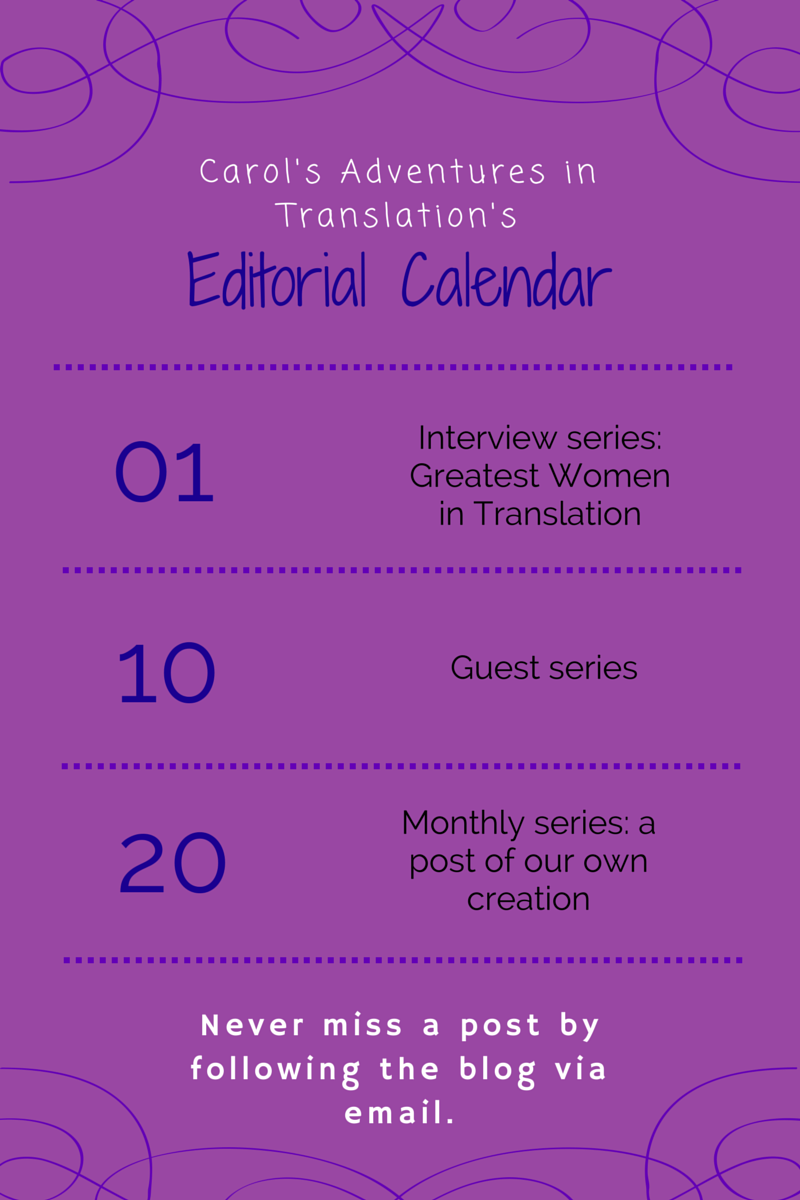
The time has come to disclose our new editorial calendar with the special feature of our brand new interview series: Greatest Women in Translation.

So here it is:

Editorial calendar

On the 1st of every month, we’ll have the brand new interview series, starting tomorrow. On the 10th of every month, we’ll keep having guests writing about diverse and interesting topics on translation (our next guest will be Tess Whitty, from the Marketing Tips for Translators podcast). And on the 20th, we’ll keep having our now monthly posts (previously weekly), written by yours truly, Carol. 😉

If any of those days falls on a holiday or on the weekend, I may anticipate for the previous day or postpone it for the next day.

Since the interview series is new, I’ll explain how it will work.

^3BD2FAACEAC897D21BE68030808476304DC722B6E37A1C22D8^pimgpsh_fullsize_distr

The idea is to feature women translators who are someone’s role model because they inspire and motivate us to reach higher and be better. Since this is a very personal opinion, my role model may not be yours, I’ll let the interviewees themselves choose the subsequent translator to be featured on the series. At the end of the day, we’ll have a group of professionals who are among the greatest women in translation. And I say “among” because the world is pretty large and it would be impossible to feature all the amazing translators who inspire and who are great role models out there.

That being said, tomorrow, the first interviewee will be someone who inspired me, since the beginning of my career, and who keeps being my inspiration. However, I won’t say another word, because it’s still a surprise.

The questions won’t be the same for every interviewee. I’ll try to make them as personal as possible, so we can have a customized interview. If you have any suggestions of questions or if there’s something you’d like to know about a translator, please let me know. I’m open to suggestions.

Last but not least, the hashtag of the series is #gr8testwomenxl8. So feel free to use it whenever you like.

“See” you tomorrow!

P.S.: June is the blog’s 2-year birthday. Stay tuned because there will be something to celebrate soon. 😉

My impressions on the VI Abrates Conference – Part 2

In case you did not read the first part, here it is.

Still on the second day of the conference, after the panel with representatives of some associations, we had a coffee break and, after that, our second keynote speaker, Renato Beninatto, spoke about Brazil’s position in the translation world. Beninatto talked about how Brazilians sometimes complain a lot about the local situation. According to him, translation, as well as its problems, is the same everywhere, not only here. The translation market is globalized. Renato also says it is a shame that ATA has the same number of Brazilian associates as Sintra: we should give more credit to local associations. To conclude his presentation, he shows this video and says a person is able to create a new initiative by themselves and inspire others. The first follower of the initiative is the most important, because he is the one that validates the leader.

In his presentation, he referred to this article: Brazil: The Social Media Capital of the Universe.

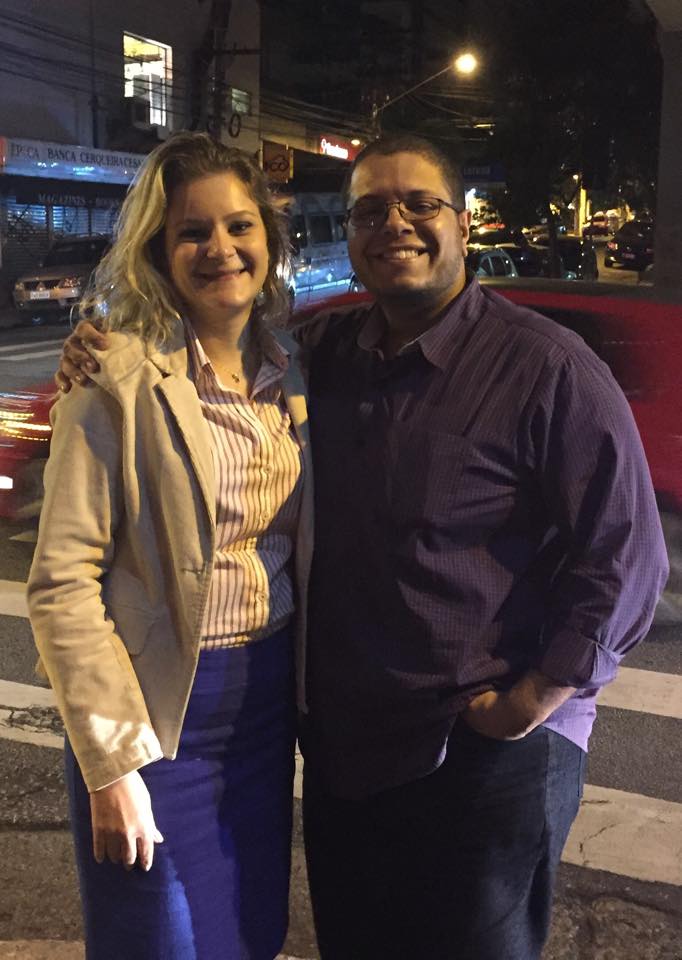
The second day was over and, while some attendees headed to a pizza place, I headed to a sushi place, where ACME E-learning hosted a Mixer with a dozen people. It was quite a pleasant evening, and I had the chance to get to know incredible new people from different areas and met a couple I already knew from other events. João, ACME’s director, will soon publish pictures and probably some words about this successful networking event.

11401323_582453758563073_2601120003924514791_n

With JoĂŁo Artur Souza, from ACME E-learning.

On Sunday, the third and, sadly, last day of conference started with Renata Cassemiro’s presentation about the importance of the translator’s occupational health. Renata is physiotherapist and Pilates instructor, so she gave us some extremely important tips and orientations. According to her, some diseases take years to start showing its symptoms, therefore, we shouldn’t wait to try to find a solution. Did you know that the incorrect use of the phone is one of the biggest causes of problems? Don’t hold the phone between your ear and your shoulder. Use a headset instead. Fact: the human being is capable and prepared to walk 30 km a day. That’s why a sedentary lifestyle brings so many health problems! Some of her tips: establish pauses throughout your workday; avoid fried food and have lighter meals; therapeutic massage is advised once a week.

The second presentation of the day was by Débora Policarpo, who talked about financial planning. Débora is a business administrator specialized in wealth management and asset allocation. According to her, financial planning is the process of achieving our life’s goals through the adequate management of our finance life. There is nothing that takes more our attention than financial problems, right? We should understand the family’s budget and dynamics, as well as in which stage of life we are in. Débora said we must set our short-, medium- and long-term goals and the income we want/need to have when we retire. There is no magical formula to calculate how much we should save to achieve our goals: we need to know the time we have and the desired income.
11206772_906045236124582_6653212949250827871_o

During DĂŠbora Policarpo’s presentation.

We had a coffee break and, after that, my presentation.

After my presentation, I watched part of Carolina Walliter’s presentation on coworking. Unfortunately, I missed a great part of it, but it seemed very interesting indeed. People loved it! According to her, coworking is a network society that generates quality of life and social awareness. Sheila Gomes, who was also watching Carolina’s presentation, recommends that we at least try working in one of the coworking spaces available. I do plan on working some hours or a day in a coworking space we have in my town. As soon as I do, I’ll write a post about my experience. 😉

The last presentation of the conference was with Isabel Vidigal, who mainly talked about ProZ.com and the possibility of getting clients from it. According to her, you have nothing to lose creating a free profile on ProZ.com, but work carefully on it.

After that, we had a lunch break and, finally the last keynote speaker, Ulisses Wehby de Carvalho, from Tecla SAP, who gave a really relaxing and enjoyable speech about the life of an interpreter. We laughed a lot with his funny and incredibly embarrassing/amazing histories! According to him, mistakes happen in the booth because there is no backspace. The interpreter has to learn how to properly deal with them when they happen.

And that was it (or at least part of it, since I attended only 1/6 of the wide array of possibilities). You can find some links to posts people have already published about the conference below:

Talking in the real world, post-conference article by Robert Lange Greene on The Economist
A LBM no Congresso da Abrates, by Ligia Sobral Fragano, from Little Brown Mouse
VI Congresso da Abrates – Parte 1, by Laila Rezende Compan, from the blog Tradutor Iniciante
VI Congresso da Abrates – Parte 2, by Laila Rezende Campan, from the blog Tradutor Iniciante
VI Congresso da Abrates – Parte 3, by Laila Rezende Campan, from the blog Tradutor Iniciante
VI Congresso da Abrates – Parte 4, by Laila Rezende Campan, from the blog Tradutor Iniciante
VI Congresso da Abrates – Parte 5 (final), by Laila Rezende Campan, from the blog Tradutor Iniciante
ImpressĂľes sobre o VI Congresso Internacional da Abrates, by Sidney Barros Junior
VI Congresso Internacional da Abrates – Um sucesso muito além do esperado, by Ponte de Letras
Línguas e Tradução: Outro Encontro de Tradutores, by Anita Di Marco, from Anita Plural
VI Congresso da Abrates: uma viagem pelo mundo da localização, by Maíra Monteiro
VI Congresso Internacional da Abrates, by Marina Borges
E o VI Congresso da Abrates?, by Thiago Hilger, from the blog O Jogo da Tradução
CAT Tools na tradução literĂĄria: para quĂŞ?, by Rafa Lombardino, from eWorldNews, about Reginaldo Francisco’s presentation (in English: CAT tools in literary translation: what are they good for?)
A TradWiki e a visibilidade do tradutor, by Daniel Estill, from TradWiki
Como foi o VI Congresso da Abrates para os iniciantes, by Lorena Leandro, from the blog Ao Principiante
Pesquisa em tradução literĂĄria: seleção de fontes e entrevistas, by Rafa Lombardino, from eWorldNews, about Candice Soldatelli’s presentation (in English: Research in literary translation: selecting and interviewing sources of information)
Impresiones sobre el congreso – Abrates 2015, by VĂ­ctor Gonzales, from El Heraldo de la TraducciĂłn
Vamos fugir do tradutĂŞs?, by Rafa Lombardino, from eWorldNews, about Ponte de Letra‘s presentation (in English: Let’s avoid translationese, shall we?)
Pensando a tradução de variantes linguĂ­sticas, by Rafa Lombardino, from eWorldNews, about Solange Pinheiro Carvalho’s presentation (in English: On translating linguistic variants)
O tradutor sob os holofotes, by Rafa Lombardino, from eWorldNews, about the round table with Carolina Caires Coelho, Alyne Azuma, Alessandra Ruiz and Candice Soldatelli, moderated by Petê Rissati (in English: Translators under the spotlight)
O papel do tradutor na nova era da publicação digital, by yours truly on the blog eWorldNews, about Rafa Lombardino’s presentation (in English, translated by Rafa herself: The role of translators in the new digital publishing age)

And here are links to some presentations that presenters made available somehow and that I became aware of:

Roney Belhassof’s presentation: Usando a internet sem ter que virar nerd
Val Ivonica’s presentation: A tecnologia vai acabar com o tradutor?
Juliana Samel’s presentation: Falsos cognatos e decalques na tradução médica inglês > português
Layla Penha’s presentation: Interpretação consecutiva e além – como se já não bastassem os desafios da tarefa em si (recorded presentation, part 1 – you can also search for the other parts)
Jorge Rodrigues’ presentation: Rumos e perspectivas da carreira do tradutor profissional
J
orge Davidson’s presentation: O ABC das CATs: o que vocĂŞ nunca se atreveu a perguntar
P
aula Ianelli’s presentation: Quatro traduçþes e um original
M
itsue Siqueira and Bruno Fontes’ presentation: Gerente de projetos: de onde vem, para onde vai? You can also find a video of part of the presentation on YouTube here.
Carolina Walliter’s presentation: Coworking e os tradutores na vanguarda da nova era do trabalho
F
abiano Cid’s presentation: A situação do tradutor hoje no Brasil: problemas encontrados em trĂŞs anos de LQA

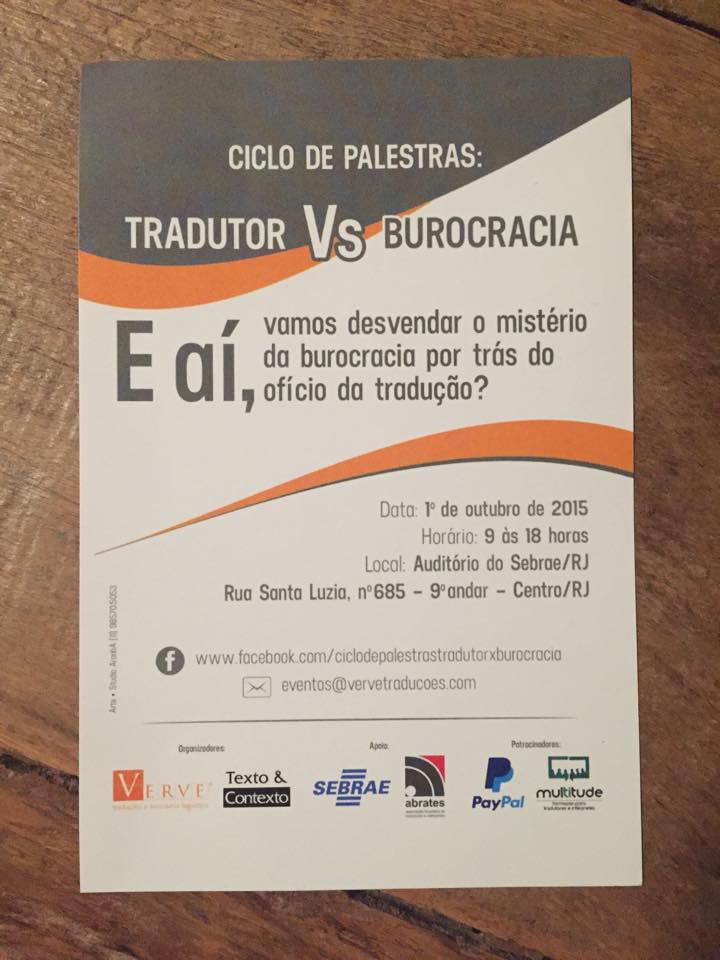
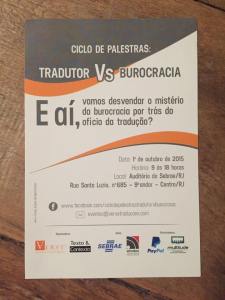
On a last note, it was informed in the conference that there will be a series of talks on bureaucracy and translation, Tradutor vs. Burocracia. The first one will be held in Rio de Janeiro, on October 1st.
1450125_581883981953384_6672309901804117042_n

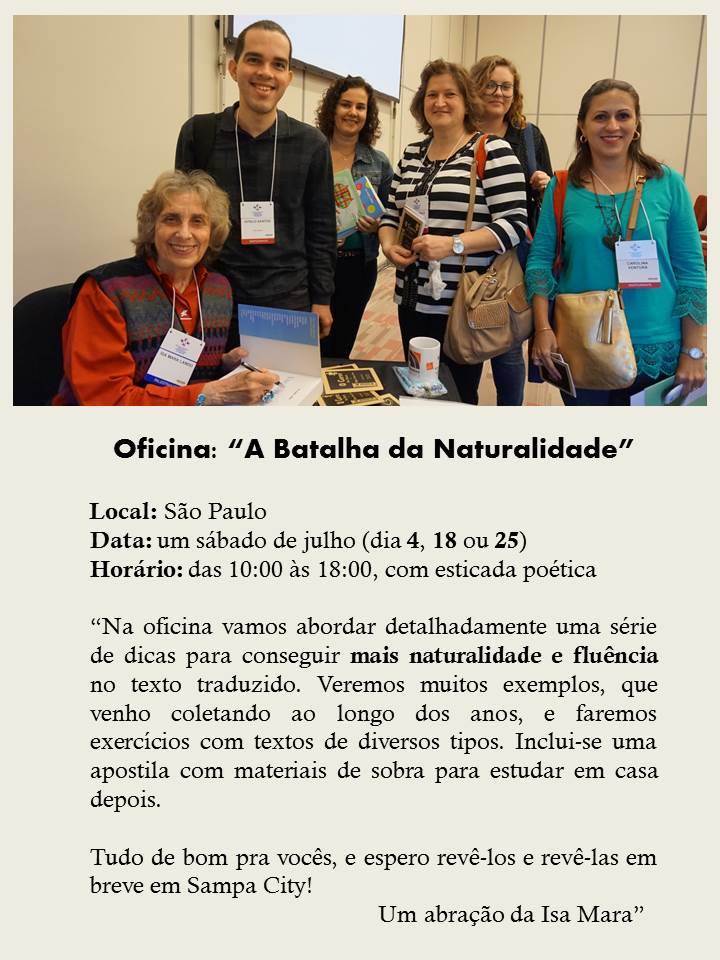
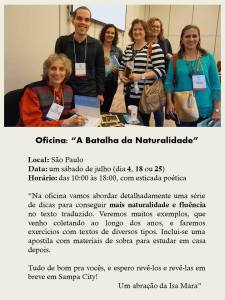
Besides, a workshop is also on the make with the amazing Isa Mara Lando, organized by Luciane Camargo. It will be on a Saturday in July, from 10 a.m. through 6 p.m., in SĂŁo Paulo. If you are interested at attending in, please send an email to lucianecamargo@hotmail.com informing your date preference (4th, 18th or 25th).
11401553_978419358855948_9047161383587473570_n

And if you are not an Abrates member yet, it’s now or never! They are offering a 50% discount on the annual fee for those who attended the conference. But it’s only until June 30th!

If you want to check what else happened during the conference, follow the hashtag #abrates15 on Facebook and on Twitter.

And if you are interested in attending the next one, it will be held in Rio de Janeiro, date yet to be announced. I’ll certainly let you all know when we have news about it.

Last, but not least, the next post – that will most probably come this week – will be about my presentation.
My impressions on the VI Abrates Conference – Part 1

11425189_581892505285865_1111287860557737037_n

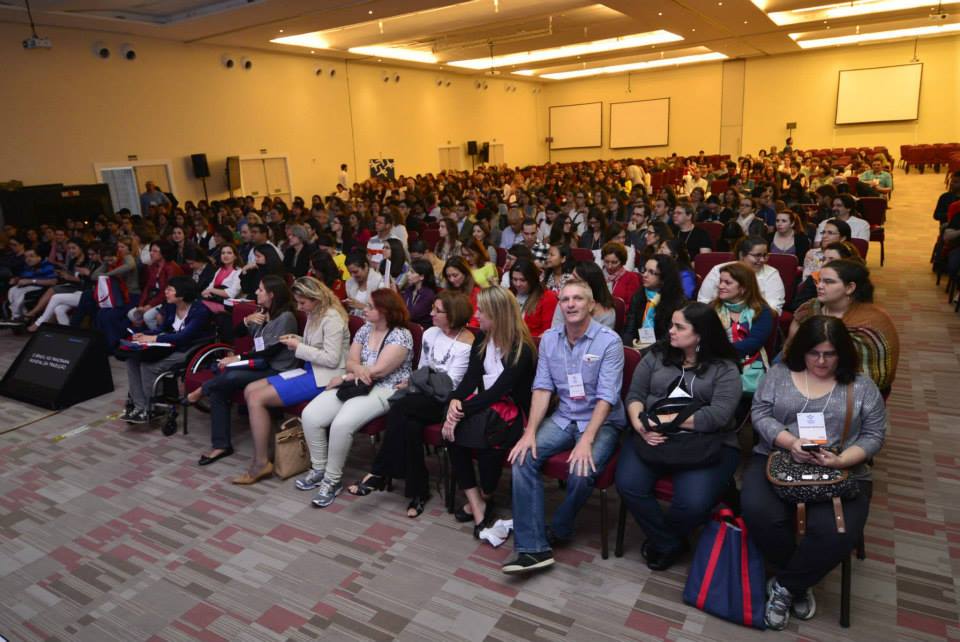
Last weekend, from June 5th through 7th I attended (and presented at) the VI Abrates International Conference in São Paulo (Centro de Convençþes Rebouças). Abrates is the Brazilian association of professional translators and interpreters and, since 2013, they hold an annual conference in different Brazilian cities. The event is the largest and most important in the area in Brazil, and possibly now the largest in Latin America. This year, we almost reached 900 participants (last year, in Rio de Janeiro, there were 450 attendees; and in 2013, in Belo Horizonte, 390).

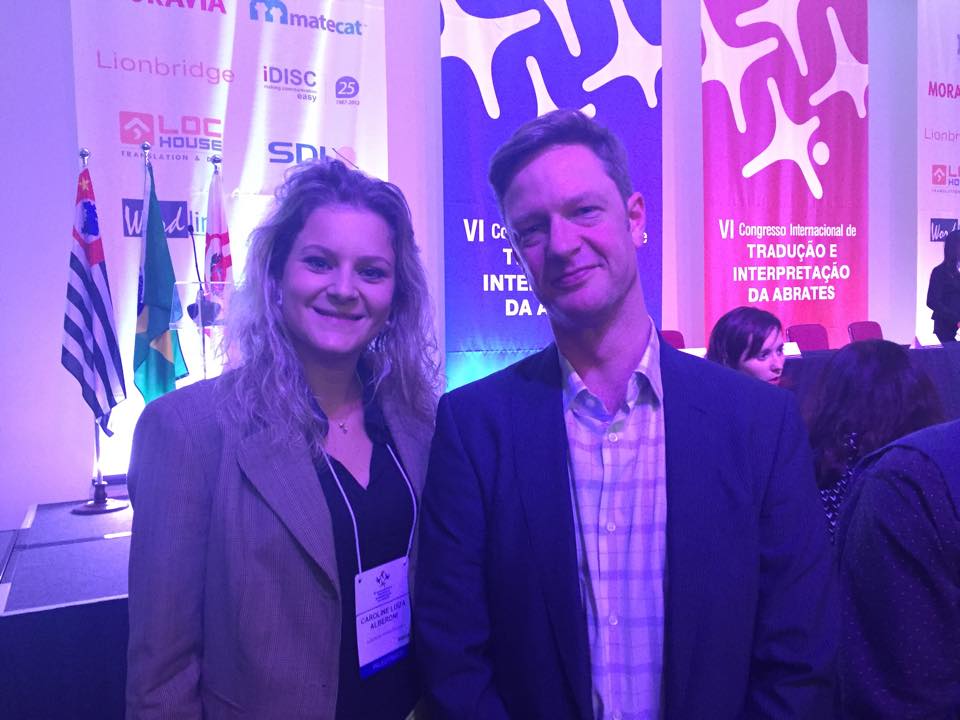
The conference officially started with great news: PayPal partnered with Abrates and will now offer special rates for receiving payments – for Abrates members only. For receiving payments from abroad, the rate will decrease from around 7.4% to 3.49% + R$ 0.60 per transaction. Everybody – including me, of course – was ecstatic with the fantastic news! Stay tuned on how to benefit with it if you are an Abrates member. The association will publish it on their site and share on their Facebook page when they do. Besides, you can also call PayPal’s SAC to know more. Following the official opening, the first keynote speaker, Robert Lane Greene, Berlin-based business correspondent for The Economist who writes the “Johnson” column on language for The Economist online, talked about languages around the world. He starts speaking in an impressive Portuguese and admits he is part of a small group of weird North-Americans who like to learn other languages. After his introduction, he starts his presentation in English and shows us some interesting numbers related to languages on the internet. On Wikipedia, for example, translations are mainly to and from English, indicating a lack of language connections. On Twitter, a great number of users tweet in two languages, and Portuguese/English is one of the most common pairs (behind Malay and Spanish). Greene also differentiates between business suit language and underwear language: the first is the one you simply wear/use for any reason, the second is close to our heart and intimate self.

The infographic on this page was one of the images he showed. Robert also mentioned this article. He also has a book, You Are What You Speak.

11401551_581868801954902_4886438609481579037_n

With Robert Lane Greene.

After his interesting presentation, we had a cocktail party where we had to change to say hi to our fellow translators.

The actual presentations started for good the next day. The main characteristic of this conference is that we have plenty of choices to choose from: there were six different rooms with a diversity of topics being presented at the same time throughout the event. My first choice (always a difficult one, Paula Ianelli and Reginaldo Francisco, for example, were also presenting at the same time) was about technology and how we can use them to improve productivity, by Fernanda Rocha. Did you know, for example, that Windows and Mac’s calculators convert units and currencies? They also calculate periods of time. You can also add two other clocks (time zones) to your toolbar.

Time to change rooms! Off to room 5 where Rafa Lombardino talked about digital self-publication. Did you know that, in Brazil, a material becomes public domain after 70 years of the author’s death? She suggests creating a blog/site to document your book translation projects (it can also serve as a portfolio). You can find the newsletter about her presentation and the link to the Prezi presentation here.

Next one was in room 1, with JoĂŁo Vicente de Paulo Jr. and Giovana Boselli, who mentioned some important steps we have to follow when/before accepting a project not to have unexpected problems down the line. For example, read the allocation instructions carefully (delivery date/time, volume, subject), open the files and have a look at them, check if a big project requires partial deliveries, check if there is reference material to be followed (glossaries, style guides), payment method.

After the coffee break, I heard Monica Hruby, president of ATPI-Rio, mentioned some problems sworn translators face in Brazil and the regulation that surrounds it. An important point: translation agencies can’t be sworn translators! So be aware! I chose this presentation because I heard from a colleague last week that many sworn translators on Jucesp’s list are dead and their son/daughter are translating on behalf of the deceased translator! This is totally insane!

Back to room 1 to hear Raquel Lucas de Souza tell us about how she became an agency. Circumstances made her realize she could solve her clients’ problems not by translating, but by finding people who could do it, being a project manager. We need to fully understand ourselves in order to identify our qualities and find out our place in the market. A professional posture is essential for having good final results. At the same time, Capitain Israel Souza Junior, last year’s keynote speaker, was talking in room 4 about idiomatic expressions in war movies’ translation.

After lunch, I watched a panel with representatives of 10 associations: ATPIESP, ATP-MG, APIC, GALA, ATP-Rio, ASTRAJUR-RS, ATPP, Abrates, Sintra and ATA. The panel was very informative and useful, but I’d like to bring the attention here to the current situation of Sintra (Brazilian translators’ union). It once had only 173 paying affiliates and considered closing its doors. Nowadays, there are 233, but it is necessary 327 in order to have a financial balance. With its current budget, they can only run until October. Currently, 106 affiliates are in default, but they can only be removed from the union after 2 years not paying! The annual fee to become an affiliate is R$ 330.00. As pointed out during the panel, some people spend a fortune to attend ATA’s conference, but claim it’s too expensive to pay for the union’s fee. I’m an affiliate and I believe the union is essential for helping us defend our rights. See, for example, what they are doing, with ATP-Rio and Conati, to defend our rights regarding Simples Nacional here.

11392789_583609965114119_5721453994127861075_n

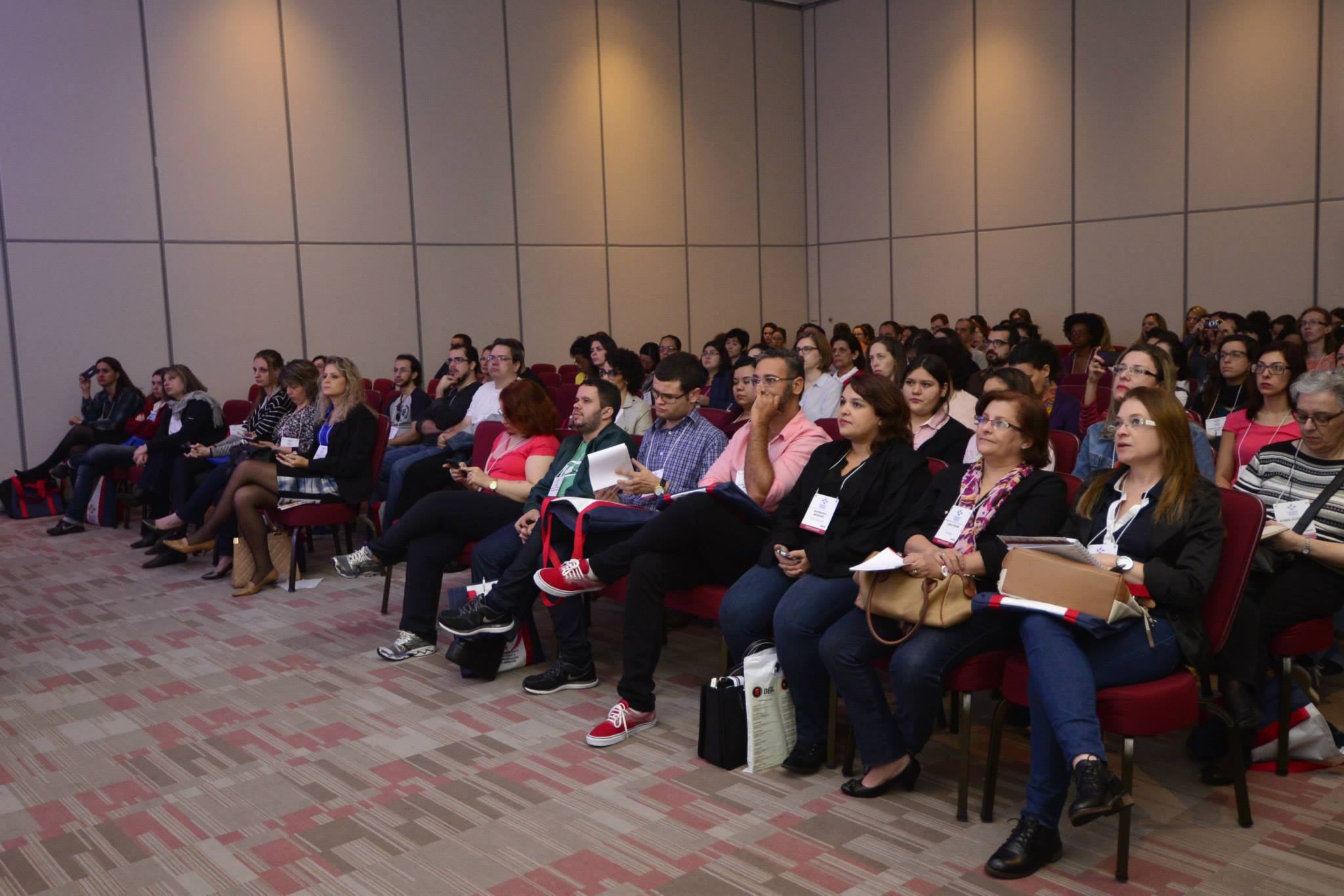
Conference attendees featuring yours truly doing what I did best: tweet. 🙂

Please find the second part of this post here.

Greatest Women in Translation

photo-1431986229655-9ca60378f77d

It does feel good to be back at writing posts for the blog, especially when there are announcements to be made – good ones, of course. Don’t you worry!

But first I’d like to thank you, my dearest readers, for always being so kind and active on the blog! Seriously, you are amazing! And, because of that, while I was giving some thoughts to the changes I’d make to the blog, you were crucial to the decisions I made. After all, let’s be honest, this blog is for you, so why would I not listen to you, right? So, THANK YOU! I hope you like the changes I’ll announce today and that you keep supporting the blog as you already do.

By the way, have you already voted for it as the Top Professional Blogs 2015? If not yet, please do on the button on your right, and fingers crossed!

Now let’s move on to what matters: the news! As you know, I’ve been more absent than ever from writing posts myself. Besides, I also had a couple of issues with the guest posts. This situation made me feel terrible, because I know I have an editorial calendar to follow and I was letting you down on it. Therefore, I decided it was time for a change! I thought of ending the guest posts altogether, but, as I said, you give me such a great feedback on them, that I really felt it would be a shame to end them. That being said, I declare the guest posts stay! As do my own posts, of course. However, their frequency will change. We’ll have both of them once a month, solving my lack of time issues and leaving me more time to plan the guest posts.

Now the great news is we’ll also have, from now on, an interview series, with which I’m really excited about! 😀 It will be called Greatest Women in Translation (#gr8estwomenxl8). As the name clearly says, I’ll be interviewing women only. I have already invited the first interviewee, and she has accepted the invitation! Yay! She’ll answer the questions I made up especially for her and will be responsible for nominating the second interviewee. That’s right! On this series, I’m not the one who gets to invite guests, the interviewees themselves will be the ones to do so. The idea is that each interviewee nominates a woman they look up to and admire in translation. If, for any reason, the nominee is not able to accept the invitation, I’ll invite another one and start the thread again. Are you as excited as me with this? 😀 Everybody has someone who inspires them, right? And isn’t it just lovely to learn more about the person?

Stay tuned, adventurers! I’ll soon disclose the monthly publication dates and when they start.

Meanwhile, how about trying to guess who the first Greatest Woman in Translation is? 😉

Guest post: Translation specialization and personality

Welcome back to our guest post series! Stay tuned, because soon we’ll have some news and changes on the blog. Meanwhile, enjoy Giulia Carletti’s post.

Welcome, Giulia!

IMG_6319

Translation lets you be everything you want to be

When I was 5 years old, I wanted to be a ballerina, even though back then I had never taken a dance class. Then, a couple of years later, I was obsessed with the E.R. series and I decided I wanted to be a surgeon: I was sure I could perform incredible operations to save people’s life, who cares if I was (and still am) clumsy and hopeless at anything even remotely crafty. Then, I moved on to wanting to be a journalist, but my fascination for anatomy and medicine never ceased. But at that age, oh, I loved writing so much! I liked inventing stories and coming up with slogans and creative ideas, to the point that my version of an advertising storyboard for a brand of chips had been sent to the factory so they could judge it. [The nutrition-lover me would object to having a 9- years old writing about chips, but that’s another story].

As every child, I was curious and all over the place, wanting to know more of most of the things I came across with. But even if the “X” of “I want to be X when I grow up” would change, something never did: my fascination for languages. English has always been my favourite subject, and I spent countless afternoons trying to translate song lyrics and articles, and the harder and more colloquial the expressions, the more I loved the research process and the challenge of saying it in Italian. After a few years in this business, I realised that working as a translator and interpreter has helped me achieve (almost) all of my childhood dreams.

Because when you translate, you face an exciting new adventure every day. You always use your analytical side, the one that helps you read the text and spot all the potential issues, making you say “I knew you were trouble!”, and you switch on this side again while proofreading. Then, depending on the topic, you tap at the different sides of your personality because, as Pirandello would say, we’re “one, no one, and a hundred thousand“. When I receive a brief and extensive guidelines for a creative project, I cannot wait to brainstorm and let all the words and ideas flowing – this is my playful side, the one that juggles words and makes them fit for the purpose and the client’s voice. But I am equally happy when I am preparing for a medical conference, having to go back to studying anatomy, letting my “scientific” side kick in.

It is the same for everyone: we all have different specialties that let us express our different interests and the diverse sides of our personalities. As translators and interpreters, we all are incredibly interested in many topics and want to dig deep – that’s one of the requirements of this job, after all. We are not afraid of being a student every day, of researching every day, of learning something new and eye-opening every day. We can (almost) become surgeons, lawyers, marketers, engineers, chefs… you name it! Although translation is a very serious business, we are entitled to have fun while doing it and we should make the most of all the opportunities we get to enjoy it, letting all the sides of our personality shine through our job.

Thanks to this profession, I could work wearing a scrub and looking exactly like Dr Corday in E.R. – what other job lets you wear a scrub even though you cannot cut straight with scissors? I’m still working on fulfilling the ballerina dream, though….

Do you feel like your different specialisations tap at different sides of your personality? Did you fulfil any dreams thanks to our job? Please let me and Caroline know in the comments!

Thank you, Caroline for handing your space over to me this time, it was a pleasure!

Thank you, Giulia, for accepting my invitation and kindly taking the time to write such an inspiring post! 🙂

About the author
giuliaGiulia Carletti from Words of Nona is a translator and conference interpreter from English and Spanish into Italian.
She specialises in marketing & transcreation, tourism, food, as well as medical interpreting. Being a word lover, she also works as a copywriter and in social media communication. She has a penchant for tennis, tea and travelling.