Guest post: Literary translation (in Portuguese)

Better late than never, right? After a busy day with four deadlines, it’s time to welcome today’s guest, Reginaldo Francisco, who will talk about literary translation.

Welcome, Reginaldo!

Child Studying Under Tree. Courtesy of FreeDigitalPhotos.net, by jannoon028.

Traduzindo literatura

Decidi ser tradutor quando tinha dezessete anos.

Na época, analisando o guia de profissões da UNESP, logo concluí que o curso de Tradução da UNESP de São José do Rio Preto, oficialmente chamado de Bacharelado em Letras com Habilitação de Tradutor, tinha sido feito para mim, ou eu para ele. A imagem e o texto sobre o curso na época não eram esses do link acima, mas acho que minha identificação não seria diferente com a apresentação atual. Apaixonado por leitura e escrita desde criança, curioso por quase tudo, especialmente por línguas estrangeiras, tendo aprendido inglês sozinho desde os treze/quatorze anos, vi que tinha encontrado exatamente o que gostaria de passar minha vida fazendo.

Para encurtar a história, que seria suficiente para outro post — ou para um blogue próprio —, estudei muito, passei no vestibular, mudei da cidadezinha de Cabrália Paulista, na região de Bauru, para São José do Rio Preto, e formei-me tradutor nos idiomas inglês e italiano. Ao longo da graduação e nos primeiros anos que se seguiram, tendo de me sustentar e “pagar as contas”, fui bolsista, professor, garçom, secretário, mas nunca abandonei a meta de ser tradutor.

Aos poucos fui conseguindo os primeiros trabalhos, divulgando meus serviços, melhorando meus preços (e nesse ínterim também fiz o mestrado em Estudos da Tradução na Universidade Federal de Santa Catarina – UFSC). Os primeiros trabalhos, e a parte principal da minha atividade ainda hoje, foram de tradução técnica, vertente da profissão pela qual também me apaixonei, mas nunca deixei de tentar entrar no ramo mais restrito da tradução literária.

A primeira tradução de literatura veio em 2008, por indicação de um amigo e colega de sala da época da graduação que não pôde aceitar o serviço por estar comprometido com as próprias atividades como professor de idiomas. Tratava-se da tradução para o italiano de três pequenos volumes de poesia do poeta paulista Aguinaldo de Bastos, com direito a citações de trechos do poema “Navio negreiro”, do Castro Alves, que também tive de verter. Trechos, aliás, bem longos: juntando-os ao final, vi que tinha traduzido 60 % do poema. Um grande desafio, bastante incomum, que teve um resultado satisfatório especialmente pela colaboração com a revisora, Silvia Marianecci, tradutora italiana nativa. Porém, acabou sendo um trabalho isolado em minha carreira, sem grandes desdobramentos posteriores além da amizade com a Silvia, que depois se mudou para o Brasil e hoje mora em Belo Horizonte, e com o Marcos Petti, que intermediou o trabalho e foi o responsável pela tradução das partes em prosa dos livros.

Voltei a traduzir literatura em 2011, depois que a diretora executiva da Editora Autêntica esteve na UFSC para ministrar uma palestra e manifestou interesse por propostas de projetos de tradução, especialmente de obras em domínio público. Como tinha vontade de traduzir literatura infantojuvenil, fui pesquisar os clássicos infantojuvenis italianos e escrevi para a editora propondo algumas ideias. Assim consegui emplacar a tradução do Diário de Gian Burrasca, que foi publicada em 2012 e acabou selecionada no Programa Nacional Biblioteca da Escola (PNBE) do MEC — pelo que soube por uma amiga, os exemplares chegaram às escolas no final do ano passado.

Na sequência, traduzi duas HQs do personagem Corto Maltese, de Hugo Pratt, para a Editora Nemo, também do Grupo Autêntica, e em 2013 aceitei o desafio de traduzir do francês A guerra dos botões, de Louis Pergaud, que deve sair este ano.

Quando a Carol me chamou para escrever um artigo sobre tradução literária para o blogue dela, fiquei muito feliz e honrado com o convite, mas também preocupado por não saber se teria muita coisa interessante para escrever sobre o assunto. Acabei decidindo compartilhar minha história, que procurei sintetizar ao máximo para não ficar maçante, e um pouco do meu processo de tradução, que apresento a seguir. Não é nenhuma receita de como traduzir e não sei se funcionaria para qualquer pessoa, mas para mim dá bastante certo.

Costumo traduzir, especialmente textos literários, em quatro etapas. A primeira é uma leitura da obra, o que não quer dizer que eu leia a obra toda primeiro, apenas que começo por essa leitura. Normalmente, antes de terminá-la, quando ainda faltam alguns capítulos para ler, inicio a segunda etapa, na qual faço uma tradução-rascunho, com bem pouca pesquisa e quase sem consultar dicionários, internet, etc. A sobreposição me possibilita distribuir o trabalho de acordo com o meu “pique” em cada horário do dia, trabalhando nesta segunda etapa durante o dia e apenas lendo os capítulos que faltam à noite ou quando estou cansado, por exemplo.

Essa tradução-rascunho serve principalmente para fazer um reconhecimento das dificuldades do trabalho. O resultado é um texto cheio de asteriscos marcando dúvidas e pontos que precisarão de mais pesquisa ou reflexão, e barras separando possibilidades de solução.

Essa estratégia traz bons resultados por dois motivos. Primeiro, porque o próprio texto pode ter, mais adiante, soluções ou dicas para chegar a soluções para as pendências; muitas vezes na etapa seguinte a melhor escolha entre duas ou mais opções iniciais fica clara pela relação com dificuldades e necessidades verificadas em outros pontos do texto. O segundo motivo é que nosso cérebro trabalha mesmo sem percebermos. Sabe quando ficamos tentando lembrar o nome de algo e não conseguimos de forma alguma, para depois a lembrança vir quando nem estamos mais pensando no assunto? Pois é, nosso cérebro deve ficar vasculhando os próprios arquivos e testando sinapses até encontrar a resposta. Daí a tradução para aquele trocadilho do original, ou para aquele versinho que não estava rimando na música que o personagem cantarolou, vir de repente no banho (já me ocorreu), ou na cama, no ônibus, na rua…

A etapa seguinte é a tradução propriamente dita, com toda a pesquisa e as tomadas de decisão necessárias. Aqui não pode sobrar mais nenhum asterisco de dúvida, e para todo problema é preciso dar uma solução — e só uma. É a etapa mais difícil e mais densa, mas é bastante facilitada pela anterior e traz a satisfação de ver seu texto definitivo se delineando, o livro começando a se tornar uma obra em português. Costumo começá-la quando concluí por volta de 70 % da etapa anterior, de modo que há uma nova sobreposição, que me permite fazer este trabalho mais denso quando estou com a cabeça mais fresca, normalmente de manhã, e voltar para a tradução-rascunho à tarde ou quando já estou cansado.

Além de deixar meu expediente menos cansativo, gosto dessa sobreposição também por outras razões. Por exemplo, o fato de assim trabalhar simultaneamente em dois pontos distintos do livro contribui para tratá-lo como uma unidade de sentido, evitando incoerências e ajudando a pensar em soluções tradutórias que funcionem bem para o texto como um todo. Além disso, conforme vou resolvendo impasses das primeiras partes, os rascunhos das partes finais vão ficando com menos asteriscos e barras, mais próximos da tradução definitiva, o que leva a uma aceleração das duas etapas na reta final.

Normalmente sem sobreposições é a etapa final, que consiste na leitura do texto em português, tentando vê-lo como a obra independente que será para o leitor final, que o lerá sem ter lido antes o original — daí procurar evitar a sobreposição com a etapa anterior, mais ligada ao texto estrangeiro. Aqui são aparadas as últimas arestas para chegar à tradução “final” enviada à editora.

O “final” entre aspas é porque o processo de produção do livro ainda terá várias outras etapas. O texto passará por revisores, preparadores, diagramadores (e voltará, espera-se, para eu aprovar as alterações feitas), e seguirá seu curso até a publicação, que pode ocorrer vários meses após a entrega da tradução, obrigando-me à hercúlea tarefa de controlar meus níveis de ansiedade.

I love learning about other translators’ experiences! Is it just me, or do you also like it? I think we can always learn something from them. And, of course, it didn’t surprise me that I enjoyed reading yours, Reginaldo! Such a beautifully written text. Thanks a lot for accepting my invite and for taking your (precious and busy) time to compose something this great. 🙂

Anyone?

About the author
Sou tradutor técnico e literário, com seis traduções publicadas e uma no forno. Sou bacharel em Letras com Habilitação de Tradutor pela Universidade Estadual Paulista (UNESP) e mestre em Estudos da Tradução pela Universidade Federal de Santa Catarina (UFSC). Eventualmente, ministro cursos e palestras sobre tradução e participo de congressos na área. Também sou autor, junto com a Profa. Dra. Claudia Zavaglia, do livro Parece mas não é: as armadilhas da tradução do italiano para o português.

How to Establish Rates

picjumbo.com_IMG_6037

This was one of the topics I already had in mind for one of my weekly posts. I decided to talk about it today after I wrote my contribution to the The Bright Side e-book, a lovely initiative by Nicole Adams and Andrew Morris that celebrates everything that is right in freelance translation, with stories of real successful translators.

This is a quite controversial topic in freelance translation because there are clients offering extremely low rates and translators who accept working for peanuts. More experienced translators, however, despise this kind of translators and think they are a disgrace for our profession.

I disagree.

I, myself, have started working as a freelance translator for an agency for R$ 0.03. Please note that the price is in Brazilian reais, not in dollars, which is even worse, taking into account that US$ 1 is approximately R$ 2.3 nowadays.

You know what? When I was offered that, I was bubbling with happiness. After all, I was able to work as a freelance translator the way I had always dreamed of and would earn some good money. I had just finished my MA and returned to Brazil; had been looking for a job for two months. That was my very first job as a translator.

After one month of “experience” (yeah, right, I was a freelancer and I had to go through an experience period; go figure!), my rate was raised a bit. After one year, it was raised a tiny bit again. However, after this period, I was beginning to be aware of the market. I read blogs, followed experienced translators on social media, talked to translator friends. I started looking for other clients and establishing my own rate.

I believe that our profession is just like any other. Nobody starts earning the same as a senior employee, right? Why should we be different? Besides, there is no such a thing as the right rate. There is, of course, a basis, such as the table of reference values suggested by Sintra (Brazilian translators’ union). Each translator should be able to establish their own rate based on this table, on their educational and professional background, on their experience, on the market, on their specialization, on the language pair, etc. We many have different rates for different clients, but we must have a minimum rate and not settle for less.

My suggestion is that you take all the above points into account when defining your rate. If you’re a newbie and/or has absolutely no idea of the price you should charge, do some research. Ask some translator friends/colleagues who are pretty much in the same level as you are, or a bit more experienced, if they would mind telling you how much they charge.

Do you have a similar or different experience with rates you would like to share with us? What’s your take on this issue?

Guest post: Pro bono translation

Here we are again, with another guest post. Today, Elis Portela talks about pro bono translation and also suggests a couple of serious organizations we can help if we like.

Welcome, Elis!

picjumbo.com_IMG_3750

Translating for a Cause

Being a good translator is a lot of hard work, but it is also a great privilege. It takes a great deal of studying, reading, writing, practicing and learning from mistakes and experience. But afterwards, all of this hard work gives us translators access to an unbelievable amount of information and, very often, a background that allows us to be more understanding of other cultures. Usually, we are avid readers, researchers and communicators, and we are always working towards understanding as best we can someone else’s point of view and sharing it with different audiences.

But maybe after a while working daily with translation, we might start taking for granted the invaluable access we have to information, and we might end up applying our skill sets in a way that is much more restricted than it has to be – after all, such skills can be applied to raising awareness and promoting education about important issues. If we take a good look around, we can identify many causes that are worth spreading information about, but remain restricted to smaller communities or groups due to linguistic barriers. We all know that both language and, in a wider sense, information, are tools that can be used to divide and deprive people or, inversely, to join them around a common cause or belief.

Apart from our paying jobs, translators can choose what kind of information they believe is important spreading, and volunteer to share such information. We can benefit greatly from working around subjects that impact other people’s lives and – why not? – the world we live in; in the very least, we benefit from developing a wider understanding of different themes and communities. There are many charitable and humanitarian associations that rely mainly on donations and don’t have a budget for translation, and that could really use our help. (By the way, an important distinction should be made here: like many professionals of all areas, it really annoys me when big companies call for volunteers to translate or “crowdsource” their materials for free. There is no reason qualified professionals should just give their services to a company that makes profit. And I also find it a little unsettling when big websites use students from English courses to “translate” their content for free and sort of give translation a bad name, but that is just me.)

To give an overview, I selected materials available from the websites of some organizations that rely on volunteer translation-related work to give us some insight on what they do and maybe some inspiration about what we can do:

  • On the website of The Rosetta Foundation (whose mission statement is to “Relieve poverty, support healthcare, develop education and promote justice through equal access to information and knowledge across the languages of the world.”), for instance, we can read inspiring testimonials from translators about their volunteer work and about the projects they feel proud to have worked on. One of such testimonials reads:

Worthwhile and helpful actions in the world should be amplified, not impeded, by language. Non-profit organizations provide often-invaluable services to society and I believe it is important to contribute to their efforts wherever possible. Providing translations is a simple contribution, but one that can make a huge difference.

  • On the website of Translators Without Borders, we can see their count of 15,868,825 translated words donated so far, and on their About Us page, we read:

Knowledge is power. It saves lives, lifts people out of poverty, ensures better health and nutrition, creates and maintains economies.
Access to information is critical. Language barriers cost lives. Aid groups working in crisis-situations face a mission-critical challenge in disseminating knowledge in the language of those who need it.

Global Voices seeks to aggregate, curate, and amplify the global conversation online – shining light on places and people other media often ignore. We work to develop tools, institutions and relationships that will help all voices, everywhere, to be heard.

Global Voices Online created the Project Lingua, which “amplifies Global Voices stories in languages other than English with the help of volunteer translators.”

These are just a few examples of what we can dedicate our time and expertise to, but, of course, there are many others. Hopefully, each one of us can find a cause that is dear to our hearts and just get involved!

Thanks a lot for your lovely contribution and for raising our awareness, Elis! It was a real pleasure having you on the blog.

Do you do pro bono translation? Do you work with any of these organizations? Would you suggest any other?

About the author
ImageI have a BA in Translation Studies (English and Italian) from  Unesp. Currently, I am getting my Postgraduate degree in Discourse Analysis with emphasis in Marketing from Uniara. I have been working with translation ever since my graduation in 2008, at first in a company and currently at home. I absolutely love being a free-lance translator and – for now – would not trade my job for any other job I can think of.

Carol’s Adventures in Blogging

Image

I’m sorry if this is getting boring (me bragging all the time about my – small but steady – achievements), but you are the reason of all these achievements, so I feel I have to share my happiness with you.

You know, being a translator has always been a dream. A dream come true with a lot of hard work, dedication, commitment, sleepless nights, endless mugs of white coffee, working weekends and holidays, and much more. It was not easy, but that’s what makes it even more special.

And after this dream came true, I kept (and still do) learning a lot from my colleagues. I fell in love with branding, social media and networking. I just love managing all my social networks, reading and sharing interesting stuff, engaging and interacting with other translatos and readers. However, it wasn’t until mid 2013 that I finally decided (and got the courage) to have a blog. I was afraid I wouldn’t know what to write, I would sound like a fool, my blog would be just another blog out there, etc. Even after I started it, I wasn’t feeling confident. I would only write when I felt like doing so, i.e. once in a long while. So, in the beginning of the year, I decided to have an editorial calendar and to invite people to write weekly posts. That way, I’d force myself to write and I’d have constant posts. The results I’m having are just amazing! It all started with the very first guest post and it just keeps getting better and, consequently, more exciting!

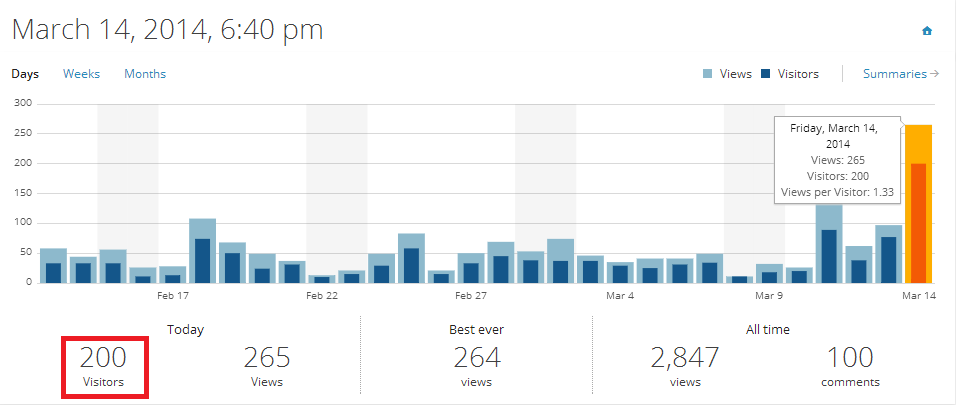
Today, so far, I’ve reached the most visitors of all times: 200! I know some of you may think it’s not such a big deal, but for me it’s a HUGE deal! Besides, people are commenting a lot on my posts, which is absolutely fantastic! You should see the enormous smile on my face every time I get a notification that someone has commented on one of my posts or every time I overcome another milestone of visitors/views. It’s such a rewarding feeling! And this makes me dedicate myself even more in writing interesting posts. It’s a vicious circle.

But all this would be impossible without you, so THANK YOU for following me, reading my posts, sharing them, commeting and giving feedback. You guys rock!

P.S.: By the time I finished writing this post the blog reached 231 visitors: =D

22 dicas importantes sobre alguns erros comuns em português

Image

Tenho cada vez mais observado um fato preocupante: a maioria dos brasileiros comete sérios erros de português. Não estou falando de conhecimento avançado, mas de erros comuns, que se aprendem na escola, dos quais se ouve falar constantemente na internet. Às vezes vejo, inclusive, pessoas com nível superior cometendo esses erros.

Além de ser essencial para dar uma impressão profissional e culta, escrever corretamente também mostra que você se importa com seus leitores, é atento e tem o conhecimento adequado da língua, inspirando confiança. Afinal de contas, não dá para confiar em alguém que escreve errado, não é?

Aqui está uma lista de termos que compilei com base em observações que tenho feito principalmente no Facebook, mas também em outras mídias sociais e em e-mails, além de conversas cotidianas. A numeração serve apenas para facilitar a visualização, não indica nível de importância dos termos.

  1. Através
    Significa “que atravessa”, “de um lado a outro”, “transpor”, “cruzar” e, portanto, não deve ser usado no sentido de “por intermédio de”. Nesse último caso, utilizar “por” ou “por meio de”.
    Exemplo: Esta universidade oferece vagas pelo/por meio do Pronatec.
    Pude contemplar a chuva através da janela.
  2. Há/atrás
    Ambos os termos indicam tempo passado, portanto, é redundante utilizar os dois na mesma frase. Utilize “há” ou “atrás”.
    Exemplo: O cliente enviou os arquivos duas horas.
    ou
    O cliente enviou os arquivos duas horas atrás.
  3. Haver
    No sentido de existir, o verbo é impessoal.
    Exemplo: Não houve feridos no acidente.
    não
    Não houveram feridos no acidente.
  4. Faltar
    Concorda com o sujeito.
    Exemplo: Faltam dois dias para o congresso.
    não
    Falta dois dias para o congresso.
  5. Fazer
    No sentido de tempo passado, não concorda com o substantivo, deve ser usado sempre no singular.
    Exemplo: Faz 24 horas que não durmo.
    não
    Fazem 24 horas que não durmo.
  6. O mesmo
    Não exerce função de pronome pessoal, portanto, não deve ser utilizado para substituir uma palavra anteriormente dita. Sempre utilize o pronome “ele” e suas derivações.
    Exemplo: Ante de utilizar o elevador, verifique se ele encontra-se parado neste andar.
    não
    Antes de utilizar o elevador, verifique se o mesmo encontra-se parado neste andar.
  7. Onde
    Expressa lugar e não deve ser usado para se referir a eventos. Nesse último caso, utilizar “em que”.
    Exemplo: Amanhã teremos uma reunião extraordinária em que será discutido o novo projeto de tradução.
    não
    Amanhã teremos uma reunião extraordinária onde será discutido o novo projeto de tradução.
  8. Qualquer
    Pronome de sentido afirmativo, portanto, não deve ser usado em frases negativas. Seu uso se deve à ideia errônea de que não há dupla negativa no português. Ela não deve ser usada em excesso, quando desnecessário, mas não é incorreta, como no inglês.
    Exemplo: Não há nenhum aluno na sala.
    ou
    Não há alunos na sala.
    não
    Não há qualquer aluno na sala.
  9. Boas-vindas
    Assim como “bem-vindo” e suas derivações, deve ser usado com hífen.
    Exemplo: Bem-vindo ao curso de introdução à interpretação.
    ou
    Segundo o cronograma, o presidente dará as boas-vindas aos convidados antes de cerimônia.
  10. Gramas
    É masculino, não feminino.
    Exemplo: Duzentos gramas de queijo, por favor.
    não
    Duzentas gramas de queijo, por favor.
  11. Ao invés de
    Indica contrariedade, oposição, inverso. “Em vez de” significa “no lugar de”.
    Exemplo: Em vez de ir ao parque, iremos ao shopping. (O parque não é o oposto do shopping, certo?)
    não
    Ao invés de ir ao parque, iremos ao shopping.
    mas
    Ao invés de cair, o preço do produto subiu.
  12. Etc.
    É a abreviação da locução latina et caetera, que significa “e outras coisas”. Como tem o sentido de “e”, não deve ser precedido por essa conjunção. Segundo a gramática moderna, pode ser precedido por vírgula e deve vir acompanhado de ponto, pois se trata de uma abreviação. Seu uso deve ser evitado com pessoas, mas não é considerado errado.
    Exemplo: Comprou vinho, pão, macarrão, etc.
  13. Porque
    Usado para indicar explicação, causa. Separado, “por que”, é um advérbio interrogativo. Acentuado, “porquê”, substitui as palavras “razão”, “causa”, “motivo”. Separado e acentuado, “por quê”, é usado no fim de frases ou quando houver pausa.
    Exemplo: O cliente cancelou o projeto porque não obteve aprovação do departamento financeiro.
    Por que você não vai à festa?
    Não sei o porquê de o meu computador não estar funcionando.
    Minha irmã me disse que você foi demitida. Por quê?
  14. Perca versus perda
    O primeiro é a conjugação do verbo “perder” na primeira e na terceira pessoa singular do presente do subjuntivo e na terceira pessoa singular do imperativo. O segundo é substantivo.
    Exemplo: Não quero que você perca a aula.
    Sinto muito por sua perda!
  15. Aonde
    Só deve ser usado quando o verbo exigir a preposição “a”.
    Exemplo: Aonde você quer ir à noite? (ir a)
    Onde você colocou o carro? (colocar em)
  16. A nível de
    Significa “à mesma altura”. Já “em nível de” significa “de âmbito”, “com status de”.
    Exemplo: Em nível de beleza, as cariocas ganham.
    Esta cidade não fica ao nível do mar.
  17. Anexo
    Deve concordar com o substantivo. Alguns estudiosos condenam o uso de “em anexo”, portanto, prefira somente “anexo”. Se quiser especificar que algo está sendo enviado dentro de um anexo, use “no anexo”.
    Exemplo: Seguem arquivos traduzidos anexos.
    O arquivo solicitado está no anexo.
  18. Esse versus este
    O primeiro é usado para retomar algo já mencionado, indica proximidade ao ouvinte. O segundo é usado para indicar o tempo no qual se está, objeto próximo ao falante, uma ideia nova ainda não mencionada. O mesmo vale para seus derivados.
    Exemplo: Estes tópicos ainda não foram abordados: revisão, edição e diagramação.
    Neste mês, teremos uma surpresa para você!
    A comissão terá cinco membros. Esses membros terão direito a votar.
  19. Seniores
    Embora o singular seja “sênior”, o plural não tem acento. O mesmo acontece com “júnior”.
  20. Horários
    A forma correta de escrever horários é 16h, 16h30 e 16h30min55s. Não há ponto depois das abreviações (h, min, s). Observe que a abreviação de “segundo” é “s”, não “seg”.
  21. Regência
    Chegar a, não chegar em. Exemplo: Cheguei ao hotel de manhã.
    Consistir em, não consistir de. Exemplo: O projeto consiste em cinco etapas.
    Assistir a. Exemplo: Marcos sempre assiste ao programa de culinária.
    Ter de ou ter que. Exemplo: Tenho de/que traduzir 3.000 palavras hoje.
  22. Pronúncia
    Subsídio = subcídio
    Inexorável = inezorável
    Gratuito = gratúito

Você já conhecia todas essas regras? Conhece alguma outra regra que acredita ser importante? Compartilhe conosco!

Leitura recomendada:
100 erros de português frequentes no mundo corporativo
Dicas de português

Guest post: Feedback

And… we’re back with our guest series! Did you miss it? I missed all the engagement you always provide in our posts!
So let’s get back to business! Today’s guest is Cesar Faria, a fellow translator and dear friend who has also studied at the same university as I did. He’ll talk about feedback – in my opinion, a pretty important topic for all translators.
Welcome, Cesar!

Embed from Getty Images

Feedback: Good Even When Bad

It was a warm Friday, 4 p.m., and I had just shut my laptop down after a quite busy week splitting my days into my two careers at that time – English teacher and translator on my first steps. I just wanted some time to relax and take a quick rest to charge batteries for the night to come, but then my cell phone rings…

To my surprise, it was the QA coordinator of the only agency I used to provide services to at that time. I had her as a contact on Skype, but never really had the opportunity to talk to her. Well, once she identified herself, my blood went cold, a rabble of insane butterflies invaded my stomach and I knew that I could not expect anything exciting from it.

And I was right. She introduced herself very kindly and asked me to open my Skype so we could talk about a file I had translated some two months before. It was a big and complex .ppt file about investment funds to be translated overnight, so they offered me a very good rush fee. I had started working as a translator no more than six months before that, but I felt I could do the job properly, since my productivity was fine at that time. I was deadly wrong. Deadline was almost not met, a lot of mistakes were pointed out, the main client returned the file with lots of complaints and a discount penalty was applied.

I couldn’t feel any more frustrated with such unpleasant situation. However, the QA coordinator was quite nice and empathetic, and told me very gently that I could learn from that experience and use it to improve my skills and attention. By then, I had never had any kind of feedback and, mainly because it was a negative one, it served to put me in a very attentive and cautious state before, during and after any translation job. I can sure say that my concerns regarding quality started being built and developed by such traumatic event.

Time has passed, and now a great deal of my jobs consists on project coordination and editing/reviewing, and for most of them I have to provide feedback for the translators involved. As I always remember the extremely polite manner my former QA coordinator handled the aforementioned situation – and since that made me grow professionally as well – I would like to share some hints for translators, especially beginners, on how to deal with feedback:

  • Read all corrections and suggestions, and create a separate file with them. I always keep a feedback file per client and a master file with all the feedback I received. This can help you learn from specialists or clients from very specific fields, and you will always have that ace up your sleeves if a terminology/consistency problem occurs in a future project for the same client.
  • If you don’t agree with something, question it. Naturally, if you think you are right, you are going to do some further research to prove your point of view. Do it politely and don’t forget to include good sources. In our profession, there is no room for arrogance. Everybody knows time is critical and short, and – as human beings – mistakes can happen, even from those who are supposed to correct them.
  • After receiving, reading and agreeing on what was written about your job, do not just turn your back, forget about it and go back to your translations. It is always a good idea to reply to the message. Preparing lists of mistakes, indicating corrections, suggesting ways to improve style, among other things, is very time-consuming and stressful. Particularly, I am not very fond of being responsible for giving someone a negative feedback, but when I have to do it, it is good to know from the person evaluated that everything was understood and next time will be better.

Finally, we all know that translation is an activity that requires continuous learning; we will never know everything; and we should learn from our mistakes. And I am also completely aware that last sentence was a total cliché, but I do believe that all those thoughts are essential to make us more careful and responsible when a job is assigned to us.

Thanks Carol for the opportunity, and I will be tremendously happy to read comments and other stories related to this topic. Feel free to email me as well: cesarhf.translator@gmail.com.

Thank you, Cesar, for accepting my invitation! I really appreciate your taking the time to write something for our blog. Your advice is great, and I hope our followers also enjoy it.

So what do you say? What’s your opinion on feedfback?

About the author
I graduated in Translation in 2004, but started working as an English teacher during and after graduation. In 2009, I quit the job and traveled to Canada to have some fun. There, I played the bass in a heavy metal band in an almost coast-to-coast tour, started dating my wife and working as a translator. When I got back to Brazil in late 2010, I decided that I wanted to be a freelance translator and that is what I am since then.

Learning the Hard Way

Imagem

After a 4-day Carnival break traveling, I come back home eager to go back to work, with 3 projects to deliver the next day. I feel relaxed and ready to work on my best client’s projects. Only to find out, when I turn my computer on, that it is plain, with absolutely no configuration: no wallpaper, only a few links on my desktop, no Outlook, no FTP, no documents… as if it had just been formatted. “Well,” I thought, “I’ll see what happened later on. Let me work on my projects first.” No, no, no! This client’s CAT, Trados Studio, wouldn’t work either!

I called a colleague. He had never heard of such a thing before. I then called my cousin, and we stayed awake until 5 am (from 11 pm) trying to figure out what happened and to fix it. He was able to find all my documents in a hidden folder. Phew! (I had a backup, but not a recent one.) But I still couldn’t open Trados. A friend of mine came over later that day and also tried to fix it. Nothing. We were only able to create another user, in which I could at least work on Trados. Apparently, my Windows crashed my user in an update, all by itself.

Consequences: I had to do something I dread: cancel all my projects. I felt terrible, desperate and miserable. It was a huge volume to allocate last minute and it was my best client, after all. While there was nothing else I could do because the situation was far beyond my reach, we can’t help it, right? We do feel horrible.

Bottom line is we learn some quite important things when catastrophes like this one happen. My lessons this time were:

  • There is no way a professional translator can have only one computer. We must have at least two! I was already planning on buying another laptop. No plans anymore. I’m buying another one right now!
  • Our backup computers must also have all the programs, software, etc. we need and have on our main computer. That is, I will have to buy another Trados license. This may be obvious for some of you, but it wasn’t for me.
  • Needless to say backups are a must. But they take time and we end up doing them less frequently than we should. So I got an idea from a colleague: send important files we use daily  to the cloud, and do it every day. And then we do our overall backups every week or month.

If you, like me, hadn’t thought of the points mentioned above before, please start considering them now. It’s better to spend some money now than to lose important clients (and our heads) in the future.

Has anything bad ever happened to you that taught you quite a lesson?