
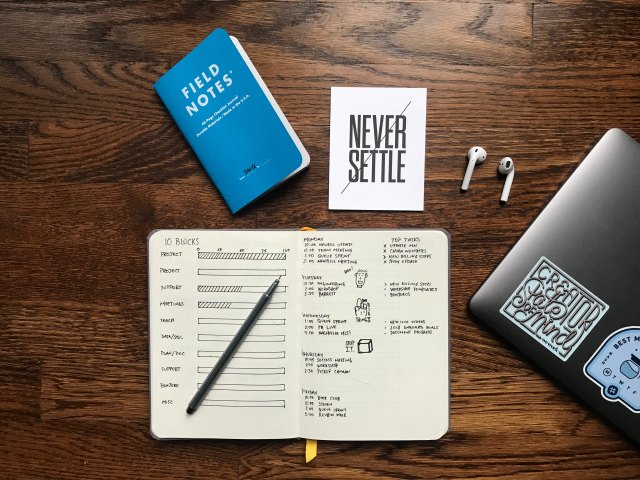
Photo by Julia Wimmerlin on Unsplash
I was scheduling my social media posts when I came across this article. The subject of working less, instead of more, that has been gaining ground recently (finally and thankfully!) has my total support for years, so I loved this article (it’s long, but worthwhile, believe me). I wanted to comment on practically every paragraph of it, so I decided to write a post, instead of simply posting it on social media.
When I started out, I worked a lot – weekends, holidays, nights! At the time, I lived with my mom, and I remember she would bring me food at the desk because I didn’t have time not even to eat. I remember my parents would go to bed and wake up, and there I was, still working. And when I went to sleep for a couple of hours in the morning (or afternoon), it was not the same as sleeping at night, so I would never rest properly.
Have you noticed how people preach being busy and working on weekends and overnight as something to be proud of? I hold a grudge on those memes, and I feel really sorry for people who proudly share them on social media. Just as I feel sorry for project managers who ask for my availability past 8 pm. “Look, I am so professional and dedicated, I work until late at night!” Sorry, pal, not something to be proud of. Your reply will only arrive in the next morning anyway, so you could have used the time you spent writing me the email to leave earlier and go home to your family. Seriously, people, just stop!
I don’t remember exactly when I stopped playing with my health and sanity, but I did eventually. I started respecting weekends and a good night sleep, and taking vacations (with absolutely no work whatsoever). After a while, I started following regular working hours and exercising in the evening (after reaching my maximum weight and having health problems). Mind you, I’m 34, and it must have taken me only a year or so to start having health problems and realizing I needed to change. I learned with practice. That old living and learning thing.
Nowadays, I wake up at 6 am, run three times a week in the morning, take a shower, have breakfast and then start working, at around 9:30 to 10 am. I have a decent lunch at around noon, do the dishes and rest a bit on the sofa while taking a quick peak at social media watching series (maybe not one of my healthiest habits, due to the flow of information to my brain, I know). Every week day, I hit the gym in the evening, so I usually stop working at around 5 to 6:30 pm, depending on the day. Take a shower, have dinner, rest a bit on the sofa while watching series and, again, taking a quick peak at social media and emails, after all, I usually spend all this time from when I stop working until I finish my dinner away from my cell phone (a great break to the mind). I used to do this until the time I went to bed, but nowadays I’m even changing this nighttime habit. At around 9:30 pm, I switch my cell phone to airplane mode, go to bed and read a book for about an hour, before going to sleep.
The secret? Being heavily productive in the restricted working hours you have left, avoiding procrastination and social media during working hours.
[T]he work we produce at the end of a 14-hour day is of worse quality than when we’re fresh, […] undermines our creativity and our cognition, […] it can make us feel physically sick – and even, ironically, as if we have no purpose.
I’m totally aware my routine will hardly fit anyone else. The fact that I’m single, have no kids and live by myself plays an important role in making it easier, but if I wasn’t organized, determined and strict, this wouldn’t work anyway. Even if you are married and have a bunch of kids, you can make it work. The secret is learning your daily routine, creating your own working hours, whenever they are, and strictly following them. Restrict your social media time to avoid procrastinating. Actually, restrict everything that is not work-related. Be professional and respect your working hours. The benefits will be worth it: more time to do whatever you want.
Keep human! See people, go places.
After all, what do you work for? Earning money, paying bills and living the life, right? We all preach the greatest benefit of being a freelancer is being free. However, most people use this freedom to work even more. That will never make sense to me. Use your freedom to go see a movie on a weekday afternoon when you have no projects, walk in the park, have a coffee with a friend or do nothing.
[Doing nothing] helps you recognise the deeper importance of situations. It helps you make meaning out of things. When you’re not making meaning out of things, you’re just reacting and acting in the moment.
Now that is something I seriously need to master, although I have been trying hard to practice: do nothing, be idle. It’s so hard! It’s as the article says, when we have nothing to do, we end up reaching for our phone or turning on the TV. It’s like we can’t handle being left only with our thoughts. Think of it for a moment… This is so sad! The good thing is it doesn’t really mean, in the strict sense, to do absolutely nothing. You can meditate, knit, doodle, discuss a problem with friends, cook… anything that doesn’t require 100% concentration. I went to the beach a couple of weeks ago and I tried to put this into practice: when in the water, I tried to sink in its energy, feel the waves, let my thoughts flow freely; when under the umbrella, I tried to watch the sea, listen to it and, again, let my thoughts flow. Remember: what works for me may never work for anybody else and vice-versa, so find what suits you.
I’d love to hear how you organize your day in order to maximize your productivity and have a decent work-life balance. Also, feel free to share how you practice your dolce far niente.
P.S.: You may have noticed I’ve been absent from the blog and from social media. First, the same old thing: projects. Second, I’ve been feeling quite tired lately, so I’m respecting my body and, instead of dedicating time to the social media and the blog, I’m using that time to rest a bit more. I’m putting the free in freelance to great use. 😉 However, don’t fret. I’m already slowly going back to normal. On February 1, a new Greatest Women in Translation interview will be published, with Antonia Lloyd Jones; on February 5, a new podcast episode will be published, with Reginaldo Francisco (Win-Win project), just before taking a break (after 20 episodes, it’s time for a well-deserved break: we return in July with fresh, newly-recorded episodes); on February 9, our guest of the month is Dolores Guiñazu; and on February 20, hopefully, another post by me.
 Vera Antunes é tradutora freelance formada pela Faculdade Ibero-Americana, com mais de 15 anos de experiência em tradução. Trabalhou em diferentes setores, tais como: bancos, indústria de bens de consumo, indústria química e ONGs antes de se dedicar integralmente à tradução. Essas experiências anteriores formaram sua especialidade em tradução. Sua lista de serviços inclui legendagem, revisão, pós-edição e transcrição.
 Carol's Adventures in Translation